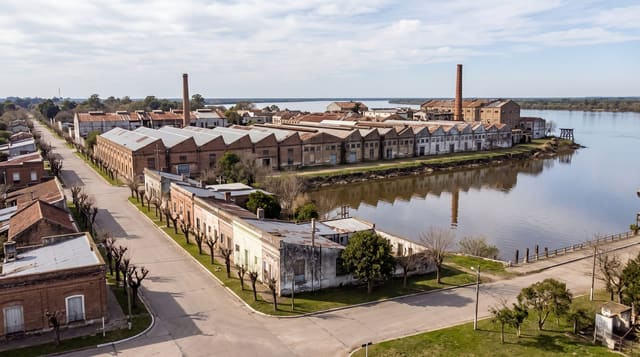
El Palmar National Park
A savanna of towering yatay palms beside the Uruguay river, protecting the last great stand of a palm that once covered the region.
Updated 4 September 2026
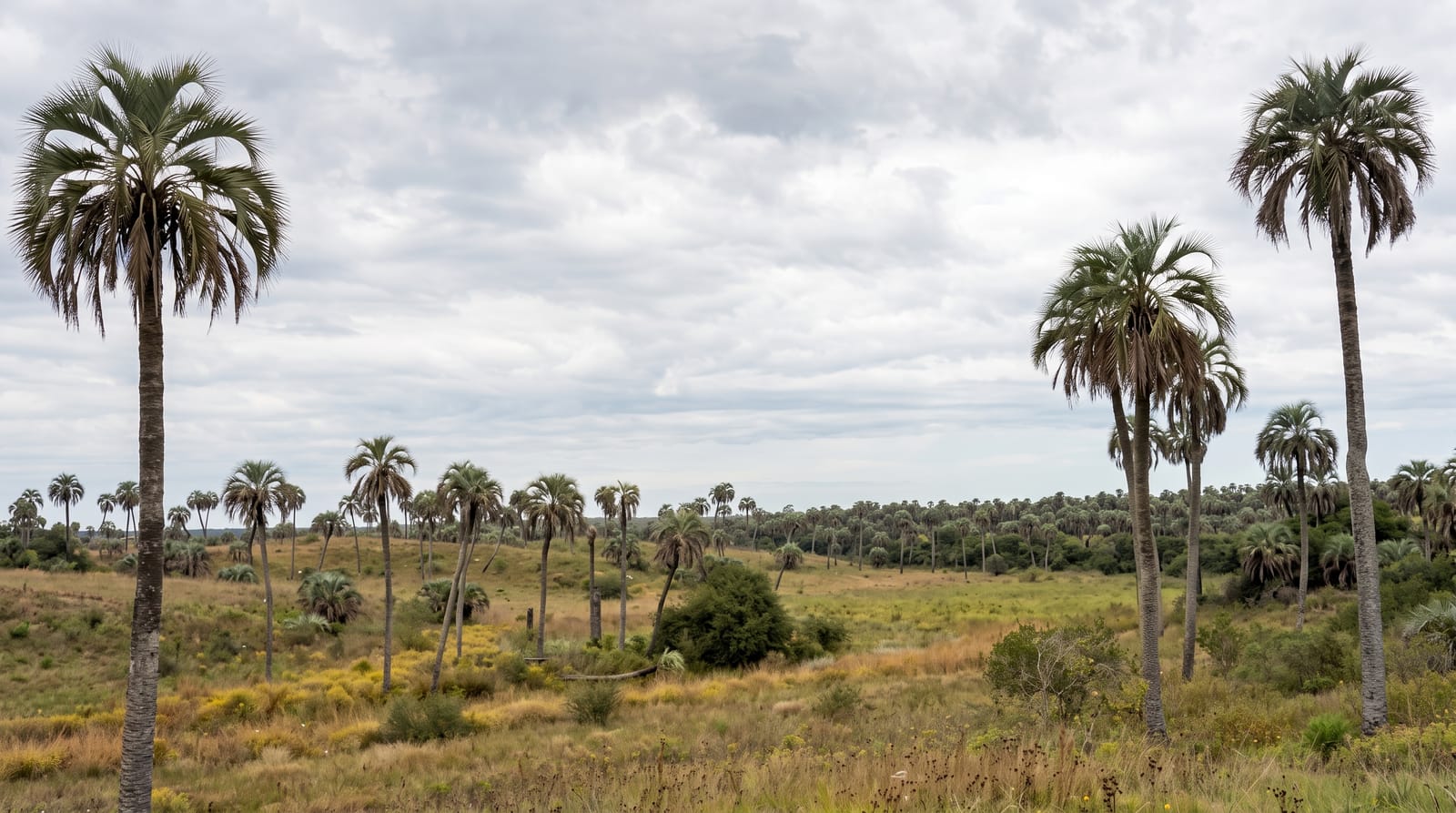
AI illustration
El Palmar was created to save the yatay palm, a species that once formed vast groves across Entre Ríos and neighbouring Uruguay and Brazil before cattle and agriculture stopped its regeneration almost everywhere else. Inside the park, palms stand across open grassland in their thousands, some over three hundred years old and reaching eighteen metres, and at sunset their silhouettes against the sky are the image most visitors take away. Trails run to the Uruguay river shore, to streams with quiet swimming spots, and past the ruins of an old lime kiln and quarry. Capybaras, foxes, vizcachas and rheas are common, and the birdlife is excellent. A campsite and visitor centre sit inside the park.
What's there
- The palm savanna - thousands of yatay palms across open grassland.
- The river shore - the Uruguay river beach and swimming areas.
- The lime kiln ruins - remains of a nineteenth-century quarry and works.
- The wildlife - capybaras, rheas, vizcachas and abundant birds.
When to go
March to November for comfortable walking; summer is hot, humid and heavy with insects, though the river swimming is welcome then. Sunrise and sunset are when the palms photograph best. The park is busiest in the January holidays.
Before you go
The park is flat and its interest is the palms and wildlife rather than dramatic scenery; visitors expecting variety may find it monotonous. Shade is scarce away from the campsite. Ticks and mosquitoes are a real nuisance in warm months.
Nearby
Colón lies south; Concordia and the Salto Grande lake are north.
Key facts
Source: Wikidata, item Q828918, read on 18 October 2026.
What to pack for El Palmar National Park
Chosen from what this place is for. Tap a kit for the full checklist.
- Broken-in walking shoes or boots - Grip and ankle support matter more than looks; never hike in brand-new boots. Find on Amazon
- Reef-safe sunscreen - High SPF that will not bleach the coral you are swimming over. Find on Amazon
- Binoculars - The single best wildlife tool - even a compact pair transforms a sighting. Find on Amazon
- Strong insect repellent - DEET or picaridin; the jungle is where bites and disease risk are highest. Find on Amazon
Some links on this page are Amazon affiliate links - if you buy through them we may earn a small commission at no extra cost to you.
All packing kitsPlan your trip
Where to start if El Palmar National Park is going on the list.
Booking links on this page are affiliate links - if you book through them we may earn a small commission at no extra cost to you. It never changes what we write about a place.
Opening times, ticket prices and seasonal closures change - check the official source before you go: official site.