Bissau
A faded Portuguese-Creole capital - the small, atmospheric and time-worn capital of Guinea-Bissau, of a crumbling old colonial quarter, a lively central market, Creole rhythms and a laid-back pace, an authentic and little-visited gateway to the country and its islands.
Updated 19 October 2026

AI illustration
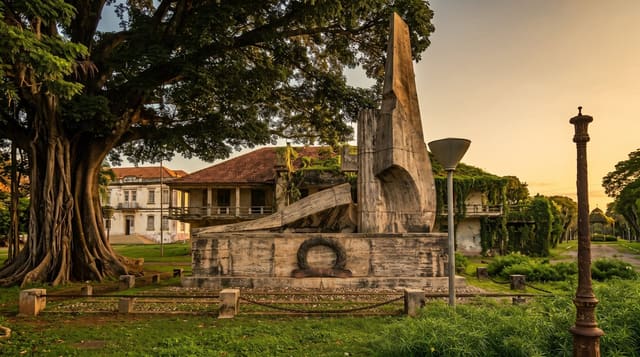
Bissau, the capital of Guinea-Bissau, is a small, atmospheric and deeply time-worn city, one of the least-visited and most faded capitals in West Africa. Its old colonial heart, the Bissau Velho quarter, is a hauntingly picturesque jumble of crumbling, weathered Portuguese colonial buildings, their pastel facades peeling amid a slow, laid-back tropical pace. The city centres on its lively central market and pulses gently with the Creole culture and music of the country, a blend of African and Portuguese roots. Modest, poor and unpolished, but genuine and welcoming, Bissau is more an authentic slice of West African life and a gateway to the Bijagós than a city of grand sights.
History
Long before Europeans came, the island of Bissau was a kingdom of the Papel people, founded according to tradition by Mecau, son of the king of Quinara, and made up of seven clans. The Portuguese founded a trading post here in 1687 and by 1696 the town had a fort and a church, but real control stayed with the Papel kings; the fort was rebuilt in 1775 by the Grão Pará and Maranhão Company, partly to hold enslaved people for shipment to Brazil, Bissau became a commune in 1869, and in 1941 the colonial capital moved here from Bolama (Wikipedia, Bissau).
The main sights
- Bissau Velho - the faded old Portuguese colonial quarter.
- The central market - the lively market and city life.
- The Creole culture - the African-Portuguese music and rhythms.
- The old fort - the crumbling Fortaleza and colonial remains.
When to go
November to May, the dry season, for the most comfortable weather, as the wet season brings heavy tropical rain; the city is best explored on foot at a relaxed pace in the cooler hours. Bissau is the arrival point and gateway for boat trips to the Bijagós Archipelago, the country's main draw.
What to expect
As an atmospheric, genuine and little-visited slice of Portuguese-Creole West Africa, with its crumbling old quarter, lively market and role as the springboard to the Bijagós, Bissau is a characterful introduction.
Nearby
The Bijagós Archipelago and the mainland countryside are within reach.
Key facts
Source: Wikidata, item Q3739, read on 18 October 2026.
What to pack for Bissau
Chosen from what this place is for. Tap a kit for the full checklist.
- Comfortable walking shoes - Sightseeing means kilometres of pavement and cobbles daily. Find on Amazon
- A slim anti-theft daypack - Zips that close properly; keep it in front in crowds and on transit. Find on Amazon
- A refillable water bottle - Many cities have public fountains; save money and plastic. Find on Amazon
- A light layer + compact umbrella - For museum air-con and a sudden shower. Find on Amazon
Some links on this page are Amazon affiliate links - if you buy through them we may earn a small commission at no extra cost to you.
All packing kitsPlan your trip
Where to start if Bissau is going on the list.
Booking links on this page are affiliate links - if you book through them we may earn a small commission at no extra cost to you. It never changes what we write about a place.
Opening times, ticket prices and seasonal closures change - check the official source before you go: official site.