Bolama
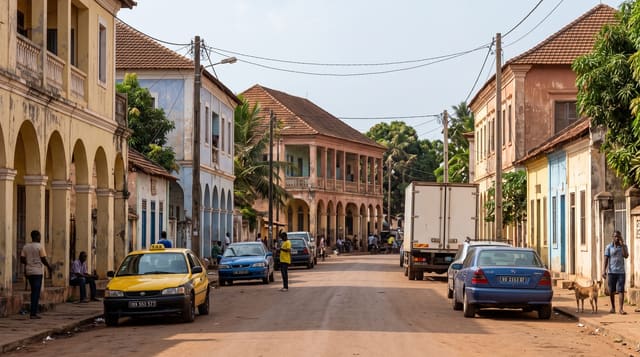
The capital that time abandoned - grand Portuguese avenues and porticoes dissolving into green on the island that once ruled the colony.
Updated 19 October 2026

AI illustration
Bolama was Portuguese Guinea's capital until 1941 - and when the government left for Bissau, the town essentially stopped: its neoclassical administration palaces, arcaded avenues, bandstand square and villa rows have spent the decades since in slow surrender to fig roots and rain, producing West Africa's most poignant colonial ghost town. Residents live among the grandeur's bones - markets, schools and church services continuing at village scale - and visitors walk boulevard axes built for a capital, now framing green silence. The island's beaches and cashew groves round out a day that photographs like a parable.
History
In 1792 the Bulama Association, a philanthropic venture, brought two hundred and seventy-five colonists in two ships to the apparently uninhabited island, hoping to settle freed Black people from the Americas and make Caribbean slave plantations unnecessary, but the attempt failed, as did another in 1814. Britain and Portugal both claimed the island until 1870, when an arbitration chaired by Ulysses S. Grant gave it to Portugal; Bolama became the first capital of Portuguese Guinea in 1879 and later a seaplane base, but a shortage of fresh water held it back, and on 6 December 1941 the capital moved to Bissau, after which the town slowly decayed (Wikipedia, Bolama (town)).
What's there
- The palace ruins - neoclassical administration dissolving into fig roots.
- The arcaded avenues - boulevard grandeur at village volume.
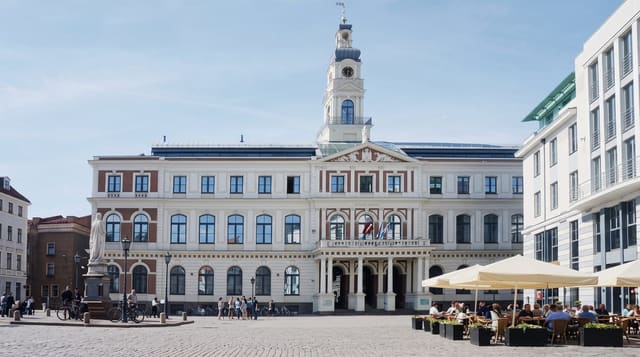
- The bandstand square - the old capital's ceremonial heart.
- The island shore - beaches and cashew country beyond the town.
When to go
November to May for dry crossings and walking; morning boats allow the full day. The light of late afternoon is the ruins' most forgiving and most dramatic.
Before you go
Structures are genuinely unstable - admire from thresholds, not under balconies; residents' privacy and pride come first in a town that is home, not a set. Crossings are informal and weather-ruled; confirm return arrangements before landing. Facilities are minimal.
Nearby
The Bijagos boats onward, Sao Joao's landing and Bissau.
Key facts
Source: Wikidata, item Q681802, read on 18 October 2026.
What to pack for Bolama
Chosen from what this place is for. Tap a kit for the full checklist.
- Reef-safe sunscreen - High SPF that will not bleach the coral you are swimming over. Find on Amazon
- Comfortable walking shoes - Sightseeing means kilometres of pavement and cobbles daily. Find on Amazon
- Quick-dry towel - A microfibre towel packs small and dries in minutes. Find on Amazon
- A slim anti-theft daypack - Zips that close properly; keep it in front in crowds and on transit. Find on Amazon
Some links on this page are Amazon affiliate links - if you buy through them we may earn a small commission at no extra cost to you.
All packing kitsPlan your trip
Where to start if Bolama is going on the list.
Booking links on this page are affiliate links - if you book through them we may earn a small commission at no extra cost to you. It never changes what we write about a place.
Opening times, ticket prices and seasonal closures change - check the official source before you go: official site.