Tsagkarada
Four separate hamlets scattered through Pelion's forest, centred on a plane tree said to be a thousand years old.
Updated 4 September 2026
AI illustration
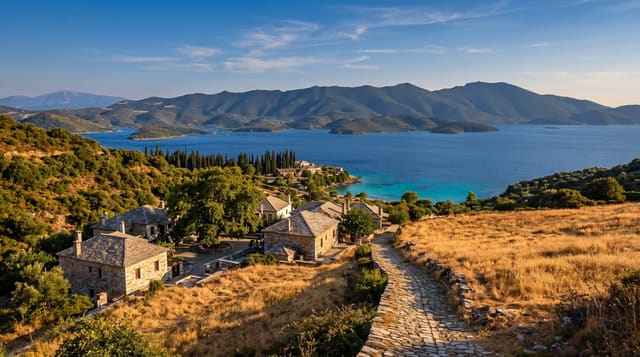
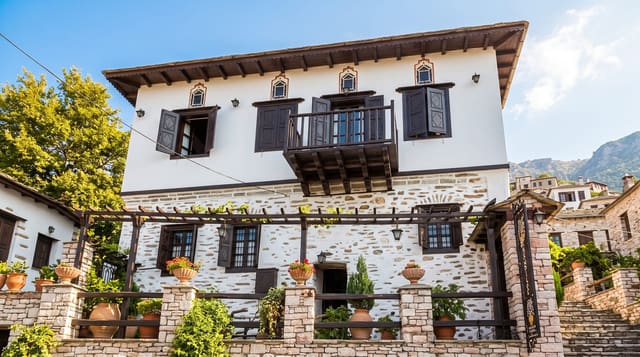
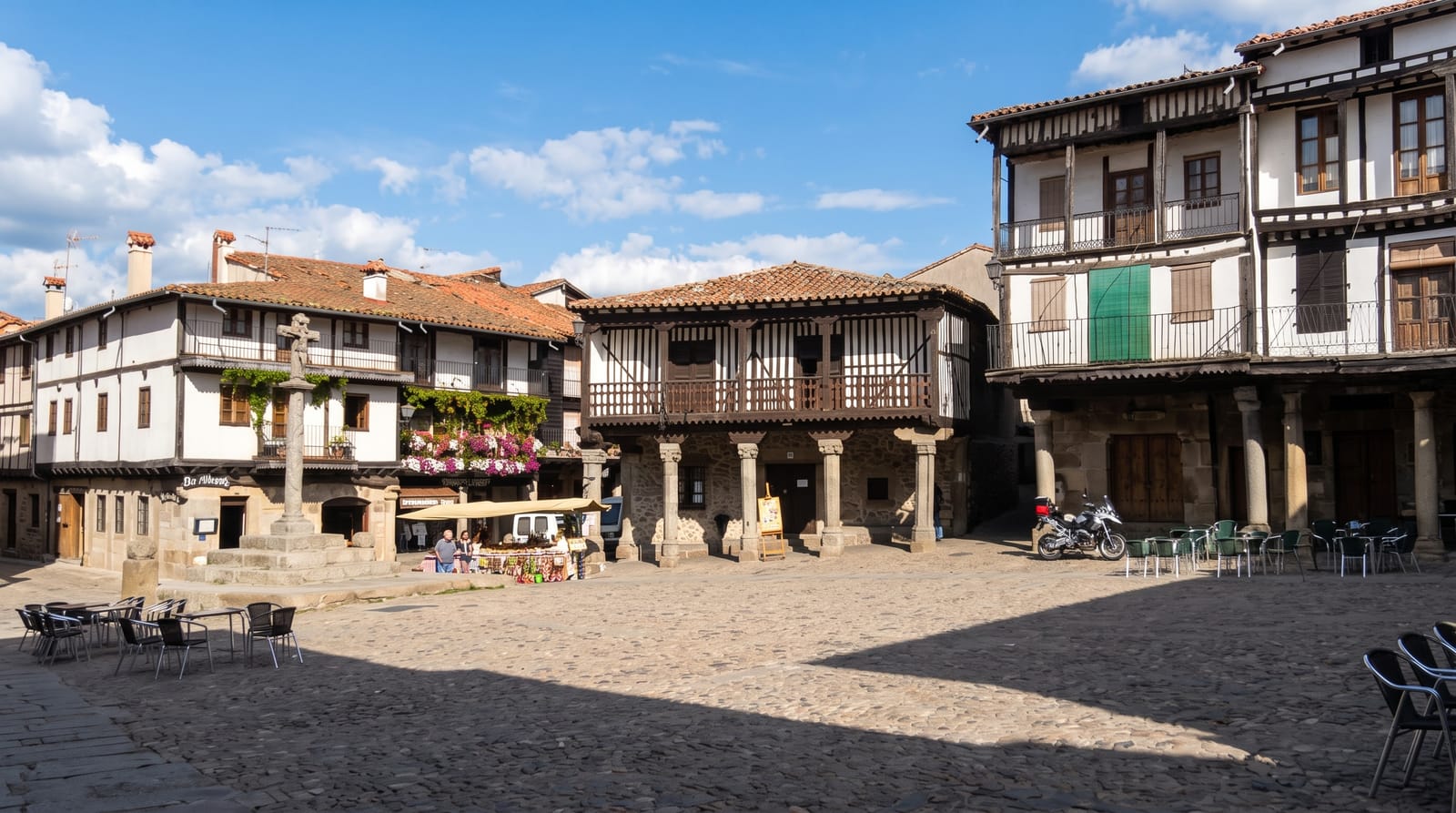
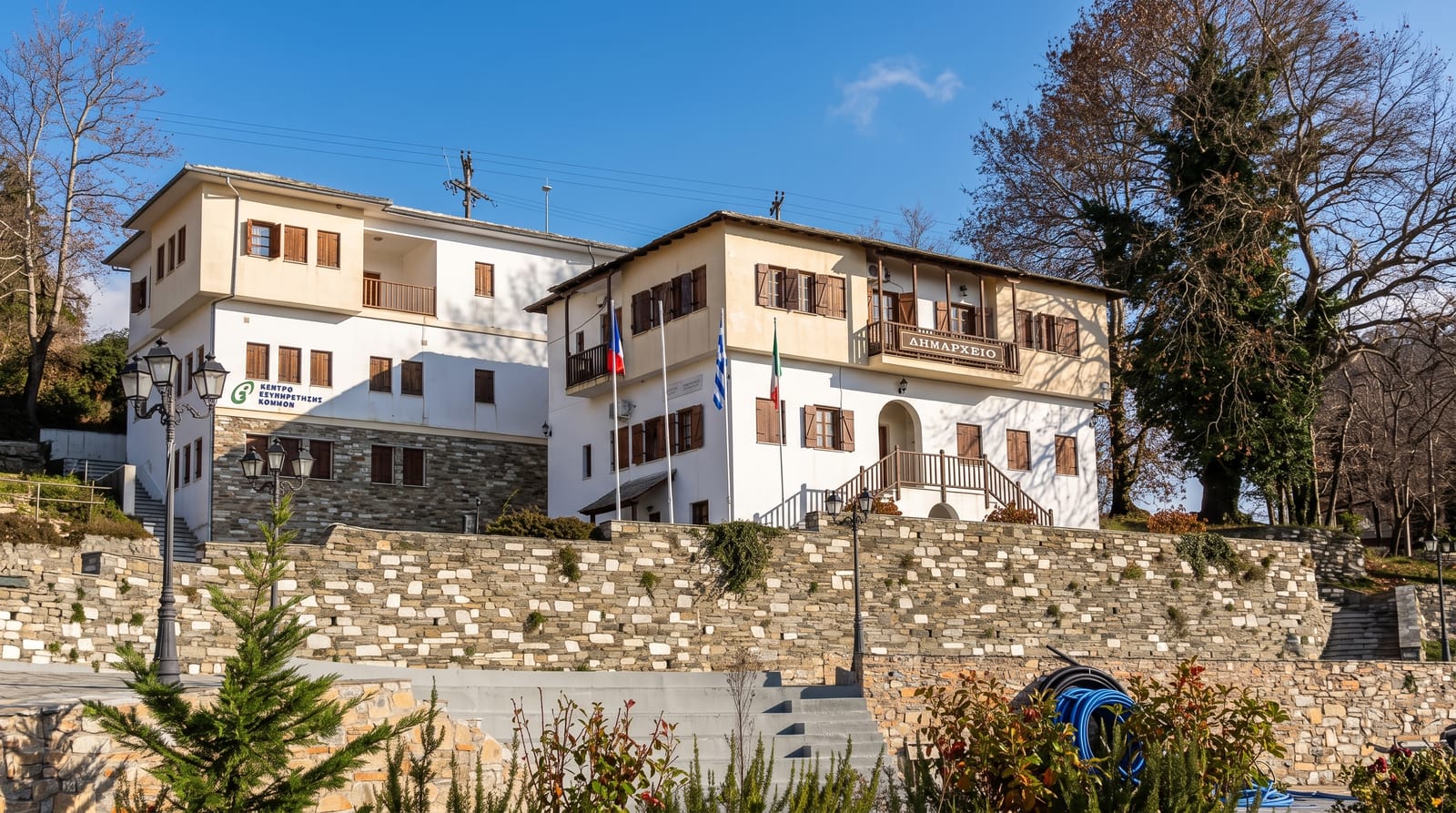
Tsagkarada is unusual in having no single centre: it consists of four quarters, Agia Paraskevi, Agios Stefanos, Agioi Taxiarches and Agia Kyriaki, each with its own square and church, spread over several kilometres of forested slope facing the Aegean. The plane tree in the Agia Paraskevi square is the landmark, with a trunk over fourteen metres in circumference and a claimed age of around a thousand years, shading the whole square and the taverna under it. The village sits in dense chestnut, beech and plane woods on the wet eastern side of Pelion, threaded with old cobbled mule paths, the kalderimia, that connect the quarters and drop through the forest to Mylopotamos and Damouchari on the coast below.
What to look for
- The great plane tree - a vast ancient trunk filling the main square.
- The four quarters - separate hamlets with their own churches and squares.
- The kalderimia - cobbled mule paths through the forest.
- The forest and sea - dense woods dropping toward the Aegean.
When to go
Late spring for greenery and open paths, autumn for colour and mushrooms; the eastern Pelion is genuinely wet, so rain is common outside high summer. August fills the coast below.
Things to know
The spread-out layout means walking or driving between quarters, and there is no village centre in the usual sense. The cobbled paths are slippery when wet and steep. Roads in are winding and slow.
Nearby
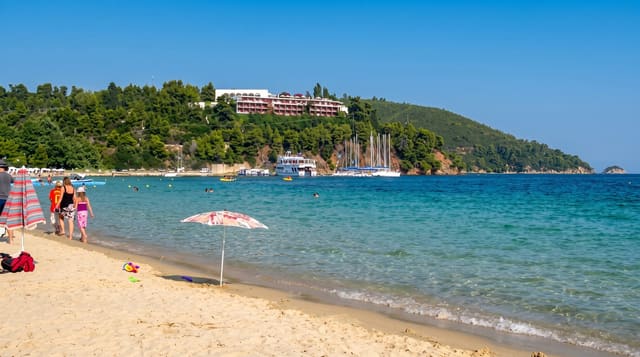
Mylopotamos and Damouchari beaches lie below; Milies and the Pelion railway are south.
Key facts
Source: Wikidata, item Q3558064, read on 18 October 2026.
What to pack for Tsagkarada
Chosen from what this place is for. Tap a kit for the full checklist.
- Reef-safe sunscreen - High SPF that will not bleach the coral you are swimming over. Find on Amazon
- Comfortable walking shoes - Sightseeing means kilometres of pavement and cobbles daily. Find on Amazon
- Quick-dry towel - A microfibre towel packs small and dries in minutes. Find on Amazon
- A slim anti-theft daypack - Zips that close properly; keep it in front in crowds and on transit. Find on Amazon
Some links on this page are Amazon affiliate links - if you buy through them we may earn a small commission at no extra cost to you.
All packing kitsPlan your trip
Where to start if Tsagkarada is going on the list.
Booking links on this page are affiliate links - if you book through them we may earn a small commission at no extra cost to you. It never changes what we write about a place.
Opening times, ticket prices and seasonal closures change - check the official source before you go: official site.