Deia
A stone village on a Tramuntana slope where Robert Graves settled in 1929, drawing writers and musicians for decades after.
Updated 4 September 2026

AI illustration
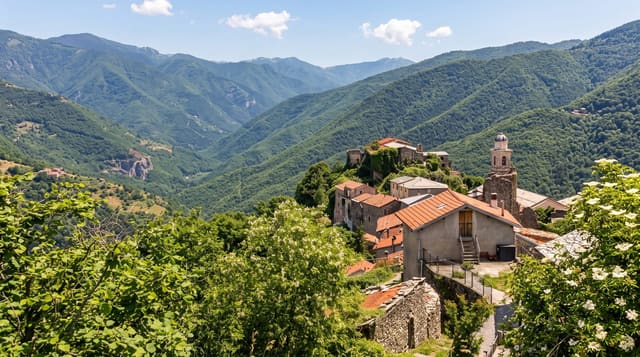
Deia occupies a steep slope between the Teix mountain and the sea, its houses in ochre stone terraced up to a church at the top with a cemetery where Robert Graves is buried under a plain slab. Graves came in 1929 on Gertrude Stein's suggestion, left during the civil war and returned in 1946, living there until his death in 1985 and writing much of his work in the house at Ca n'Alluny, now a museum kept as he left it with his study, printing press and garden. The village became a gathering point for writers, artists and later musicians, and it retains an expensive bohemian character. A steep path leads down to Cala Deia, a small pebble cove with two restaurants on the rocks.
What to look for
- Ca n'Alluny - Graves's house kept as a museum with his study intact.
- The hilltop cemetery - his grave under a plain slab beside the church.
- The ochre village - stone houses terraced up a steep Tramuntana slope.
- Cala Deia - a pebble cove below with restaurants on the rocks.
When to go
April to June and September to October; the Ma-10 coast road is busy in summer with coaches and cyclists. The Deia international music festival runs concerts through the summer months.
Before you go
Parking in the village is very limited and the road through is narrow. Deia is expensive, with accommodation and restaurants priced well above the island average. The path to the cove is steep and rough.
Nearby
Valldemossa lies south along the coast road; Soller and its port are north.
Key facts
Source: Wikidata, item Q233337, read on 18 October 2026.
What to pack for Deia
Chosen from what this place is for. Tap a kit for the full checklist.
- Padded shorts - The one thing that makes a full day in the saddle bearable. Find on Amazon
- Comfortable walking shoes - Sightseeing means kilometres of pavement and cobbles daily. Find on Amazon
- Helmet - Bring your own if you have a good one; rentals vary wildly. Find on Amazon
- A slim anti-theft daypack - Zips that close properly; keep it in front in crowds and on transit. Find on Amazon
Some links on this page are Amazon affiliate links - if you buy through them we may earn a small commission at no extra cost to you.
All packing kitsPlan your trip
Where to start if Deia is going on the list.
Booking links on this page are affiliate links - if you book through them we may earn a small commission at no extra cost to you. It never changes what we write about a place.
Opening times, ticket prices and seasonal closures change - check the official source before you go: official site.