Stemnitsa
A silversmiths' village of stone houses and belfries on the western slope of Mount Menalon, above the Lousios gorge.
Updated 19 October 2026
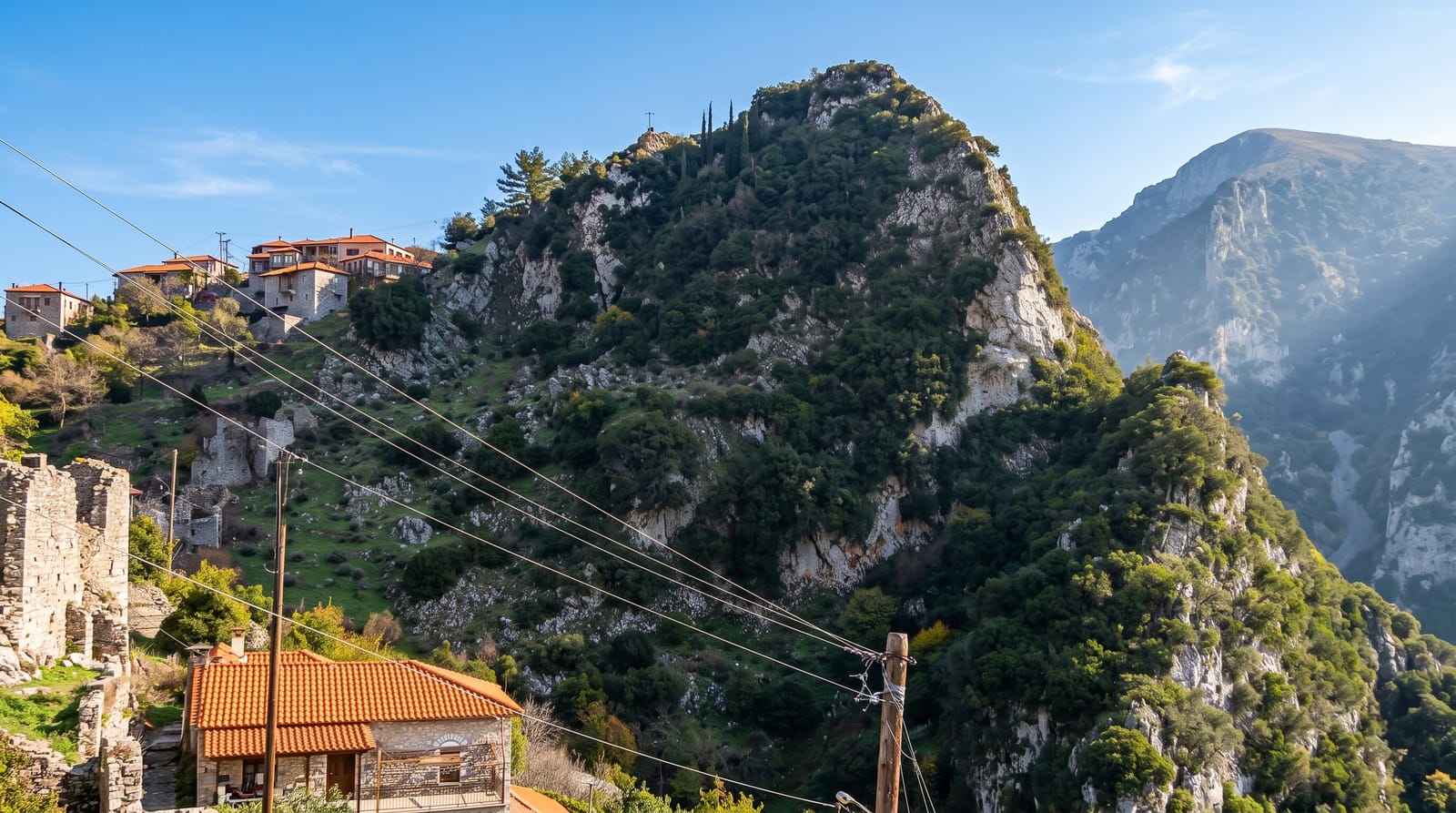
AI illustration
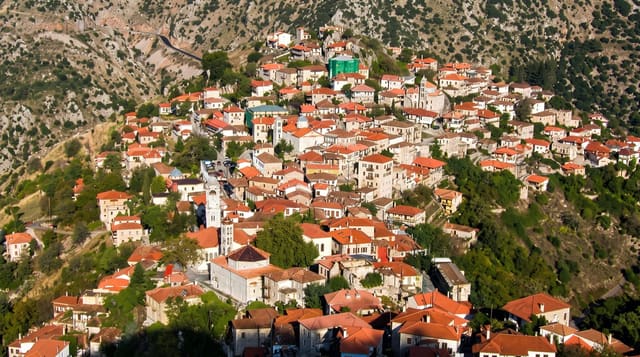
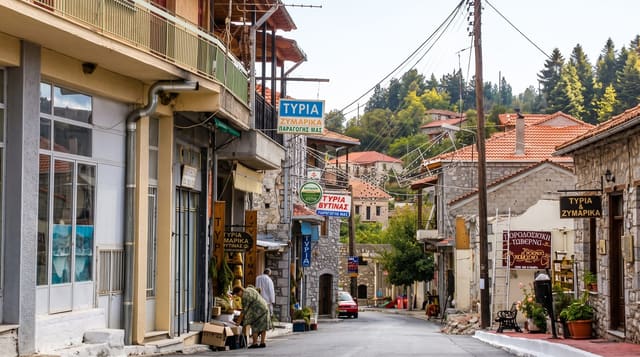
Stemnitsa, known locally as Ipsous, stands at about 1,080 metres among fir and walnut trees, and it built its reputation on metalwork: generations of silversmiths and bell-makers worked here, and the village still hosts a school of silver and goldsmithing that trains jewellers from across Greece. The stone houses have tiled roofs and wooden balconies, the lanes are steep, and Byzantine churches with carved screens are scattered through the settlement, several with frescoes. A small folklore museum reconstructs workshops of the old crafts, and a clock tower on the hill above gives a view over the roofs to the gorge. The village is a stage on the Menalon Trail and a base for walking down into the Lousios, where the monasteries hang on the cliffs.
History
Stemnitsa has been identified with the ancient Arcadian city of Hypsous, said to have been founded by a son of Lycaon and already in ruins when Pausanias came in the 2nd century AD; its present name is Slavic, meaning "woodland", from the Slavs who settled the Peloponnese in the 7th and 8th centuries. Remote enough to be a safe haven under the Ottomans, it became a centre of Greek culture and religion, many old churches survive, and the village was known for its gold- and silversmiths; from the end of May to mid June 1821 the monastery of Zoodochos Pigi here was the first seat of the Peloponnesian Senate, the temporary government of the liberated Peloponnese (Wikipedia, Stemnitsa).
What to look for
- The silversmithing school - a working institution continuing the village craft.
- The stone lanes - tiled roofs, balconies and steep cobbled streets.
- The churches - small Byzantine chapels with painted interiors.
- The clock tower view - the village and the gorge from above.
When to go
Late spring and autumn are best for walking; winter weekends fill with visitors for the snow and the tavernas. Summer is cool at this height compared with the coast.
Good to know
The village is very quiet outside weekends, with only a handful of places to eat, and some shut in low season. Streets are steep and unsuitable for anyone with mobility difficulties. Museum hours are short.
Nearby
Dimitsana lies north; the Lousios gorge and its monasteries are below, with Karytaina castle to the south-west.
Key facts
Source: Wikidata, item Q15635266, read on 18 October 2026.
What to pack for Stemnitsa
Chosen from what this place is for. Tap a kit for the full checklist.
- Broken-in walking shoes or boots - Grip and ankle support matter more than looks; never hike in brand-new boots. Find on Amazon
- Warm base layers - Merino or synthetic against the skin - never cotton, which chills when damp. Find on Amazon
- Comfortable walking shoes - Sightseeing means kilometres of pavement and cobbles daily. Find on Amazon
- Modest clothing - Shoulders and knees covered - the single most common requirement. Find on Amazon
Some links on this page are Amazon affiliate links - if you buy through them we may earn a small commission at no extra cost to you.
All packing kitsPlan your trip
Where to start if Stemnitsa is going on the list.
Booking links on this page are affiliate links - if you book through them we may earn a small commission at no extra cost to you. It never changes what we write about a place.
Opening times, ticket prices and seasonal closures change - check the official source before you go: official site.