Tiryns
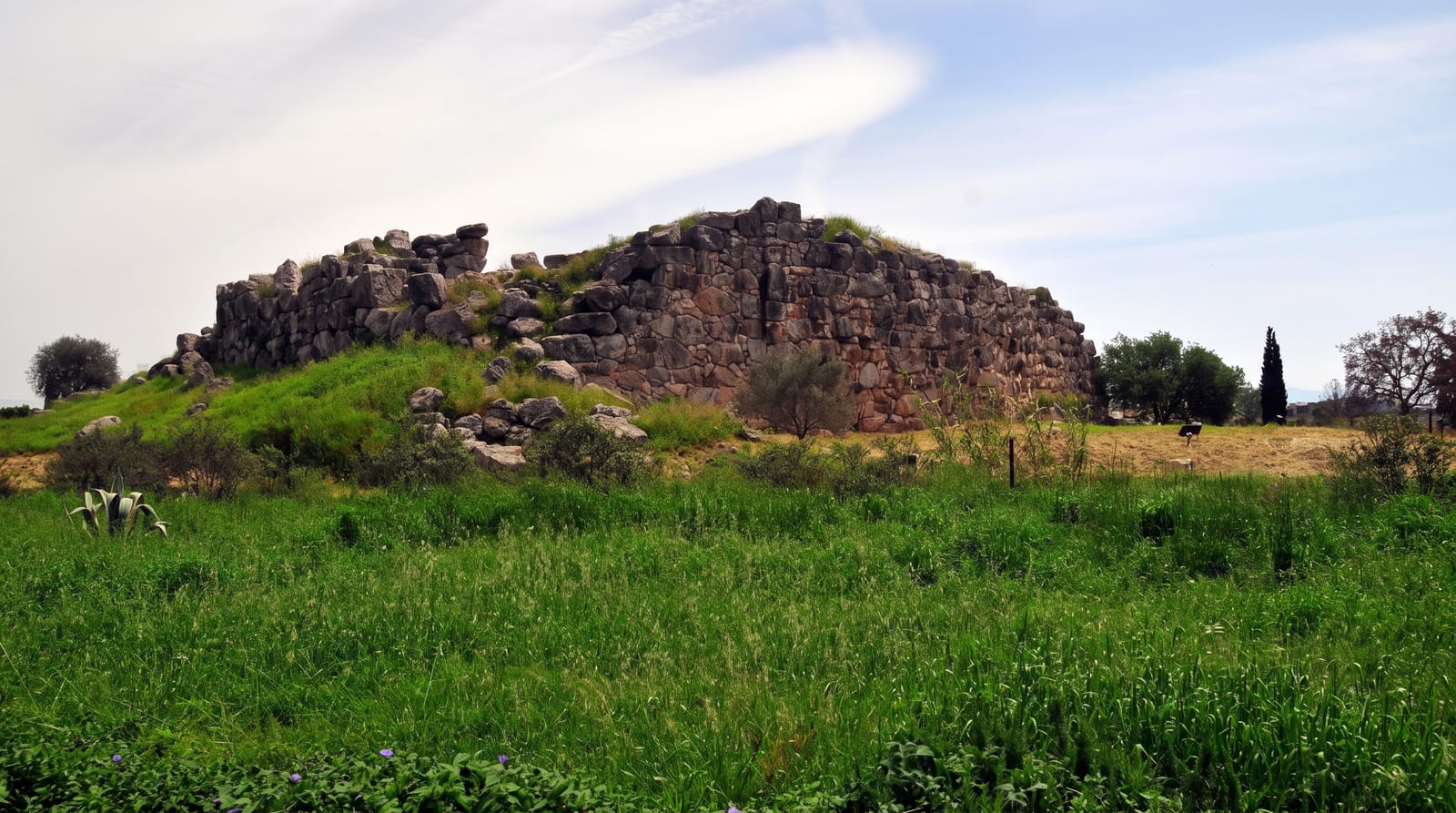
A Mycenaean citadel whose walls, built of blocks the Greeks thought only giants could lift, still stand seven metres thick.
Updated 18 October 2026
AI illustration
UNESCO World Heritage
Tiryns rises only about eighteen metres above the Argive plain, but its walls are the point: limestone blocks weighing up to thirteen tonnes, laid in the thirteenth century BC into ramparts up to seven metres thick and originally far higher. Later Greeks called such masonry Cyclopean, believing only the Cyclopes could have moved the stones, and Homer called the place Tiryns of the great walls. Inside are the ramp entrance designed so attackers would expose their unshielded side, the megaron with the round hearth and the throne base, and, best of all, the galleries: corbelled passages inside the thickness of the wall, their stones polished smooth by centuries of sheep sheltering there. The site was inscribed by UNESCO with Mycenae in 1999.
History
The hill was settled in the Neolithic, and in the middle of the 3rd millennium BC a flourishing settlement here built a great circular structure 28 metres across, whose remains lie under the courtyard of the later palace. The Mycenaean citadel rose in three phases between about 1500 and 1200 BC, and the ruins that stand today date from the last of them, when Tiryns was among the most important centres of the Mycenaean world; the palace area stayed inhabited after the collapse of the Bronze Age until the mid-8th century BC, and around 1180 BC a cauldron of gold and silver treasures, including a 15th-century BC Minoan signet ring, was buried in the lower town. By the Classical period Tiryns had become insignificant, though it sent 400 hoplites to Plataea in 480 BC, and in 468 BC Argos wrecked both Tiryns and Mycenae and moved their people to Argos (Wikipedia, Tiryns).
Highlights
- The Cyclopean walls - ramparts of blocks up to thirteen tonnes.
- The corbelled galleries - passages inside the wall, worn smooth by sheep.
- The great ramp - the tactical approach to the main gate.
- The megaron - the palace hall with its hearth and throne base.
When to go
Spring and autumn; the citadel is treeless and hot in summer, and mornings are best. It is easily combined with Mycenae on the same ticket and the same day.
Practical notes
Tiryns is much smaller than Mycenae and gets far fewer visitors, which is either a disappointment or a relief. Signage is minimal, and the upper citadel is a maze of foundations. The galleries are the highlight and take five minutes.
Nearby
Nafplio is ten minutes away; Mycenae lies north and Argos north-west across the plain.
Key facts
Source: Wikidata, item Q217379, read on 18 October 2026.
What to pack for Tiryns
Chosen from what this place is for. Tap a kit for the full checklist.
- Comfortable walking shoes - Sightseeing means kilometres of pavement and cobbles daily. Find on Amazon
- A slim anti-theft daypack - Zips that close properly; keep it in front in crowds and on transit. Find on Amazon
- A refillable water bottle - Many cities have public fountains; save money and plastic. Find on Amazon
- A light layer + compact umbrella - For museum air-con and a sudden shower. Find on Amazon
Some links on this page are Amazon affiliate links - if you buy through them we may earn a small commission at no extra cost to you.
All packing kitsPlan your trip
Where to start if Tiryns is going on the list.
Booking links on this page are affiliate links - if you book through them we may earn a small commission at no extra cost to you. It never changes what we write about a place.
Opening times, ticket prices and seasonal closures change - check the official source before you go: official site.