Serifos
A bare rocky island whose Chora spills down a cone above the port, with abandoned iron mines along the coast.
Updated 19 October 2026
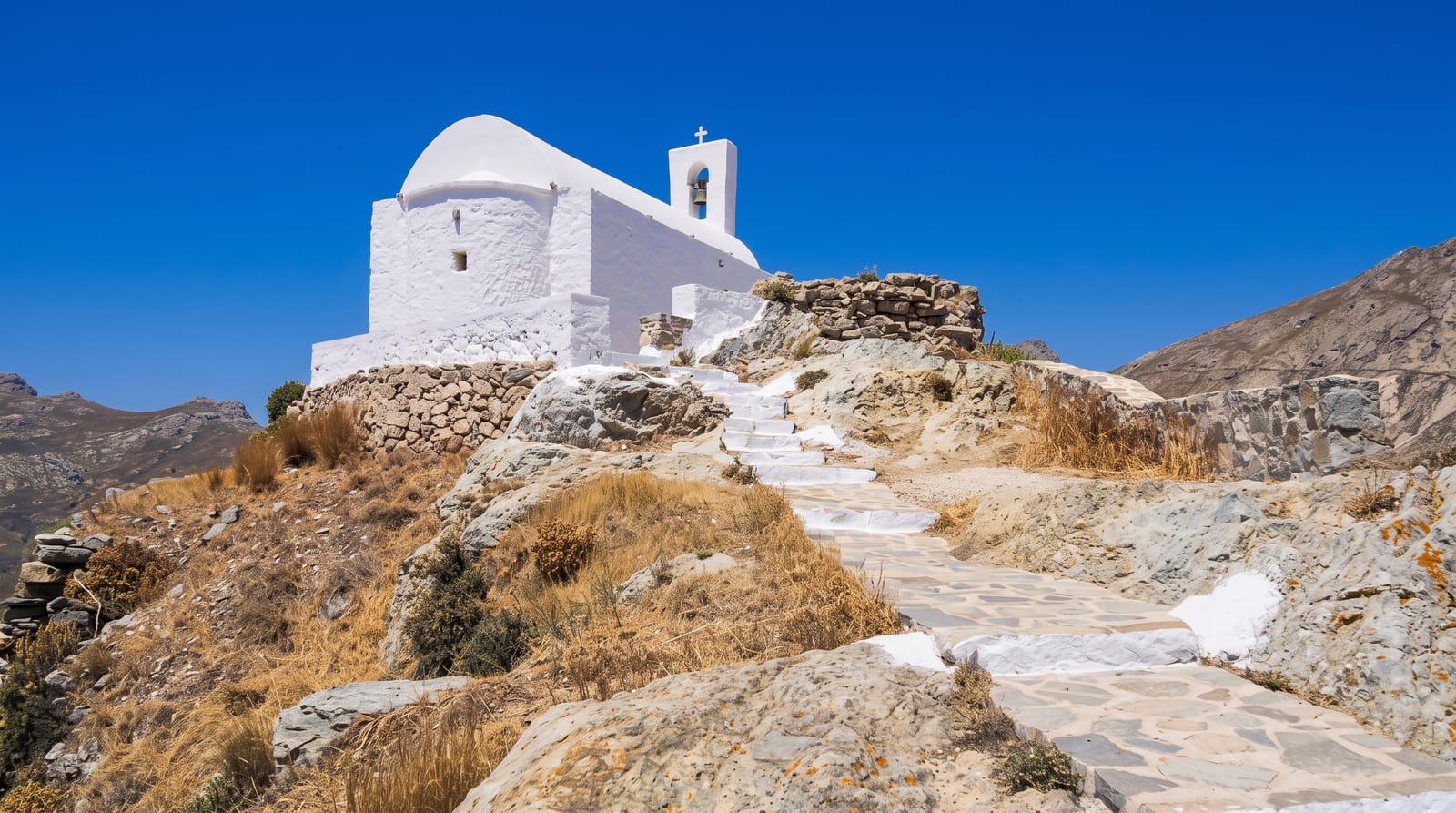
AI illustration
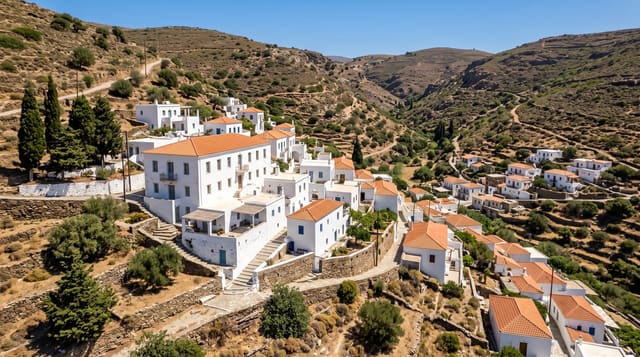
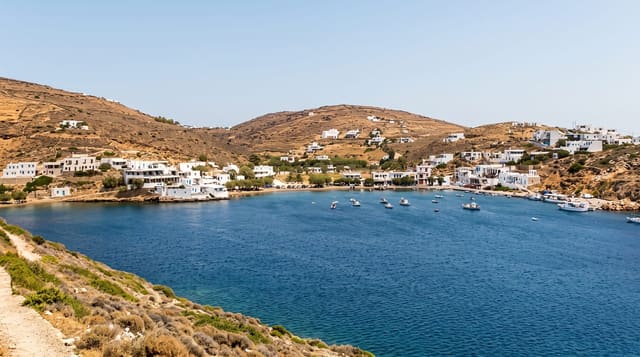
Serifos is dry, rocky and sparsely populated, and its Chora is the sight: white houses stacked up a steep cone above the port of Livadi, crowned by a ruined Venetian castle, with lanes so narrow and steep that the upper town is reached only on foot. In myth this is where Perseus grew up and where he turned the king to stone with the Gorgon's head, which explains the island's stony reputation. From the late nineteenth century Serifos was mined for iron ore, and the industrial remains, loading bays at Megalo Livadi, rusting rails, tunnels and the ruins of company buildings, stand along the western coast as an unusual layer over a Cycladic landscape. Beaches are numerous and mostly empty, from sandy Livadakia and Psili Ammos to remote coves reached on foot.
History
In myth Danaë and the infant Perseus washed ashore on Serifos after her father Acrisius set them adrift in a chest, and Perseus later turned the island's king Polydectes to stone with the head of Medusa. Colonised by Ionians from Athens, Serifos was one of the few islands that refused to submit to Xerxes, though later writers mention it with contempt for its poverty, and the Roman emperors used it as a place of exile; after 1204 it came under Venetian rule, its mines reopened after about 1,000 years, and in 1394 the miners went on strike against Nikolaos Adoldos (Wikipedia, Serifos).
What's there
- The Chora - a white town spilling down a cone with a castle above.
- The mining remains - loading piers, rails and ruins at Megalo Livadi.
- The empty beaches - sandy and pebble bays scattered around the coast.
- The old paths - stone routes across the bare interior to chapels and coves.
When to go
May, June and September for warm sea and comfortable walking; the island is bare and offers no shade in midsummer. August brings Athenian visitors but Serifos stays quieter than its neighbours.
Before you go
The Chora involves serious stair climbing, and cars stop well below the top. The island is dry and treeless, which some find stark. Facilities are concentrated in Livadi; elsewhere there is very little.
Nearby
Sifnos lies south; Kythnos north, with Piraeus a few hours away by fast boat.
Key facts
Source: Wikidata, item Q217214, read on 18 October 2026.
What to pack for Serifos
Chosen from what this place is for. Tap a kit for the full checklist.
- Reef-safe sunscreen - High SPF that will not bleach the coral you are swimming over. Find on Amazon
- Quick-dry towel - A microfibre towel packs small and dries in minutes. Find on Amazon
- Water shoes - Protect your feet on rocky entries, hot sand and sea-urchin spines. Find on Amazon
- Dry bag - Keeps phone, cash and keys safe while you are in the water. Find on Amazon
Some links on this page are Amazon affiliate links - if you buy through them we may earn a small commission at no extra cost to you.
All packing kitsPlan your trip
Where to start if Serifos is going on the list.
Booking links on this page are affiliate links - if you book through them we may earn a small commission at no extra cost to you. It never changes what we write about a place.
Opening times, ticket prices and seasonal closures change - check the official source before you go: official site.