Kythnos
A quiet western Cycladic island with hot springs, a hundred beaches and a double sandbar joining an islet at Kolona.
Updated 19 October 2026
AI illustration
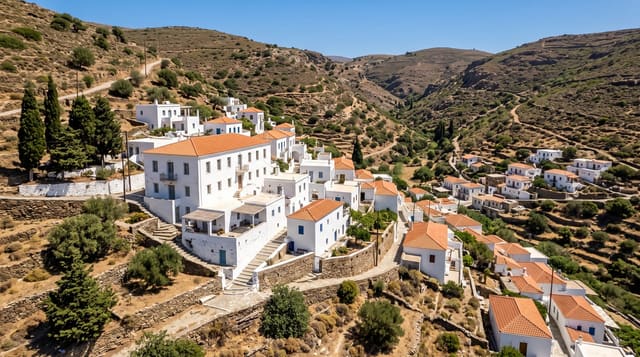
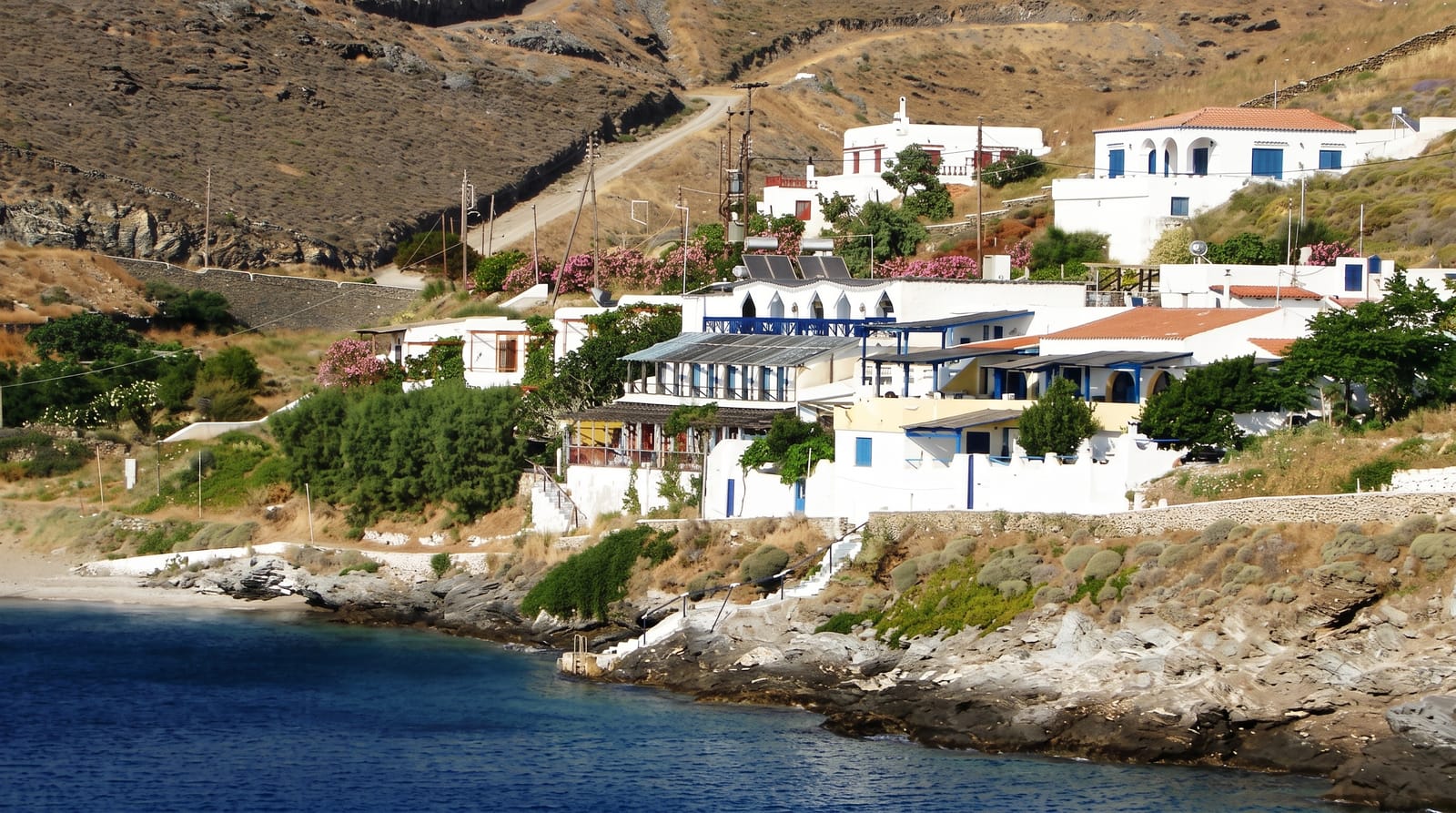
Kythnos is dry, low and largely undeveloped, with two main settlements, Chora and Dryopida, and the small spa village of Loutra on the northeast coast, where thermal springs at around fifty degrees have been used since antiquity and feed a small nineteenth-century bathhouse and a stream that runs warm into the sea. The island's signature sight is Kolona, a sandbar several hundred metres long joining the islet of Agios Loukas to the main island, with sea on both sides and a beach on each; it is reached by boat or by a rough track and a walk. Dryopida is the prettiest village, with tiled roofs unusual in the Cyclades and the Katafyki cave beneath it, an old iron mine and natural cavern open in season.
History
Kythnos has one of the oldest known settlements in the Cyclades, a Mesolithic site of 10000-8000 BCE at Maroulas near Loutra, partly eroded into the sea, where excavations in 1996 found intact human skeletons. Finds of the third millennium BCE at Skouries near Mount Profitis Elias, with copper smelting sites and open-air mines studied in 1984-1985, suggest the island supplied metal ore to others in the Bronze Age, and the earliest people known to historians were the Carians; a Hellenistic site at Vryokastro above the bay of Episkopi has yielded houses and a sanctuary (Wikipedia, Kythnos).
The landscape
- Kolona - the double sandbar linking an islet, with beach on both sides.
- The Loutra springs - thermal water in a small bathhouse and on the shore.
- Dryopida - a tile-roofed village with the Katafyki cave below.
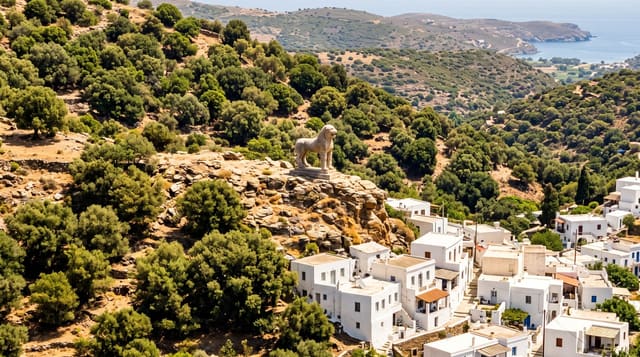
- The empty beaches - dozens of coves, many reached only on foot or by boat.
When to go
May, June and September for warm sea and quiet roads; the island fills modestly in August with Greek families. Winter is very quiet and the thermal baths are the main draw.
Practical notes
Kythnos has little in the way of sights and few facilities outside the three settlements. Many beaches need a boat or a rough track. The bathhouse at Loutra is dated and basic rather than a modern spa.
Nearby
Kea lies north on the Lavrio line; Serifos and Sifnos continue south.
Key facts
Source: Wikidata, item Q739779, read on 18 October 2026.
What to pack for Kythnos
Chosen from what this place is for. Tap a kit for the full checklist.
- Reef-safe sunscreen - High SPF that will not bleach the coral you are swimming over. Find on Amazon
- Head torch + spare batteries - Hands-free light is essential; caves are truly dark. Find on Amazon
- Swimwear - Needed at most public thermal pools; some traditional baths are nude and single-sex. Find on Amazon
- Quick-dry towel - A microfibre towel packs small and dries in minutes. Find on Amazon
Some links on this page are Amazon affiliate links - if you buy through them we may earn a small commission at no extra cost to you.
All packing kitsPlan your trip
Where to start if Kythnos is going on the list.
Booking links on this page are affiliate links - if you book through them we may earn a small commission at no extra cost to you. It never changes what we write about a place.
Opening times, ticket prices and seasonal closures change - check the official source before you go: official site.