Paros
A central Cyclades island of marble quarries, a fishing harbour turned nightlife town, and beaches on every coast.
Updated 19 October 2026
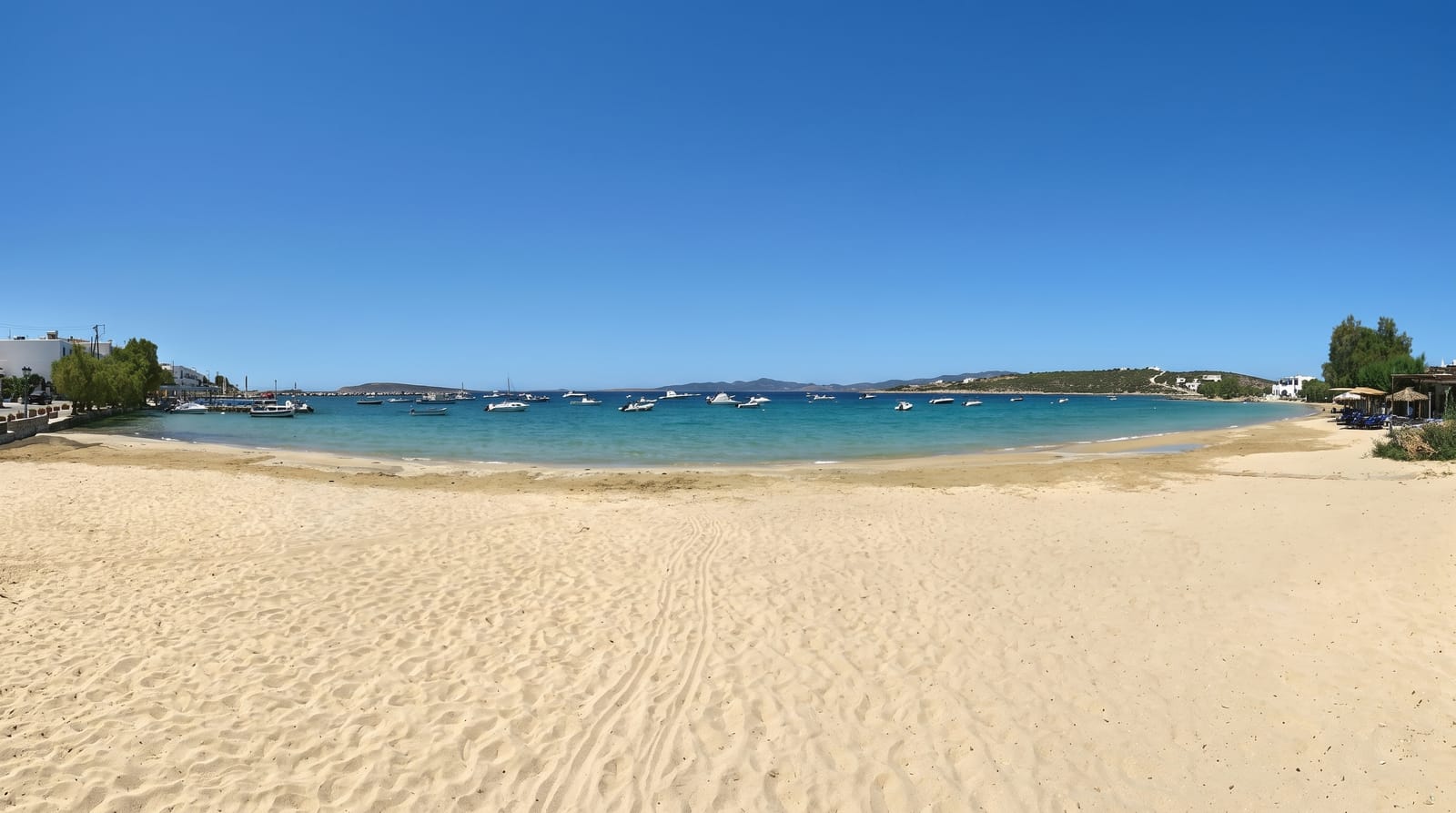
AI illustration
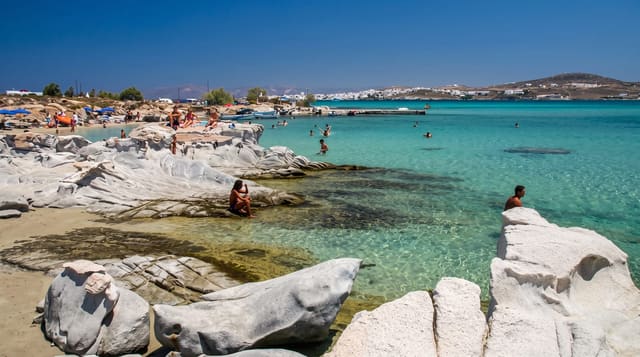
Paros supplied the ancient world with the finest white marble known, translucent Parian lychnites cut from underground galleries at Marathi, used for the Hermes of Praxiteles and the Venus de Milo; the quarry tunnels can still be seen, unlit and unmanaged, a short drive from Parikia. The island's two towns divide the visitors: Parikia, the port, with the great Byzantine church and a Venetian castle built from ancient blocks, and Naoussa in the north, once a fishing village and now the fashionable centre, with a small sunken Venetian fort at the harbour mouth. Between them lie mountain villages such as Lefkes, the Byzantine paved road across the hills, and beaches for every taste: Kolymbithres with its sculpted rocks, Golden Beach for windsurfing, Santa Maria and Faragas.
History
Ancient names of the island include Plateia, Demetrias, Strongyle, Hyria, Hyleessa and Minoa, and it later received a colony of Ionians from Athens under whom it prospered, sending out colonies to Thasos, in which the Parian poet Archilochus is said to have taken part, and to Parium on the Hellespont. Shortly before the Persian Wars it seems to have depended on Naxos, and in 490 BC it sided with the Persians and sent a trireme to Marathon, after which Miltiades besieged its capital and demanded a fine of 100 talents; under the Delian League Paros paid the highest tribute of the island members (Wikipedia, Paros).
What's there
- The marble quarries - ancient underground galleries at Marathi.
- Naoussa harbour - the fishing port and the half-sunken Venetian fort.
- Lefkes and the Byzantine road - a hill village and its old paved route.
- The beaches - Kolymbithres, Golden Beach, Santa Maria and others.
When to go
May, June and September for warm sea and manageable crowds; August is expensive and full, particularly in Naoussa. The meltemi wind blows hard in July and August, which windsurfers welcome and others do not.
Good to know
Naoussa has become one of the Cyclades' most expensive destinations and its harbour restaurants price accordingly. Ferries and rooms in August need booking well ahead. The marble quarries are unlit and genuinely unsafe to enter deeply.
Nearby
Antiparos is a ten-minute ferry away; Naxos lies east and Mykonos north.
Key facts
Source: Wikidata, item Q201272, read on 18 October 2026.
What to pack for Paros
Chosen from what this place is for. Tap a kit for the full checklist.
- Travel rod + reel - A packable multi-piece rod fits in a case and covers most holiday fishing. Find on Amazon
- Reef-safe sunscreen - High SPF that will not bleach the coral you are swimming over. Find on Amazon
- Quick-dry clothing - Board shorts or synthetics that shrug off spray and dry fast. Find on Amazon
- Head torch + spare batteries - Hands-free light is essential; caves are truly dark. Find on Amazon
Some links on this page are Amazon affiliate links - if you buy through them we may earn a small commission at no extra cost to you.
All packing kitsPlan your trip
Where to start if Paros is going on the list.
Booking links on this page are affiliate links - if you book through them we may earn a small commission at no extra cost to you. It never changes what we write about a place.
Opening times, ticket prices and seasonal closures change - check the official source before you go: official site.