Naxos
The Cyclades' generous heart - long sandy beaches, a marble gate to nowhere, mountain villages under Zas and the best food-farming island in the archipelago.
Updated 19 October 2026
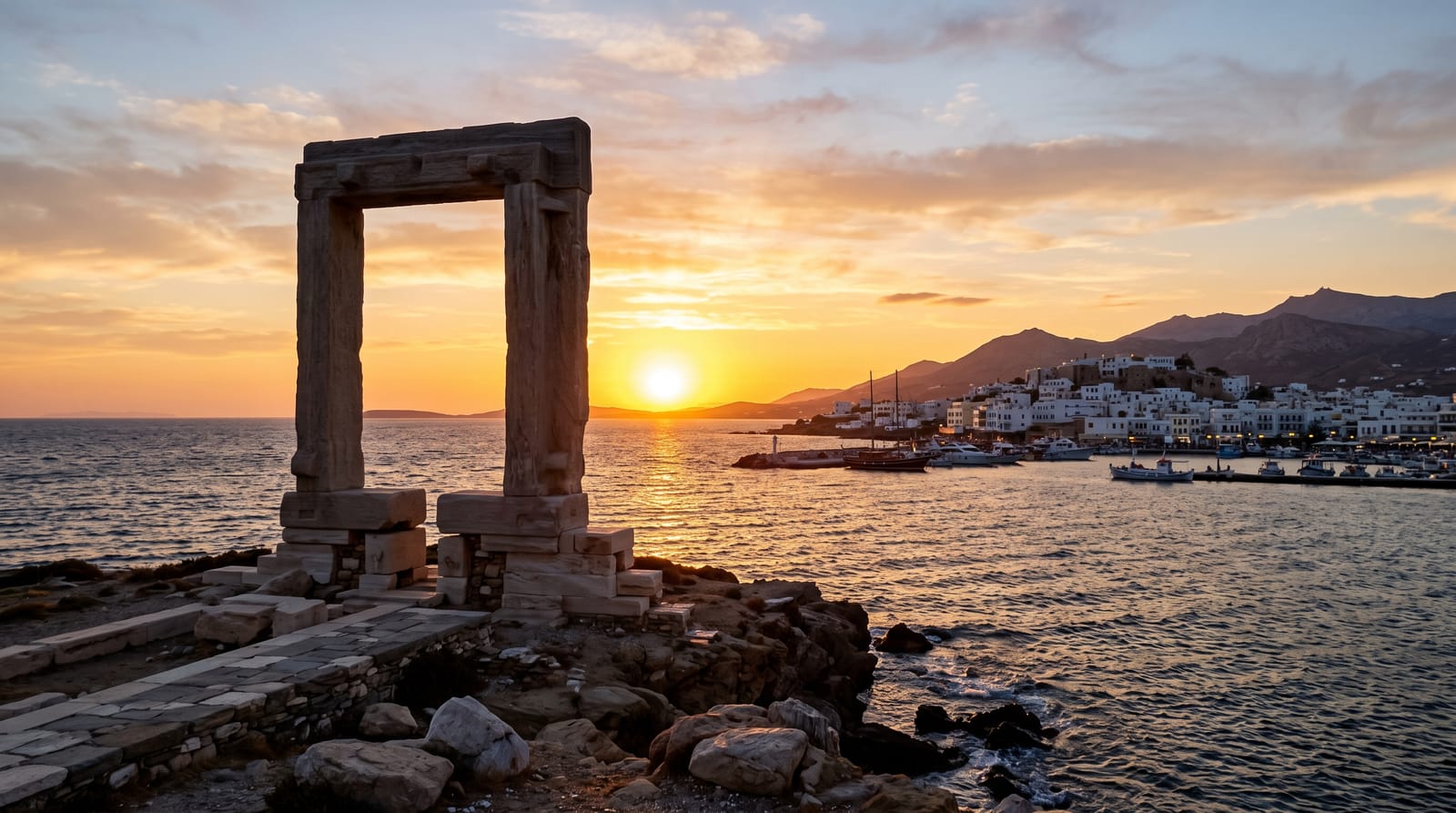
AI illustration
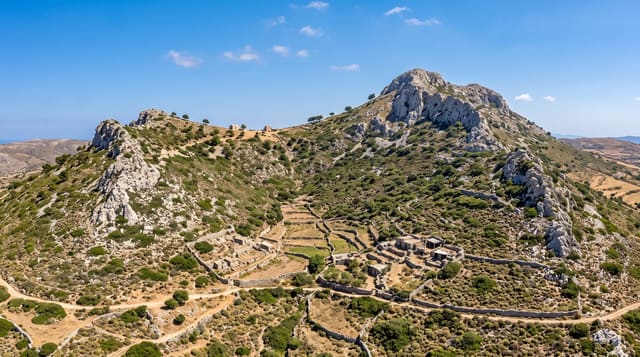
Naxos is the island returning visitors quietly recommend over its famous neighbours: the biggest and greenest of the Cyclades, prosperous enough from farming and marble never to need tourism desperately, and better for it. The Portara - a colossal marble doorway of an unfinished ancient temple - frames the sunset at the harbour's edge; the west coast runs in kilometres of genuinely sandy beaches from family-calm to windsurf-wild; and the interior climbs through olive and citrus valleys to marble-paved mountain villages under Mount Zas, the Cyclades' highest point, where mythology says Zeus was raised. The island's potatoes, cheeses and citrus liqueur are minor celebrities in Greece, and its tavernas cook like they mean it.
History
In Greek myth the young Zeus was raised in a cave on Mount Zas, whose name means Zeus, and Homer's "Dia", the "divine" island, was a name given to Naxos too. Legend tells that Theseus left Ariadne here after she helped him kill the Minotaur, and that Dionysus, protector of the island, found her and fell in love with her; the giant brothers Otus and Ephialtes appear in other Naxian myths, in one of them as the island's settlers (Wikipedia, Naxos).
What's there
- The Portara at sunset - the great marble gate on its islet by the harbour.
- The west-coast beaches - Agios Prokopios, Plaka and the long sands south.
- The mountain villages - Halki, Apiranthos and Filoti under Mount Zas.
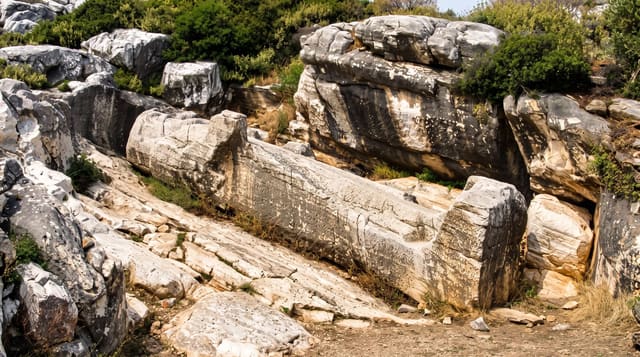
- The kouros statues - the giant unfinished ancient figures still lying in their quarries.
When to go
May, June and September are the sweet months - swimming weather, uncrowded villages and hiking temperatures for Zas. July and August fill the beaches without overwhelming the big island the way smaller ones drown; the meltemi wind delights windsurfers at Mikri Vigla and tests beach umbrellas everywhere else.
Before you go
Naxos does not perform the caldera drama of Santorini or Mykonos's polish - its glamour is groceries, sand and marble lanes, which is exactly the appeal. Beaches near town fill in peak weeks; the sands run far enough south that walking solves it. A car earns its cost - the mountain villages and quarries are the island's second half, and buses serve them thinly. Ferries in high summer sell out; book the spine routes ahead.
Nearby
The Small Cyclades sail from Naxos daily; Paros is twenty minutes across the channel.
Key facts
Source: Wikidata, item Q188527, read on 18 October 2026.
What to pack for Naxos
Chosen from what this place is for. Tap a kit for the full checklist.
- Broken-in walking shoes or boots - Grip and ankle support matter more than looks; never hike in brand-new boots. Find on Amazon
- Reef-safe sunscreen - High SPF that will not bleach the coral you are swimming over. Find on Amazon
- Quick-dry clothing - Board shorts or synthetics that shrug off spray and dry fast. Find on Amazon
- Head torch + spare batteries - Hands-free light is essential; caves are truly dark. Find on Amazon
Some links on this page are Amazon affiliate links - if you buy through them we may earn a small commission at no extra cost to you.
All packing kitsPlan your trip
Where to start if Naxos is going on the list.
Booking links on this page are affiliate links - if you book through them we may earn a small commission at no extra cost to you. It never changes what we write about a place.
Opening times, ticket prices and seasonal closures change - check the official source before you go: official site.