Apiranthos
A marble-paved village high on Naxos whose dialect and customs are close to those of the Cretan mountain villages.
Updated 21 October 2026
AI illustration
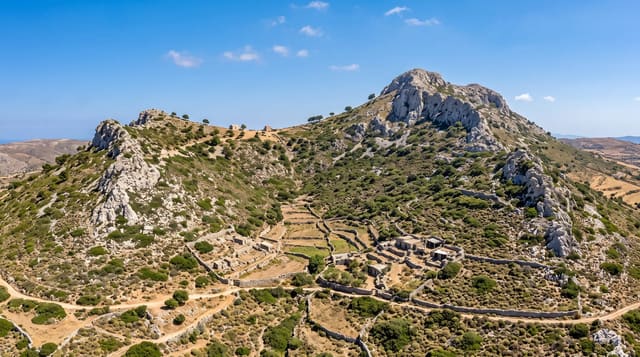
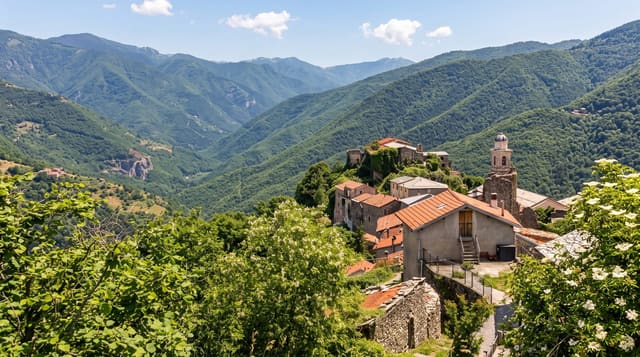
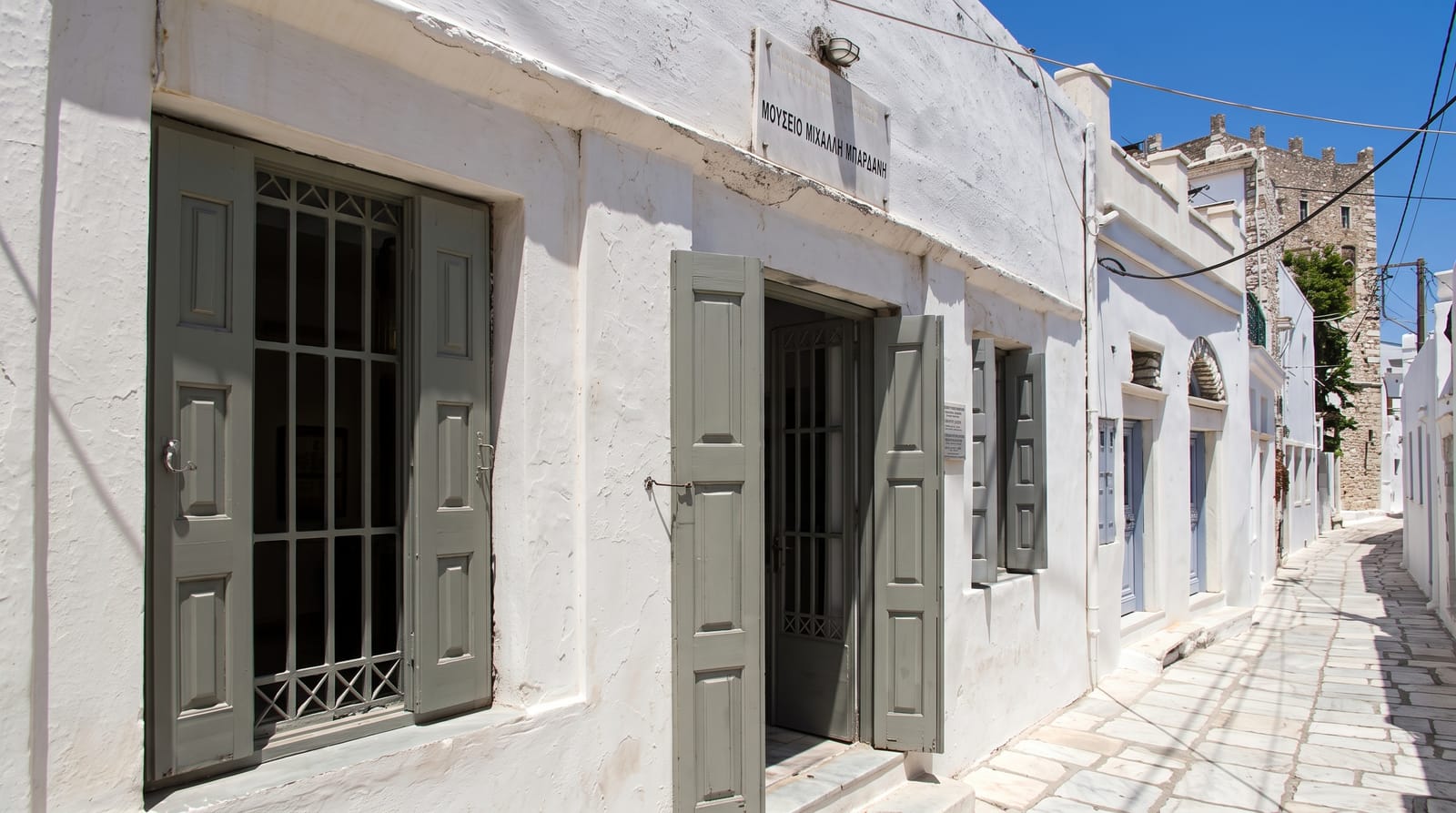
Apiranthos sits at 650 to 700 metres on the flank of Naxos's central range, and it is unlike the rest of the island: the lanes are paved in local marble, the houses are built of undressed stone rather than whitewashed, and two Venetian towers stand among them. Its dialect and customs are so close to those of the Cretan mountain villages that some historians think it was founded by Cretans, and older residents still speak with Cretan features. The village has a strong intellectual tradition and holds four small museums, archaeological, folklore, geological and natural history, unusual for a place of this size. Around it lie the emery mines that were once the island's main export, with an aerial cable line still visible on the slopes.
Highlights
- The marble lanes - streets paved in local stone, arched in places.
- The Venetian towers - fortified houses among the village buildings.
- The four museums - archaeology, folklore, geology and natural history.
- The emery workings - abandoned mine structures and cable lines nearby.
When to go
Spring for wildflowers on the slopes and clear air, autumn for warm days without crowds. Summer is cooler here than the coast, which makes it a common afternoon escape. Museums keep short and irregular hours.
What to expect
The village is small and quiet, with a few tavernas and shops, and the museums are one-room affairs often closed. Streets are steep and marble is slippery when wet. Buses from Chora are infrequent.
Nearby
Mount Zas trailheads and Filoti are west; Moutsouna and the east coast lie below.
Key facts
Source: Wikidata, item Q618224, read on 18 October 2026.
What to pack for Apiranthos
Chosen from what this place is for. Tap a kit for the full checklist.
- Comfortable walking shoes - Sightseeing means kilometres of pavement and cobbles daily. Find on Amazon
- A slim anti-theft daypack - Zips that close properly; keep it in front in crowds and on transit. Find on Amazon
- A refillable water bottle - Many cities have public fountains; save money and plastic. Find on Amazon
- A light layer + compact umbrella - For museum air-con and a sudden shower. Find on Amazon
Some links on this page are Amazon affiliate links - if you buy through them we may earn a small commission at no extra cost to you.
All packing kitsPlan your trip
Where to start if Apiranthos is going on the list.
Booking links on this page are affiliate links - if you book through them we may earn a small commission at no extra cost to you. It never changes what we write about a place.
Opening times, ticket prices and seasonal closures change - check the official source before you go: official site.