Paleochora
A town on a peninsula with a sandy beach on one side and pebble on the other, under the ruins of a Venetian castle.
Updated 19 October 2026
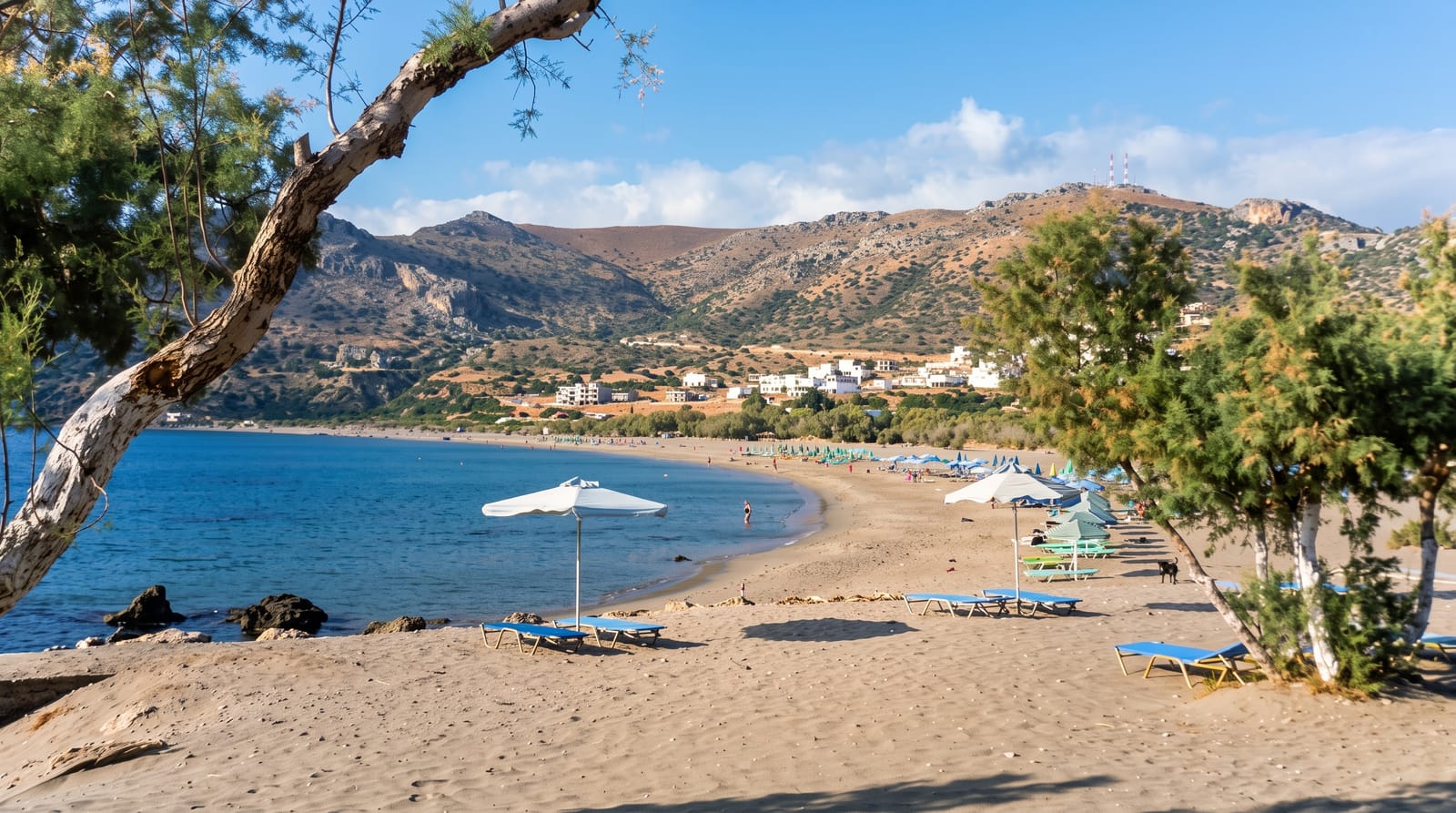
AI illustration
Paleochora sits on a low peninsula pushing into the Libyan Sea, which gives it two beaches: a wide sandy one on the western side, backed by tamarisk trees and shallow enough for children, and a pebble shore on the east where the fishing boats and the ferry dock. On the tip stand the ruins of the Venetian castle of Selino, built in 1278 by the Venetian general Marino Gradenigo, little more than walls and a gate but with a fine view along the coast. The town itself is low-rise and relaxed, its main street closed to traffic in the evening when tables come out. Boats run east along the roadless south coast to Sougia, Agia Roumeli, Loutro and Chora Sfakion, and south to the island of Gavdos, which makes Paleochora a natural base for the region.
History
In 1278 the Venetian general Marino Gradenigo built a fort here, the Selino Kasteli, which gave its name to the whole province, previously called Orina; it was wrecked in 1332 and rebuilt in 1334. In 1834 the English traveller Robert Pashley found the fort in ruins and the area uninhabited, resettlement began in 1866, and in December of that year, during the Cretan uprising, the British gunboat HMS Assurance took some 340 women and children from here to safety in Piraeus (Wikipedia, Palaiochora).
The main sights
- The double beaches - sand on the west side, pebble and harbour on the east.
- The castle ruins - Venetian walls on the tip of the peninsula.
- The evening street - the main road closed to cars for tables and walking.
- The ferry links - boats along the roadless south coast and to Gavdos.
When to go
May, June, September and October for warm sea and walking weather; the town stays partly open in winter, which is unusual for southern Crete. August is busy but never overwhelming.
Practical notes
The town is functional rather than picturesque, and its appeal is the pace and the beaches rather than architecture. Wind on the sandy side can be strong. Ferry schedules dictate day trips and are weather-dependent.
Nearby
Elafonisi lies west; Sougia, Agia Roumeli and the Samaria exit are east by boat.
Key facts
Source: Wikidata, item Q2047708, read on 18 October 2026.
What to pack for Paleochora
Chosen from what this place is for. Tap a kit for the full checklist.
- Travel rod + reel - A packable multi-piece rod fits in a case and covers most holiday fishing. Find on Amazon
- Reef-safe sunscreen - High SPF that will not bleach the coral you are swimming over. Find on Amazon
- Comfortable walking shoes - Sightseeing means kilometres of pavement and cobbles daily. Find on Amazon
- A small tackle selection - Hooks, weights, line and a few lures or flies suited to local waters. Find on Amazon
Some links on this page are Amazon affiliate links - if you buy through them we may earn a small commission at no extra cost to you.
All packing kitsPlan your trip
Where to start if Paleochora is going on the list.
Booking links on this page are affiliate links - if you book through them we may earn a small commission at no extra cost to you. It never changes what we write about a place.
Opening times, ticket prices and seasonal closures change - check the official source before you go: official site.