Kerameikos
The ancient cemetery and potters' quarter of Athens, where the city wall, two great gates and the road to Eleusis survive.
Updated 19 October 2026
AI illustration
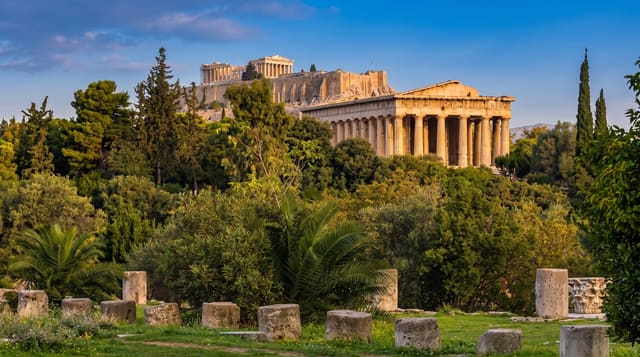
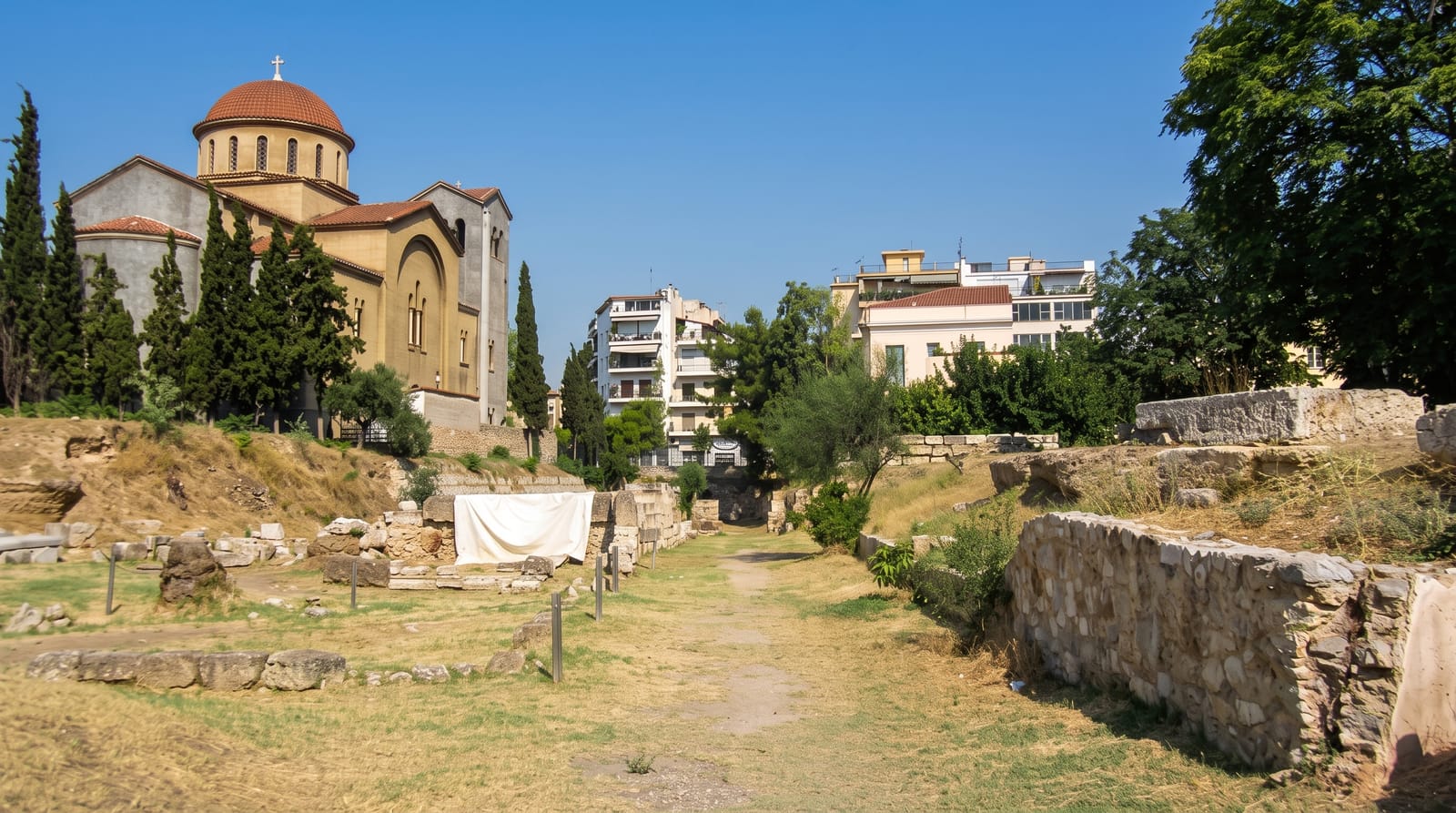
Kerameikos was the potters' quarter, which gave the world the word ceramic, and for centuries the principal burial ground of Athens. The site preserves a long stretch of the Themistoclean city wall of 478 BC and both of its major gates: the Dipylon, the largest gate in the ancient Greek world and the start of the road to the Academy, and the Sacred Gate, where the Sacred Way set off for Eleusis. Along the Street of Tombs stand grave monuments of remarkable quality, marble bulls, mourning sirens, reliefs of the dead taking leave of their families, mostly casts with the originals in the small on-site museum. Tortoises crawl through the grass and the Eridanos stream still runs across the site, which makes it one of the quietest archaeological corners in central Athens.
History
The area is named after the deme of the Kerameis, the potters, from keramos, "pottery clay", the root of the English word ceramic; once marshland along the Eridanos river, it was used as a cemetery as long ago as the 3rd millennium BC. The new city wall of 478 BC, built after the Persian sack of Athens in 480 BC at the suggestion of Themistocles, transformed it: the funerary sculptures were built into the wall, and two great gates were raised here, through which the Sacred Way and the road to the Academy left the city (Wikipedia, Kerameikos).
What to look for
- The Street of Tombs - grave monuments lining the ancient road out of the city.
- The Dipylon and Sacred Gates - foundations of the two main gates of Athens.
- The city wall - a long surviving section of the fifth-century BC defences.
- The site museum - original grave sculpture and pottery found here.
When to go
Spring for wildflowers and green grass among the stones; autumn for clear light. The site has some shade but not much, so avoid midsummer midday.
Things to know
The remains are foundations and low walls, so the site rewards a plan or a guide more than most. Many famous sculptures here are casts. In exchange, you often have the place nearly to yourself, minutes from the busiest streets in Athens.
Nearby
Monastiraki, Thiseio and the Ancient Agora lie east along Ermou; Gazi is immediately north.
Key facts
Source: Wikidata, item Q630974, read on 18 October 2026.
What to pack for Kerameikos
Chosen from what this place is for. Tap a kit for the full checklist.
- Comfortable walking shoes - Sightseeing means kilometres of pavement and cobbles daily. Find on Amazon
- Modest clothing - Shoulders and knees covered - the single most common requirement. Find on Amazon
- A slim anti-theft daypack - Zips that close properly; keep it in front in crowds and on transit. Find on Amazon
- A scarf or shawl - To cover the head or shoulders on entry; women especially at mosques. Find on Amazon
Some links on this page are Amazon affiliate links - if you buy through them we may earn a small commission at no extra cost to you.
All packing kitsPlan your trip
Where to start if Kerameikos is going on the list.
Booking links on this page are affiliate links - if you book through them we may earn a small commission at no extra cost to you. It never changes what we write about a place.
Opening times, ticket prices and seasonal closures change - check the official source before you go: official site.