Ideon Cave
A high cave on Psiloritis where, in one Cretan tradition, Zeus was raised, and where bronze shields were dedicated for centuries.
Updated 4 September 2026
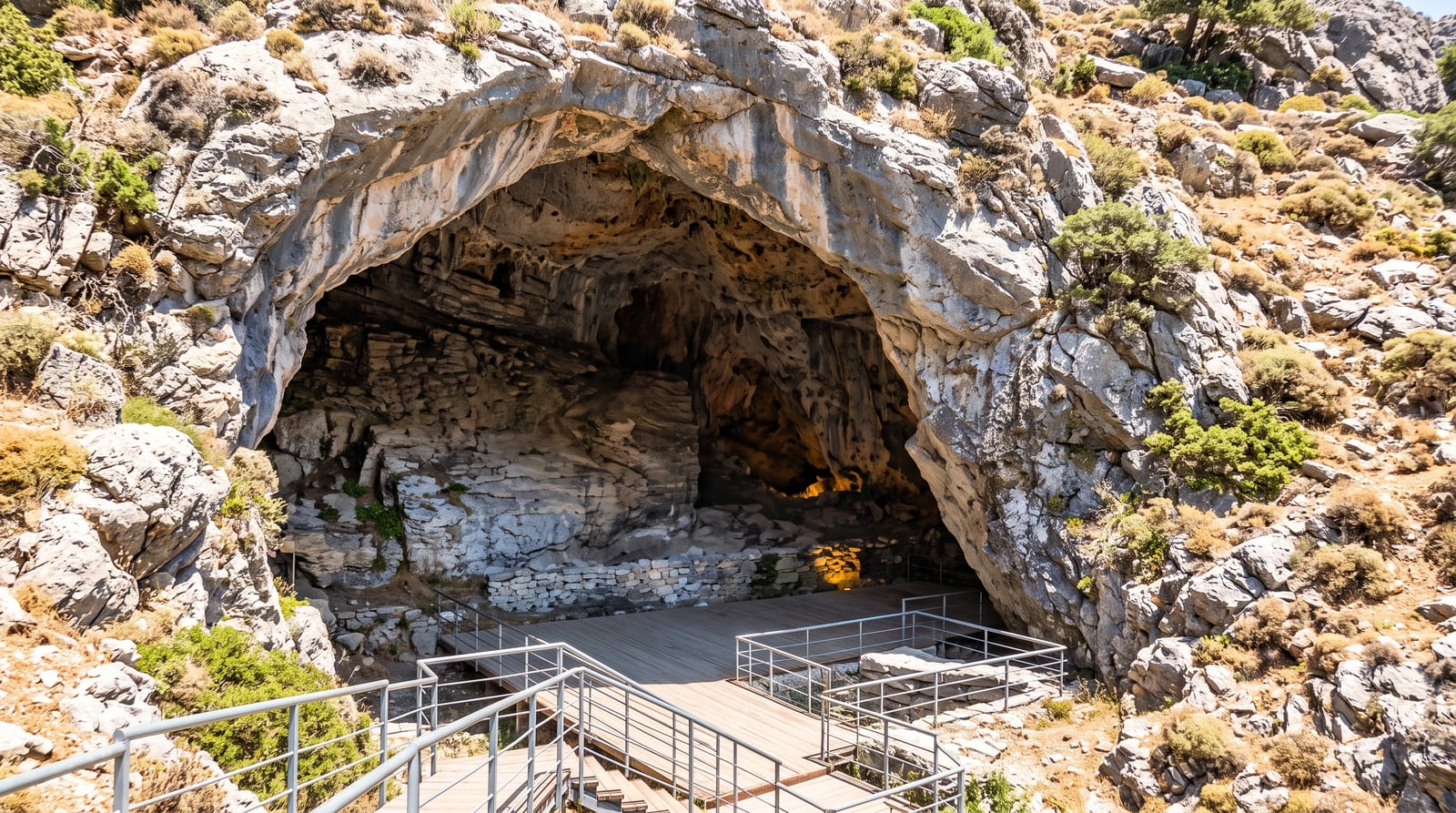
AI illustration
At 1,538 metres on the edge of the Nida plateau, the Idaean cave was one of the most important cult places in ancient Crete, a rival to the Dictaean cave for the claim to have sheltered the infant Zeus. Excavation produced extraordinary material: bronze shields with eastern-influenced decoration from the eighth and seventh centuries BC, tympana, jewellery, ivory and thousands of votive objects, showing continuous use from Minoan times into the Roman period. The cave itself is a wide, high chamber rather than a formation cave, entered from the plateau across open ground. The setting is what stays with visitors: a bare high plateau ringed by the Psiloritis ridges, with shepherds' stone huts, the mitata, scattered across the grass.
What's there
- The cave chamber - a wide, high opening rather than a formation cave.
- The Nida plateau - flat high grassland ringed by Psiloritis peaks.
- The mitata - round dry-stone shepherds' huts on the plateau.
- The excavation ground - the terraced area worked by archaeologists.
When to go
June to October, when the mountain road is clear; snow closes the plateau in winter and often into spring. Mornings are clearest, and afternoon cloud regularly covers the ridges.
Before you go
The cave interior is largely empty, fenced in part and unlit, with the finds housed in the Heraklion museum, so there is little to see inside. The plateau taverna opens irregularly. The road up is long and exposed with no fuel or services.
Nearby
Anogia village lies below; the Psiloritis summit trail and Sfendoni cave are in the same range.
Key facts
Source: Wikidata, item Q935991, read on 18 October 2026.
What to pack for Ideon Cave
Chosen from what this place is for. Tap a kit for the full checklist.
- Broken-in walking shoes or boots - Grip and ankle support matter more than looks; never hike in brand-new boots. Find on Amazon
- Head torch + spare batteries - Hands-free light is essential; caves are truly dark. Find on Amazon
- Warm base layers - Merino or synthetic against the skin - never cotton, which chills when damp. Find on Amazon
- Shelter suited to the place - Tent, tarp or hut booking - match it to the terrain and rules. Find on Amazon
Some links on this page are Amazon affiliate links - if you buy through them we may earn a small commission at no extra cost to you.
All packing kitsPlan your trip
Where to start if Ideon Cave is going on the list.
Booking links on this page are affiliate links - if you book through them we may earn a small commission at no extra cost to you. It never changes what we write about a place.
Opening times, ticket prices and seasonal closures change - check the official source before you go: official site.