Museum of Cretan Ethnology
A village museum of Cretan rural life organised by how people actually lived, from bread and oil to weaving and death.
Updated 19 October 2026
AI illustration
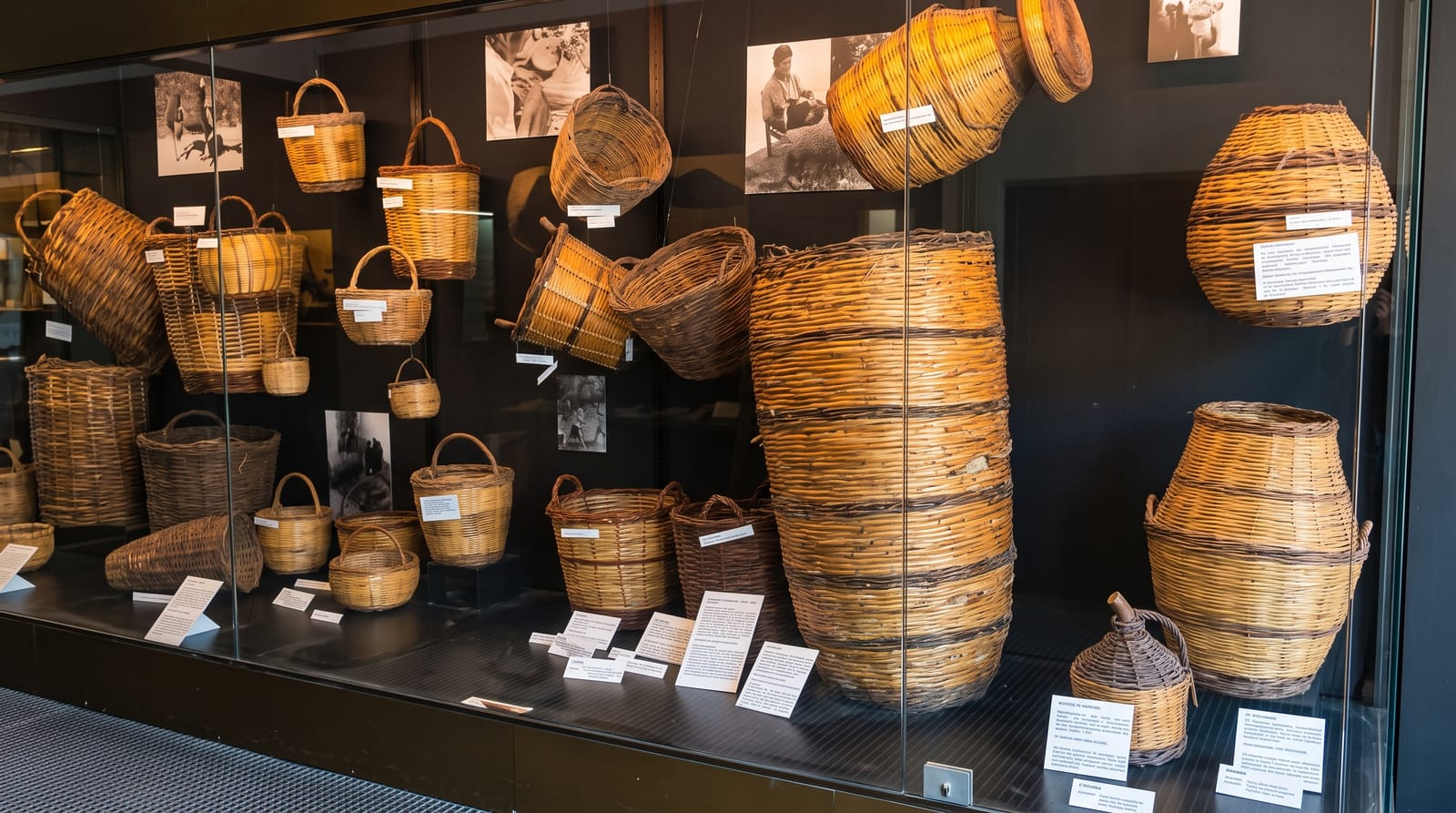
Founded in 1973 and housed in a purpose-built stone building in the village of Vori, this museum was recognised by the Council of Europe as one of the best of its kind in the 1990s, and it deserves the reputation. Instead of glass cases of anonymous objects, the displays are organised by the activities of rural life: growing and harvesting, bread, wine, olive oil, herding and cheese-making, weaving and dress, building, music, ritual and death, each with tools, films and explanation of how the work was done and why the objects took the shapes they did. The collection runs to thousands of items gathered from villages across Crete before the old rural economy vanished, and the labelling is unusually thoughtful in both Greek and English.
History
The museum was set up in 1973 on the initiative of the Mesara Cultural Association, which spent the following years planning the museum and its research centre; with support from the Ministry of Culture the building went up between 1977 and 1981, and in 2001 a complex of 2,800 square metres for research, education and conferences was added, funded by the European Union and the ministry (Wikipedia, Museum of Cretan Ethnology).
What you'll find
- The thematic halls - rooms built around farming, food, craft and ritual.
- The tools - working implements collected from Cretan villages.
- The textiles - looms, blankets and traditional dress.
- The explanations - detailed context on how each practice worked.
When to go
Year-round; the museum is indoors and quiet, an ideal counterpart to the Minoan sites of the Messara. It closes on some weekdays and in low season, so check hours before driving.
Good to know
Vori is a small village with limited facilities, and the museum is the only reason to stop. Visitors expecting archaeology will find ethnography instead. Allow at least ninety minutes to do it justice.
Nearby
Phaistos and Agia Triada are ten minutes away; Matala and the south coast lie beyond.
Key facts
Source: Wikidata, item Q11938049, read on 18 October 2026.
What to pack for Museum of Cretan Ethnology
Chosen from what this place is for. Tap a kit for the full checklist.
- Comfortable walking shoes - Sightseeing means kilometres of pavement and cobbles daily. Find on Amazon
- A slim anti-theft daypack - Zips that close properly; keep it in front in crowds and on transit. Find on Amazon
- A refillable water bottle - Many cities have public fountains; save money and plastic. Find on Amazon
- A light layer + compact umbrella - For museum air-con and a sudden shower. Find on Amazon
Some links on this page are Amazon affiliate links - if you buy through them we may earn a small commission at no extra cost to you.
All packing kitsPlan your trip
Where to start if Museum of Cretan Ethnology is going on the list.
Booking links on this page are affiliate links - if you book through them we may earn a small commission at no extra cost to you. It never changes what we write about a place.
Opening times, ticket prices and seasonal closures change - check the official source before you go: official site.