Anogia
A weaving and music village high on Psiloritis, home to many of Crete's best-known lyra players and singers.
Updated 4 September 2026
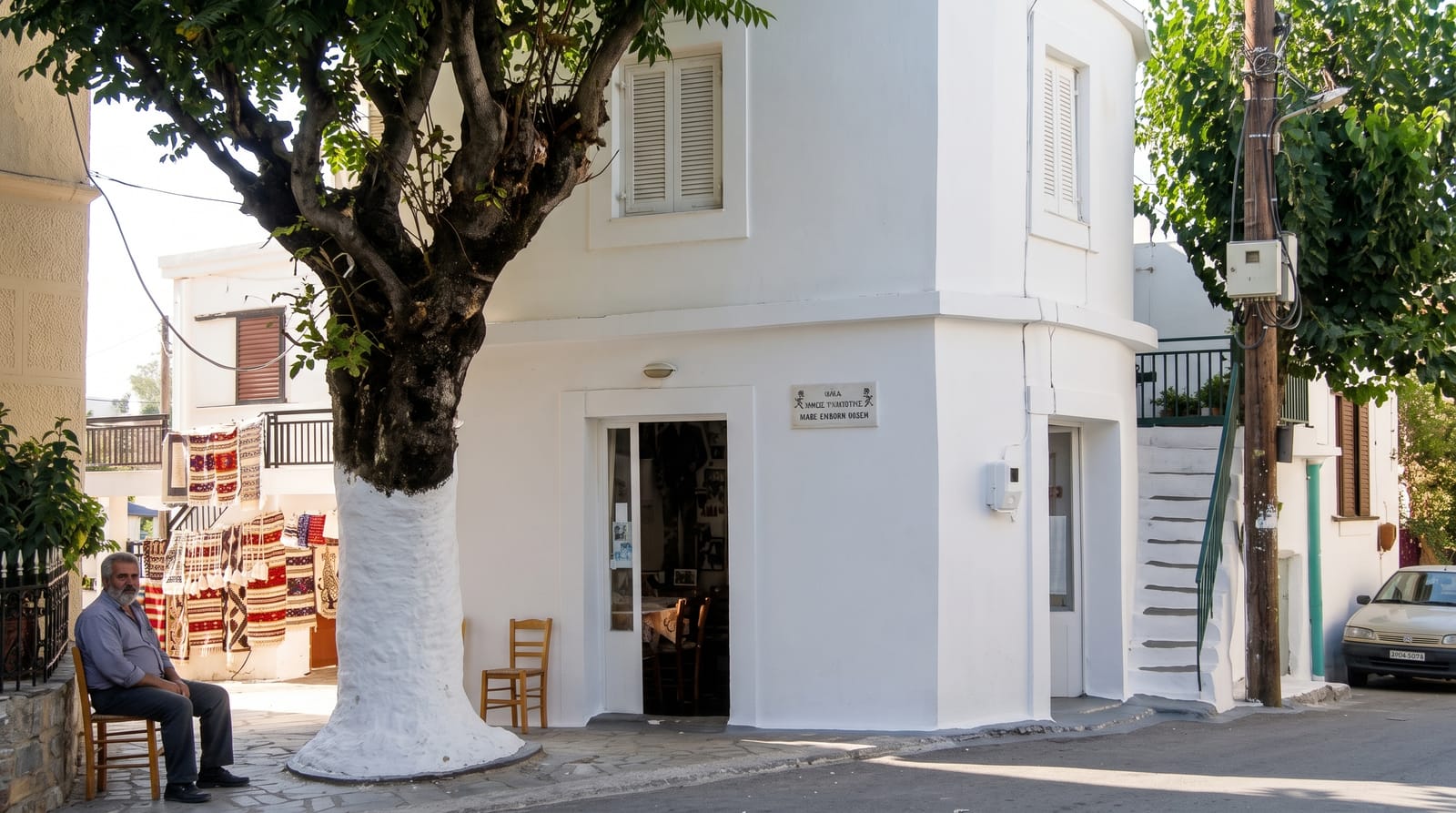
AI illustration
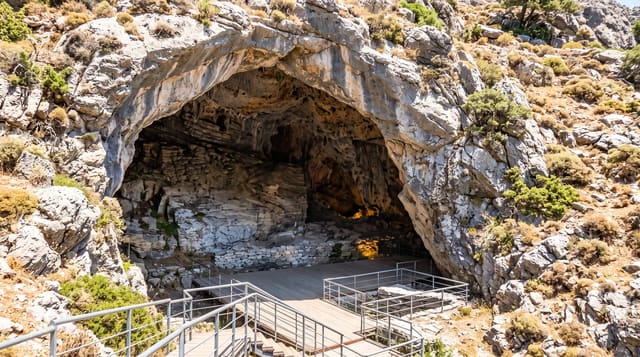
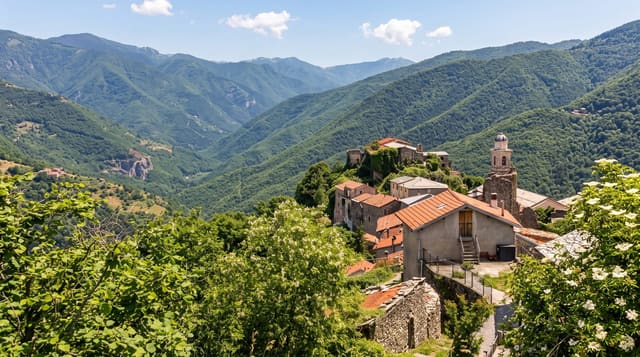
Anogia stands at about 740 metres on the northern flank of Psiloritis, a stone village of some two thousand people that has produced a remarkable share of Crete's musicians, including Nikos Xylouris and Psarantonis, and the sound of the lyra is genuinely part of daily life rather than a performance for visitors. The upper village keeps weaving workshops where older women work at looms in shopfronts, selling blankets and textiles; the lower village has the church square and tavernas serving the mountain cooking of the region, lamb, cheese, wild greens. From here the road climbs to the Nida plateau at 1,400 metres, the shepherds' mitata huts, the Ideon cave and the start of the Psiloritis summit route.
What to look for
- The weaving shops - looms working in the upper village streets.
- The music tradition - lyra and Cretan song, heard in tavernas and festivals.
- The mountain cooking - lamb, cheese and greens in the village tavernas.
- The Nida road - the climb to the high plateau and the Ideon cave.
When to go
May to October for the mountain roads and the summer festival season; winter brings snow and the village turns inward. Village feast days are the best time to hear music properly.
Before you go
Anogia is a working village, not a showpiece, and parts are plainly modern concrete. Textile shops sell a mixture of handwoven and imported goods. Evening music happens when it happens rather than on a schedule.
Nearby
The Nida plateau and Ideon cave are above; Rethymno and Heraklion are each about an hour away.
Key facts
Source: Wikidata, item Q567511, read on 18 October 2026.
What to pack for Anogia
Chosen from what this place is for. Tap a kit for the full checklist.
- Head torch + spare batteries - Hands-free light is essential; caves are truly dark. Find on Amazon
- Warm base layers - Merino or synthetic against the skin - never cotton, which chills when damp. Find on Amazon
- Comfortable walking shoes - Sightseeing means kilometres of pavement and cobbles daily. Find on Amazon
- Shelter suited to the place - Tent, tarp or hut booking - match it to the terrain and rules. Find on Amazon
Some links on this page are Amazon affiliate links - if you buy through them we may earn a small commission at no extra cost to you.
All packing kitsPlan your trip
Where to start if Anogia is going on the list.
Booking links on this page are affiliate links - if you book through them we may earn a small commission at no extra cost to you. It never changes what we write about a place.
Opening times, ticket prices and seasonal closures change - check the official source before you go: official site.