Didyma Craters
Two great collapse dolines in the Argolid hills, the smaller one hiding two medieval chapels in its wall.
Updated 14 October 2026

AI illustration
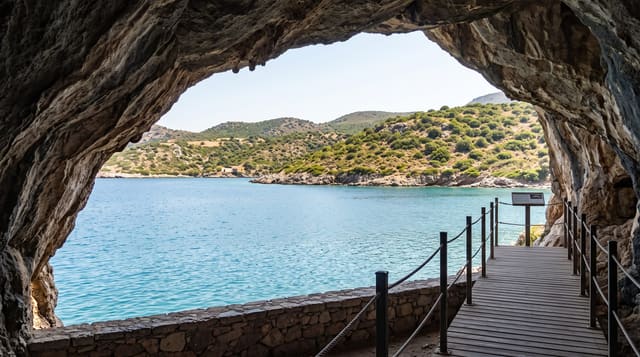
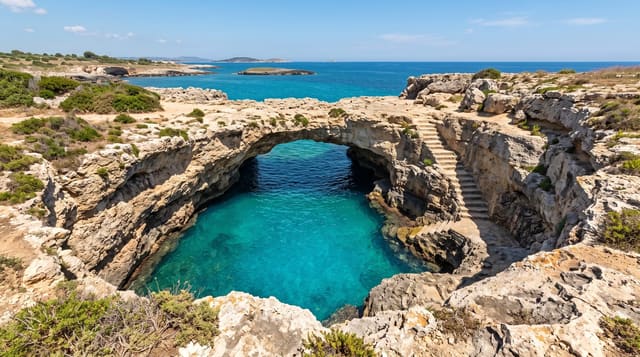
The two Didyma craters are sinkholes formed when underground limestone caverns collapsed, leaving circular pits in the middle of farmland. The larger is about 150 metres across and some 90 metres deep with sheer sides and a wooded floor, best seen from the rim. The smaller, some 60 metres wide, is the reason people come: a narrow tunnel through the rock leads into the pit, and against the far wall stand two chapels, Agios Georgios of the thirteenth century and the Metamorphosis, built into a rock overhang with fragments of fresco still on the plaster. Standing inside, with the circle of sky above and figs growing out of the walls, is the memorable part. Farmers work olive groves right up to the rims, and there are no barriers at the big crater.
What's there
- The small crater - a tunnel entrance leading to two chapels inside the pit.
- The frescoed chapels - medieval churches under an overhang in the crater wall.
- The large crater - a 150-metre sinkhole with sheer walls and a wooded floor.
- The rim farmland - olive groves running up to the edge.
When to go
Spring for green and wildflowers inside the pits; autumn for clear light. Midday sun reaches the crater floor and makes photography easier.
What to expect
The large crater has no fence and no path down, so keep well back from crumbling edges. The tunnel to the small crater is low and dark in places. Signposting from the village is poor and a map helps. No facilities at all.
Nearby
Ermioni and the Argolic coast lie south; Nafplio is about an hour north.
What to pack for Didyma Craters
Chosen from what this place is for. Tap a kit for the full checklist.
- Broken-in walking shoes or boots - Grip and ankle support matter more than looks; never hike in brand-new boots. Find on Amazon
- Head torch + spare batteries - Hands-free light is essential; caves are truly dark. Find on Amazon
- Layers + a waterproof shell - Mountain weather turns fast; a packable rain jacket saves the day. Find on Amazon
- Grippy closed shoes - Cave floors are wet, muddy and slick with formations. Find on Amazon
Some links on this page are Amazon affiliate links - if you buy through them we may earn a small commission at no extra cost to you.
All packing kitsPlan your trip
Where to start if Didyma Craters is going on the list.
Booking links on this page are affiliate links - if you book through them we may earn a small commission at no extra cost to you. It never changes what we write about a place.
Opening times, ticket prices and seasonal closures change - check the official source before you go: official site.