Franchthi Cave
A seaside cave occupied almost continuously for 35,000 years, from Palaeolithic hunters to the first farmers.
Updated 21 October 2026
AI illustration
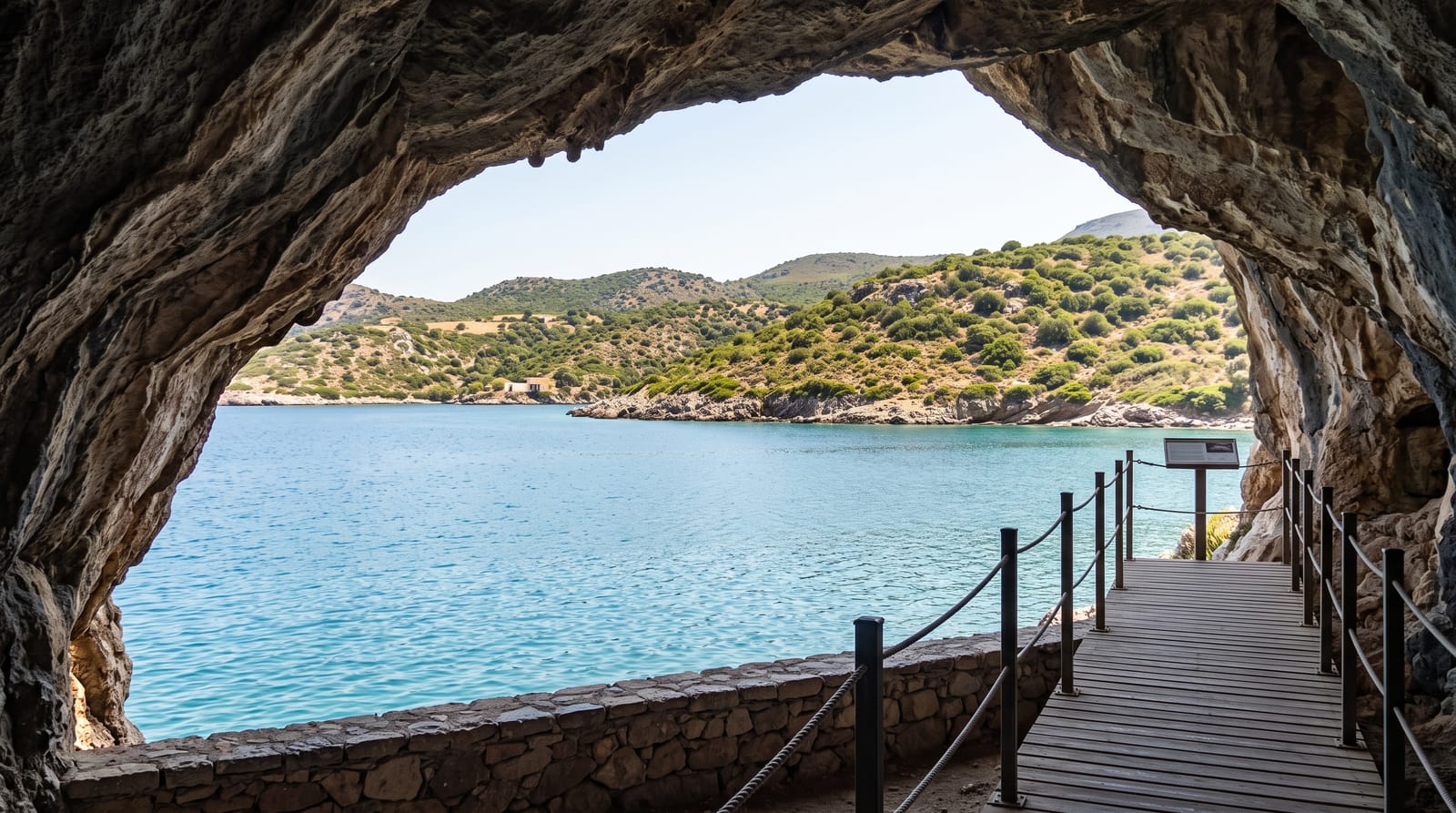
Franchthi is one of the most important prehistoric sites in Europe because of an unusual continuity: excavations found human occupation running from around 38,000 BC through the Palaeolithic, Mesolithic and Neolithic to about 3,000 BC, a record of the same shelter used as ice ages came and went, as sea levels rose, and as hunting and gathering gave way to farming. The deposits contained obsidian from Melos from as early as about 13,000 BC, among the earliest evidence of seafaring, along with deep-sea fish bones, early cultivated grain and one of the oldest burials in Greece. The cave itself is a wide mouth in a limestone headland on the bay of Koilada, reached by a path along the shore; the interior is protected and closed, but the setting and scale are the point.
What you'll find
- The cave mouth - a wide opening in the headland above the water.
- The bay of Koilada - the fishing harbour and boatyards across the water.
- The coastal path - a short walk along the rocks to the entrance.
- The excavation terraces - the shaped ground where digs took place.
When to go
Spring and autumn; the path is exposed and hot in summer. Morning light falls into the cave mouth. Swimming is possible from the rocks below in warm months.
What to expect
The cave interior is fenced off, so the visit is a walk to a viewpoint with no display, no guide and almost no signage. The significance is scientific and invisible on the ground. The path is rocky and unsuitable for wheelchairs.
Nearby
Koilada village and its boatyards are across the bay; Ermioni and Porto Heli lie south.
Key facts
Source: Wikidata, item Q1441331, read on 18 October 2026.
What to pack for Franchthi Cave
Chosen from what this place is for. Tap a kit for the full checklist.
- Travel rod + reel - A packable multi-piece rod fits in a case and covers most holiday fishing. Find on Amazon
- Reef-safe sunscreen - High SPF that will not bleach the coral you are swimming over. Find on Amazon
- Head torch + spare batteries - Hands-free light is essential; caves are truly dark. Find on Amazon
- Comfortable walking shoes - Sightseeing means kilometres of pavement and cobbles daily. Find on Amazon
Some links on this page are Amazon affiliate links - if you buy through them we may earn a small commission at no extra cost to you.
All packing kitsPlan your trip
Where to start if Franchthi Cave is going on the list.
Booking links on this page are affiliate links - if you book through them we may earn a small commission at no extra cost to you. It never changes what we write about a place.
Opening times, ticket prices and seasonal closures change - check the official source before you go: official site.