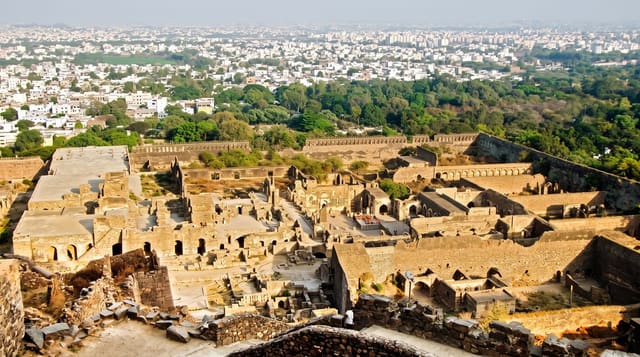
Fort Metal Cross
A whitewashed British fort above Dixcove harbour in the Western Region, restored and still overlooking the fishing bay.
Updated 18 October 2026
UNESCO World Heritage
Fort Metal Cross was built by the English between 1683 and 1692 above the natural harbour at Dixcove, one of the better anchorages on this stretch of coast, and it was first called Fort Dixcove. It passed to the Dutch in 1868 in an exchange of coastal possessions, and they renamed it Fort Metalen Kruis; it returned to Britain four years later, but the name stuck as Fort Metal Cross. The structure survives well: whitewashed walls, corner bastions, cannon on the platforms and rooms around a courtyard, restored in part by a private lease arrangement in the 2000s. From the walls the view runs down over the fishing harbour where boats are built and beached. It is one of the components of the World Heritage inscription on Ghana's forts and castles.
History
The fort, originally Fort Dixcove, stands on a promontory at Infuma in Dixcove, and in 1712 John Kanu, a local ally of the Prussians at nearby Groß Friedrichsburg, besieged it twice without taking it. It served as a station for timber from the nearby forest and for repairing ships, and as a slave prison during the slave trade. In the great exchange of forts of 1868 it passed to the Dutch, who renamed it Fort Metalen Kruis, and on 6 April 1872 it returned to Britain with the whole Dutch Gold Coast, keeping the translated name Fort Metal Cross; in 1979 it became part of the World Heritage Site of Ghana's forts and castles (Wikipedia, Fort Metal Cross).
The main sights
- The whitewashed walls - the restored bastioned structure above the bay.
- Cannon platforms - the gun positions facing the anchorage.
- The courtyard rooms - the chambers around the interior.
- Dixcove harbour - the fishing bay and boatbuilding below.
When to go
November to March in the dry season. Mornings are best for light and heat. Visits are guided and the fort keeps daytime hours.
What to expect
The restoration has been partial and its history contested locally. Guiding varies in quality and depth. The road to Dixcove is rough in places. Fees and photography charges are sometimes negotiated on arrival.
Nearby
Busua beach lies a short distance east; Butre is beyond it.
Key facts
Source: Wikidata, item Q1427246, read on 18 October 2026.
What to pack for Fort Metal Cross
Chosen from what this place is for. Tap a kit for the full checklist.
- Travel rod + reel - A packable multi-piece rod fits in a case and covers most holiday fishing. Find on Amazon
- Comfortable walking shoes - Sightseeing means kilometres of pavement and cobbles daily. Find on Amazon
- A small tackle selection - Hooks, weights, line and a few lures or flies suited to local waters. Find on Amazon
- A slim anti-theft daypack - Zips that close properly; keep it in front in crowds and on transit. Find on Amazon
Some links on this page are Amazon affiliate links - if you buy through them we may earn a small commission at no extra cost to you.
All packing kitsPlan your trip
Where to start if Fort Metal Cross is going on the list.
Booking links on this page are affiliate links - if you book through them we may earn a small commission at no extra cost to you. It never changes what we write about a place.
Opening times, ticket prices and seasonal closures change - check the official source before you go: official site.