Golconda Fort
The diamond-trading citadel where the Koh-i-Noor passed through, built with acoustics that carry a clap to the summit.
Updated 19 October 2026
AI illustration
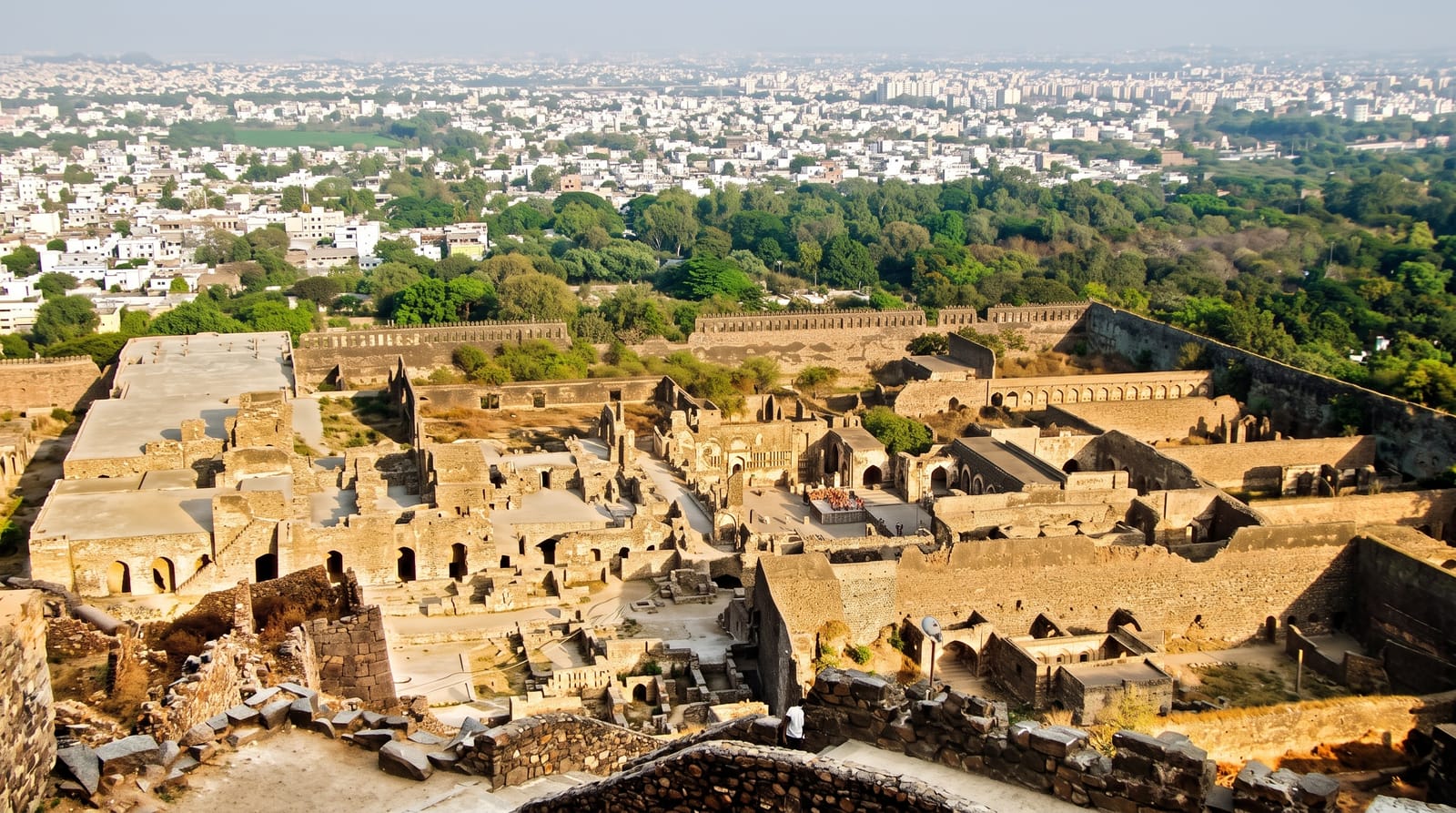
Golconda began as a mud fort and was rebuilt in granite by the Qutb Shahis from the sixteenth century, with an outer wall of about eleven kilometres, eight gates and a citadel on a hill inside. Its wealth came from diamonds: the mines of the region supplied the Koh-i-Noor, the Hope and other famous stones, and Golconda was the market where they were cut and traded, which is why the name became a byword for wealth. Its acoustics are the other feature: a hand clapped under the dome at the Fateh Darwaza can be heard at the Bala Hisar pavilion on the summit, a kilometre away, and was used as a warning system.
History
Golconda began as a small mud fort of the Kakatiya dynasty, its name probably from the Telugu Gollakonda, "shepherd's hill", and it later passed to the Bahmani kingdom by a grant from the Raja of Warangal. Quli Qutb Shah, sent by the Bahmanis as governor, made it the seat of his rule around 1501, and the Qutb Shahi kingdom grew rich here, with a strong cotton-weaving industry in the early seventeenth century; in 1687, after an eight-month siege, Aurangzeb took the fort, ended the Qutb Shahi dynasty and captured its last king, Abul Hasan Qutb Shah (Wikipedia, Golconda).
What to look for
- The acoustic clap - a sound at the gate audible at the summit pavilion.
- The granite walls - eleven kilometres of outer circuit with eight gates.
- The Bala Hisar - the citadel pavilion at the top of the hill.
- The diamond history - the trade that made Golconda a byword for wealth.
When to go
October to March; the climb is exposed and Hyderabad summers are severe. Mornings are best. The evening sound and light show runs in two or three languages.
Things to know
The climb to the summit is around four hundred steps with no shade. The acoustic demonstration is crowded and often drowned out by other visitors clapping. Much of the interior is ruined.
Nearby
The Qutb Shahi tombs lie north; the Charminar is east.
Key facts
Source: Wikidata, item Q4141623, read on 18 October 2026.
What to pack for Golconda Fort
Chosen from what this place is for. Tap a kit for the full checklist.
- Broken-in walking shoes or boots - Grip and ankle support matter more than looks; never hike in brand-new boots. Find on Amazon
- Comfortable walking shoes - Sightseeing means kilometres of pavement and cobbles daily. Find on Amazon
- Layers + a waterproof shell - Mountain weather turns fast; a packable rain jacket saves the day. Find on Amazon
- A slim anti-theft daypack - Zips that close properly; keep it in front in crowds and on transit. Find on Amazon
Some links on this page are Amazon affiliate links - if you buy through them we may earn a small commission at no extra cost to you.
All packing kitsPlan your trip
Where to start if Golconda Fort is going on the list.
Booking links on this page are affiliate links - if you book through them we may earn a small commission at no extra cost to you. It never changes what we write about a place.
Opening times, ticket prices and seasonal closures change - check the official source before you go: official site.