Göttingen
A university town whose graduates kiss a bronze goose girl, and where a great many Nobel physicists worked.
Updated 19 October 2026
AI illustration
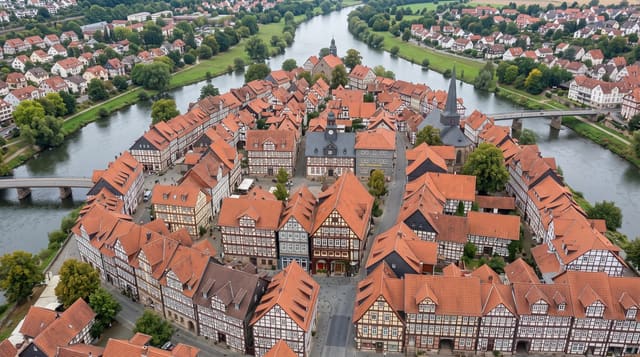
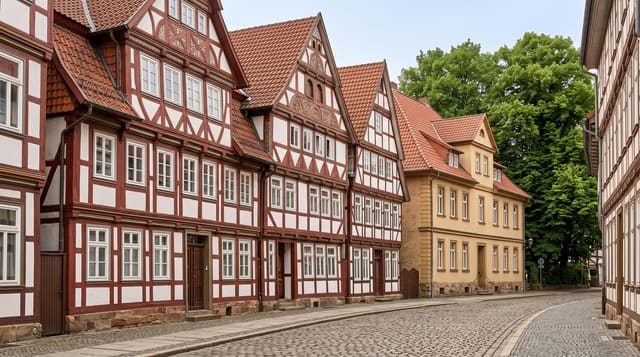
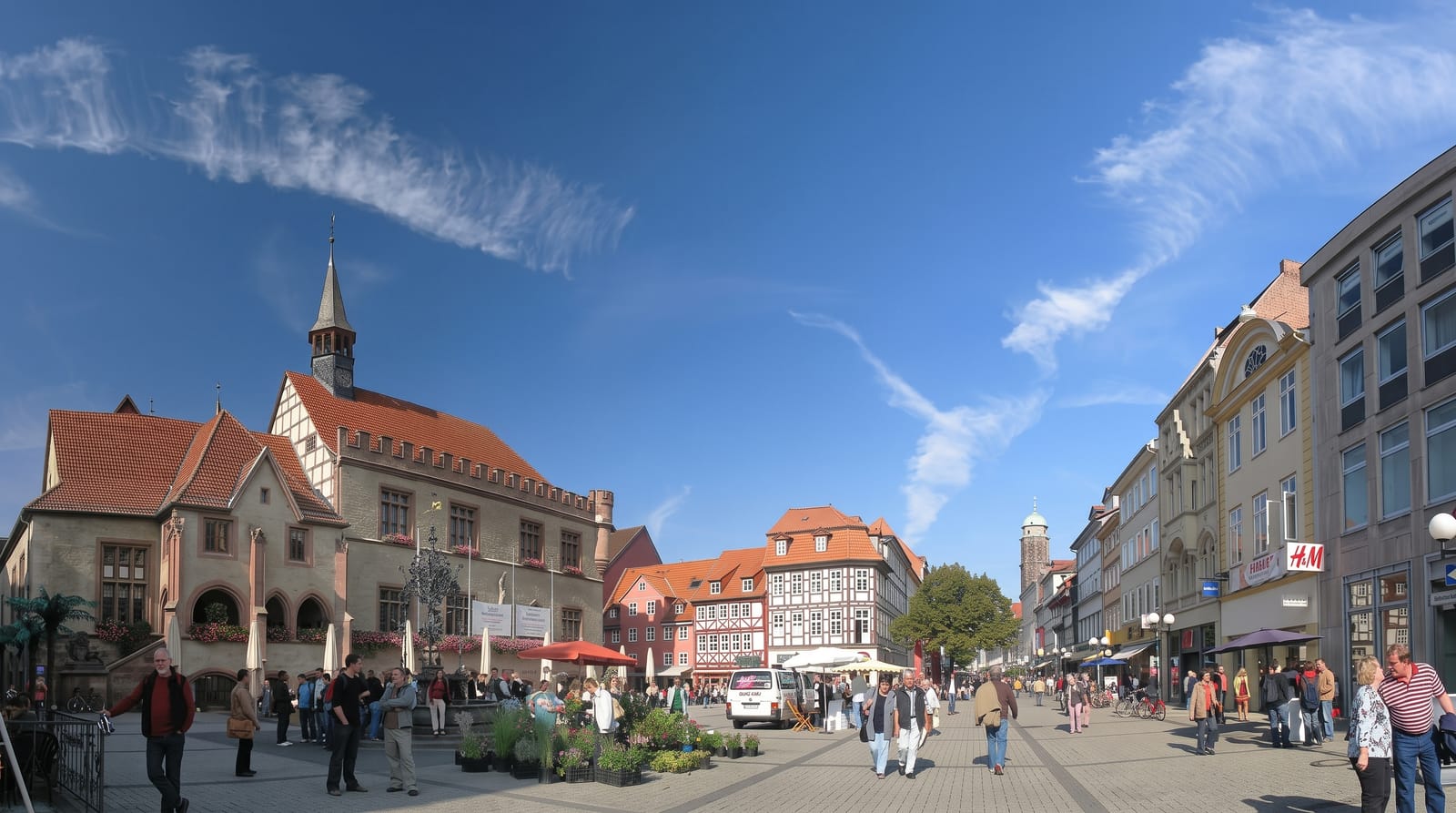
The university was founded in 1734 and became one of the leading centres of mathematics and physics: Gauss, Riemann, Hilbert, Born and Heisenberg all worked here, and the town claims a long list of Nobel laureates connected to it, many marked on plaques on the houses where they lived. In the 1920s the physics institute was central to the development of quantum mechanics. Tradition has doctoral graduates kiss the Gänseliesel, a bronze goose girl on the market square fountain of 1901, after their defence; the practice is officially prohibited and universally ignored. The old town keeps timber-framed houses and the medieval town hall.
History
Göttingen grew from a village called Gutingi, probably named after a stream, the Gote, where archaeology points to settlement as early as the 7th century; it is first recorded in 953, when Emperor Otto I gave property there to the Moritz monastery in Magdeburg. Across the Leine stood Grona, a fortress recorded from 915 and used as an Ottonian imperial palace, with 18 royal and imperial visits between 941 and 1025; Henry II, who built the church of St Alban in Gutingi, died there, and the citizens destroyed the fortress between 1323 and 1329. The present town, laid out as a pentagon around a trading settlement at the river crossing, was probably founded between 1150 and 1180, perhaps by Henry the Lion, and stayed subject to the Welf dukes of Brunswick-Lüneburg rather than becoming a free imperial city; the old village was taken inside the walls around 1360, and the present St Albani church dates from 1423 (Wikipedia, Göttingen).
Highlights
- The Gänseliesel - a 1901 fountain figure kissed by new doctors.
- The plaques - houses marked with the scientists who lived in them.
- The physics history - the institute where quantum mechanics developed.
- The old town - timber-framed streets around the medieval town hall.
When to go
April to October; the town is livelier in term time. Museums close Mondays. The old town is compact and walkable.
Good to know
Much of the scientific heritage is plaques rather than sites. The old town is small. The city outside it is ordinary.
Nearby
Hann. Münden lies west; Einbeck is north.
Key facts
Source: Wikidata, item Q3033, read on 18 October 2026.
What to pack for Göttingen
Chosen from what this place is for. Tap a kit for the full checklist.
- Comfortable walking shoes - Sightseeing means kilometres of pavement and cobbles daily. Find on Amazon
- Modest clothing - Shoulders and knees covered - the single most common requirement. Find on Amazon
- A slim anti-theft daypack - Zips that close properly; keep it in front in crowds and on transit. Find on Amazon
- A scarf or shawl - To cover the head or shoulders on entry; women especially at mosques. Find on Amazon
Some links on this page are Amazon affiliate links - if you buy through them we may earn a small commission at no extra cost to you.
All packing kitsPlan your trip
Where to start if Göttingen is going on the list.
Booking links on this page are affiliate links - if you book through them we may earn a small commission at no extra cost to you. It never changes what we write about a place.
Opening times, ticket prices and seasonal closures change - check the official source before you go: official site.