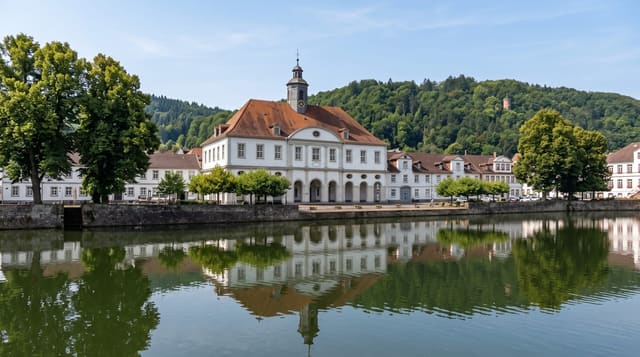
Einbeck
The town whose exported beer gave Bavaria the word bock, through a Munich mispronunciation of its name.
Updated 19 October 2026
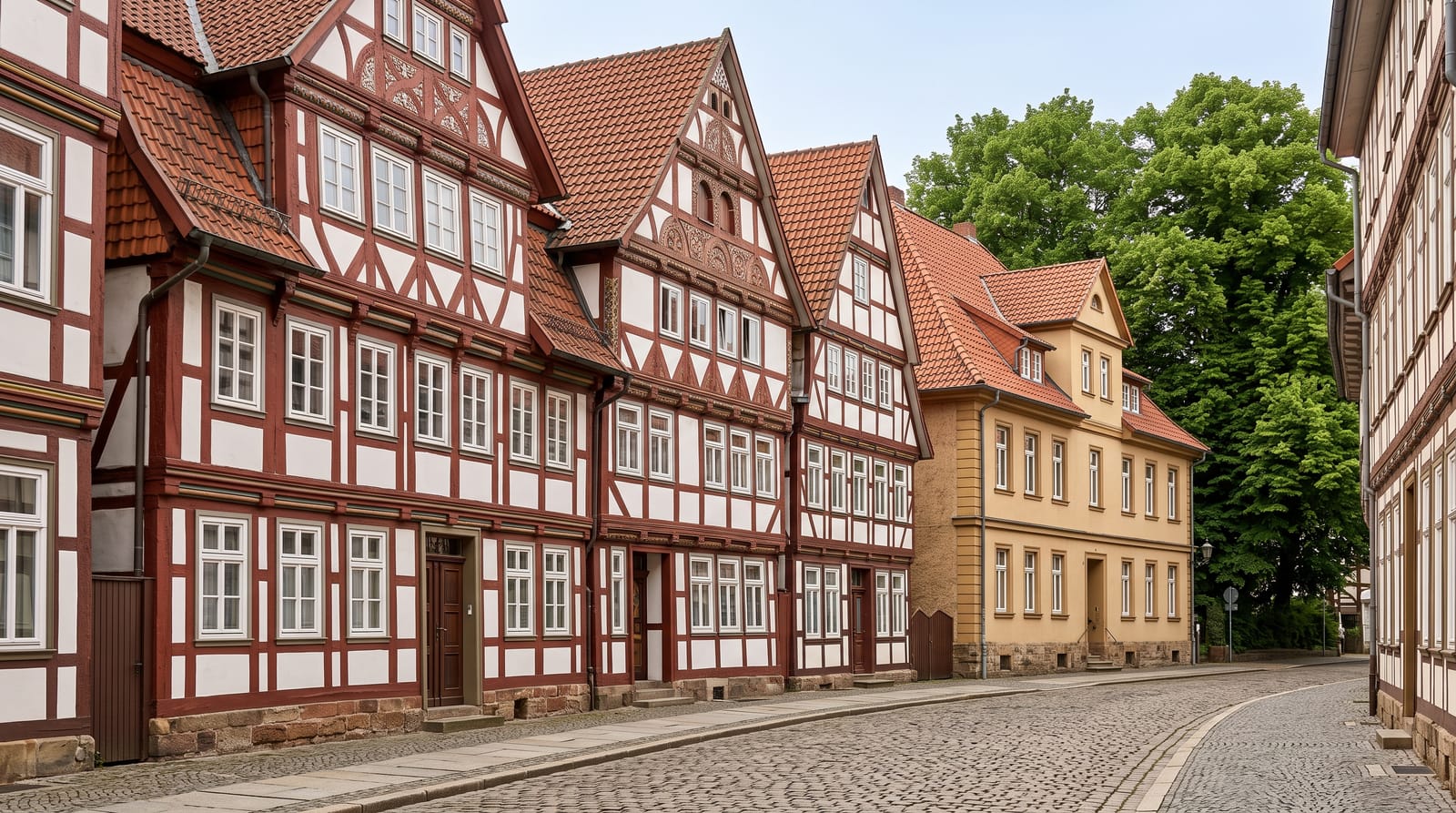
AI illustration
Einbeck brewed on a commercial scale from the fourteenth century, with brewing rights attached to houses rather than to breweries: around seven hundred citizens held the right and brewed in turn using a communal kettle wheeled from house to house, which is why the old houses have wide arched doorways tall enough to take it. The beer was exported across northern Europe. When a Bavarian duke brought an Einbeck brewer to Munich in the seventeenth century, the local pronunciation of Ainpöckisch shortened to bock, which became the German word for a strong beer. Around four hundred timber-framed houses survive, many with carved and painted beams.
History
In the early Middle Ages several villages stood along the Ilme in the middle Leine valley before Einbeck was founded, and a stift of Saint Alexander, founded by a local count's grandson, grew into an important sanctuary. Beer was brewed in the larger houses that held brewing rights, still recognisable by their wide arched doors, made to take the brewing kettle; in Munich the name Einbeck was misheard as "oan bock", a billy goat, and when the ducal brewhouse copied the taste, Bock beer was born (Wikipedia, Einbeck).
What's there
- The wide doorways - arches built to admit the communal brewing kettle.
- The carved beams - painted and carved timber fronts across the old town.
- The bock origin - the name that became a beer style through Munich.
- The brewing museum - the town's trade and its export reach.
When to go
April to October; the town is quiet and rarely crowded. Museums close Mondays. A bicycle museum and a car museum also operate in the town.
What to expect
The town is small and quickly walked. Museums keep limited hours. The modern brewery is a commercial operation, not historic.
Nearby
Göttingen lies south; Hameln is northwest.
Key facts
Source: Wikidata, item Q47244, read on 18 October 2026.
What to pack for Einbeck
Chosen from what this place is for. Tap a kit for the full checklist.
- Padded shorts - The one thing that makes a full day in the saddle bearable. Find on Amazon
- Comfortable walking shoes - Sightseeing means kilometres of pavement and cobbles daily. Find on Amazon
- Helmet - Bring your own if you have a good one; rentals vary wildly. Find on Amazon
- A slim anti-theft daypack - Zips that close properly; keep it in front in crowds and on transit. Find on Amazon
Some links on this page are Amazon affiliate links - if you buy through them we may earn a small commission at no extra cost to you.
All packing kitsPlan your trip
Where to start if Einbeck is going on the list.
Booking links on this page are affiliate links - if you book through them we may earn a small commission at no extra cost to you. It never changes what we write about a place.
Opening times, ticket prices and seasonal closures change - check the official source before you go: official site.