German Mining Museum
A museum with a full-scale mine built beneath it, twenty metres down and two and a half kilometres long.
Updated 21 October 2026
AI illustration
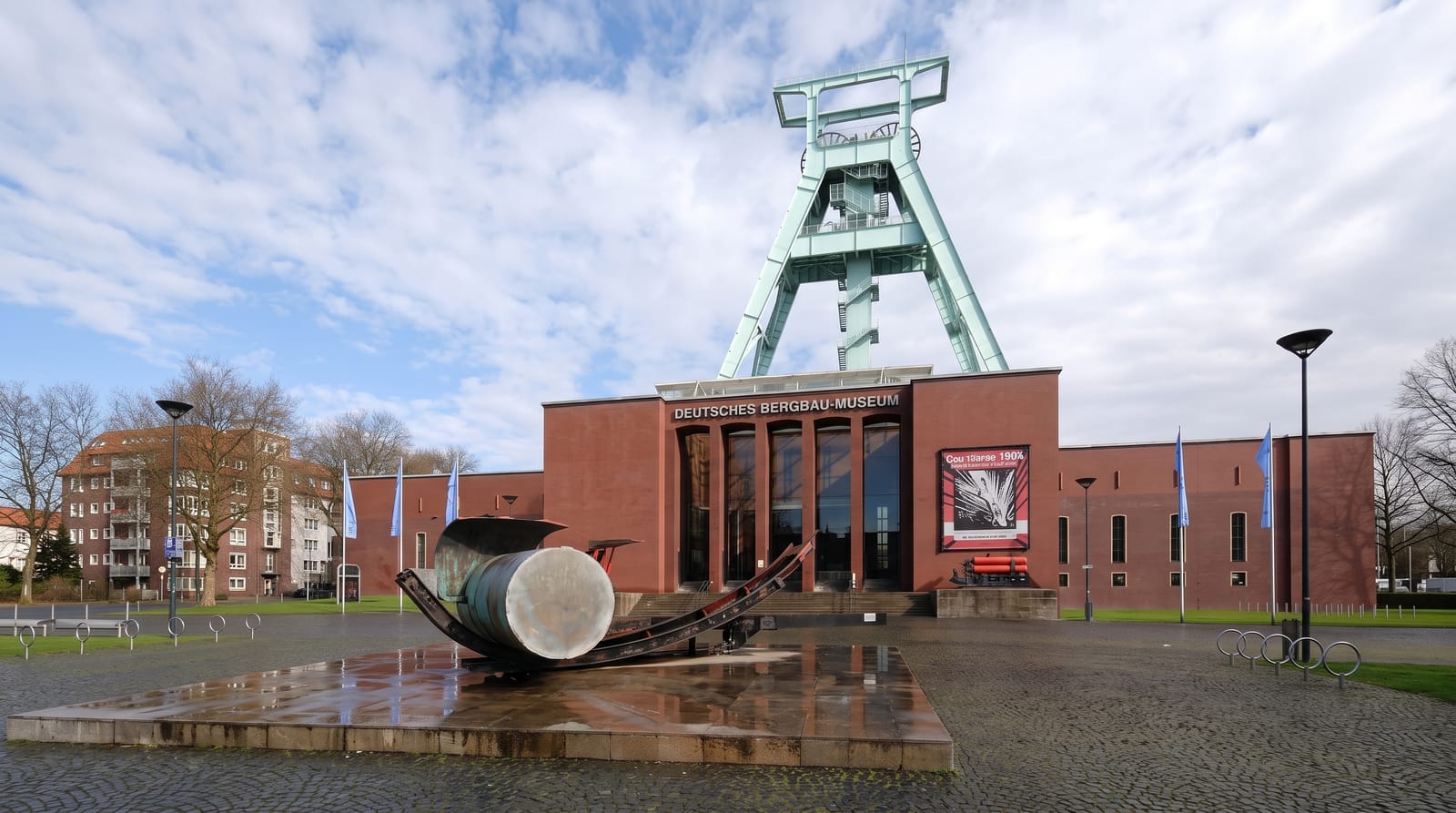
Founded in 1930, the Deutsches Bergbau-Museum is the largest mining museum in the world and combines a public museum with a research institute. Beneath it lies a demonstration mine built specifically for the purpose from 1935 onward, about twenty metres down with two and a half kilometres of galleries fitted with real machinery from different periods, from hand tools to shearer loaders, so visitors walk through working conditions across a century. It is not a former mine but a purpose-built teaching facility. The winding tower above, visible across the city, was moved here in 1973 and 1974 from the closed Germania colliery and carries a viewing platform.
Highlights
- The demonstration mine - 2.5 kilometres of galleries twenty metres down.
- The machinery - real equipment from hand tools to modern cutters.
- The winding tower - a headframe moved from a colliery in 1973.
- The research collections - mineral, technology and mining history holdings.
When to go
Year-round; the museum closes Mondays. The underground tour takes about an hour and involves walking and steps. School groups fill weekdays in term time.
Before you go
The mine below is purpose-built, not an original working pit. The tour involves a lot of walking with low sections. It closes Mondays.
Nearby
Essen's Zollverein lies west; Dortmund is east.
Key facts
Source: Wikidata, item Q896952, read on 18 October 2026.
What to pack for German Mining Museum
Chosen from what this place is for. Tap a kit for the full checklist.
- Head torch + spare batteries - Hands-free light is essential; caves are truly dark. Find on Amazon
- Comfortable walking shoes - Sightseeing means kilometres of pavement and cobbles daily. Find on Amazon
- Grippy closed shoes - Cave floors are wet, muddy and slick with formations. Find on Amazon
- A slim anti-theft daypack - Zips that close properly; keep it in front in crowds and on transit. Find on Amazon
Some links on this page are Amazon affiliate links - if you buy through them we may earn a small commission at no extra cost to you.
All packing kitsPlan your trip
Where to start if German Mining Museum is going on the list.
Booking links on this page are affiliate links - if you book through them we may earn a small commission at no extra cost to you. It never changes what we write about a place.
Opening times, ticket prices and seasonal closures change - check the official source before you go: official site.