Zollverein Coal Mine
A geometric colliery and coking plant in the Ruhr, kept whole after closure and now a walkable industrial site with museums.
Updated 18 October 2026

AI illustration
UNESCO World Heritage
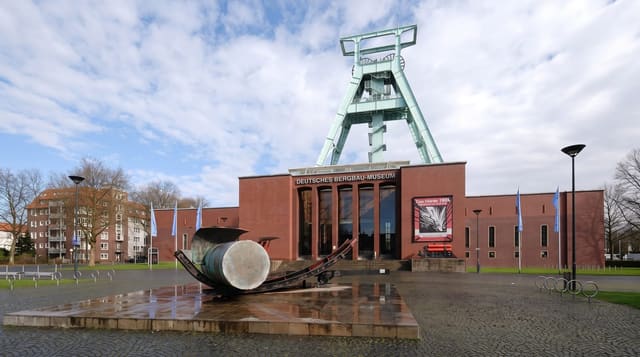
Shaft 12 at Zollverein was designed in the late 1920s by architects who applied Bauhaus logic to a coal mine: identical steel frames, brick infill, everything symmetrical around the winding tower. It worked as a colliery until 1986 and the coking plant beside it until 1993, and instead of demolition the whole complex was kept, cleaned and opened up. You now walk the route the coal took, riding a long exterior escalator into the coal washery, which holds the Ruhr Museum. The coking plant next door is a kilometre of ovens and pipework you can circle on foot, with a pool improvised in one yard in summer and an ice track laid between the batteries in winter.
History
The industrialist Franz Haniel founded the mine in 1847, naming his company after the German Customs Union, and began sinking Shaft 1 on 18 February that year; coal was first mined in 1851, and by 1890 three shafts produced a million tonnes a year, making Zollverein the most productive mine in Germany. Shafts and ventilation shafts were added through the 1890s and 1900s against firedamp accidents, output reached about 2.5 million tonnes a year by the First World War, and Shaft 12, opened in 1932 in the New Objectivity style, earned it the name of the most beautiful coal mine in the world. Mining ended on 23 December 1986 and the coking plant, built in 1957-1961, closed on 30 June 1993, and on 14 December 2001 the complex was inscribed on the World Heritage List (Wikipedia, Zollverein Coal Mine Industrial Complex).
What's there
- Shaft 12 winding tower - the red steel double frame that became the emblem of the whole Ruhr.
- The Ruhr Museum - the region's story installed inside the working levels of the old coal washery.
- The coking plant - a kilometre of ovens, gas pipes and cooling towers, walkable end to end.
- The escalator into the washery - a long orange climb up the outside of the building.
When to go
The grounds are open all day, every day, and free, so timing is about light rather than hours. Winter suits the site: low sun on rusted steel, and the ice track at the coking plant. Museums keep normal hours and close on some public holidays. Guided tours reach areas that are otherwise locked, and those need booking ahead.
Things to know
It is big and hard surfaced, with long walks between buildings and little shade or shelter, so the weather decides the day. Much of the machinery sits behind glass or fencing, and without a tour or the audio guide the industrial detail stays opaque. The surrounding district is workaday. Photographers arrive in numbers on clear evenings.
Nearby
Essen's cathedral treasury, the Baldeney lake shore, and the landscape park in Duisburg's old ironworks.
Key facts
Source: Wikidata, item Q122026, read on 18 October 2026.
What to pack for Zollverein Coal Mine
Chosen from what this place is for. Tap a kit for the full checklist.
- Comfortable walking shoes - Sightseeing means kilometres of pavement and cobbles daily. Find on Amazon
- Modest clothing - Shoulders and knees covered - the single most common requirement. Find on Amazon
- A slim anti-theft daypack - Zips that close properly; keep it in front in crowds and on transit. Find on Amazon
- A scarf or shawl - To cover the head or shoulders on entry; women especially at mosques. Find on Amazon
Some links on this page are Amazon affiliate links - if you buy through them we may earn a small commission at no extra cost to you.
All packing kitsPlan your trip
Where to start if Zollverein Coal Mine is going on the list.
Booking links on this page are affiliate links - if you book through them we may earn a small commission at no extra cost to you. It never changes what we write about a place.
Opening times, ticket prices and seasonal closures change - check the official source before you go: official site.