Dresden and the Frauenkirche
The baroque jewel on the Elbe - a city of magnificent palaces and churches, its great domed Frauenkirche painstakingly rebuilt from wartime rubble.
Updated 4 August 2026
AI illustration
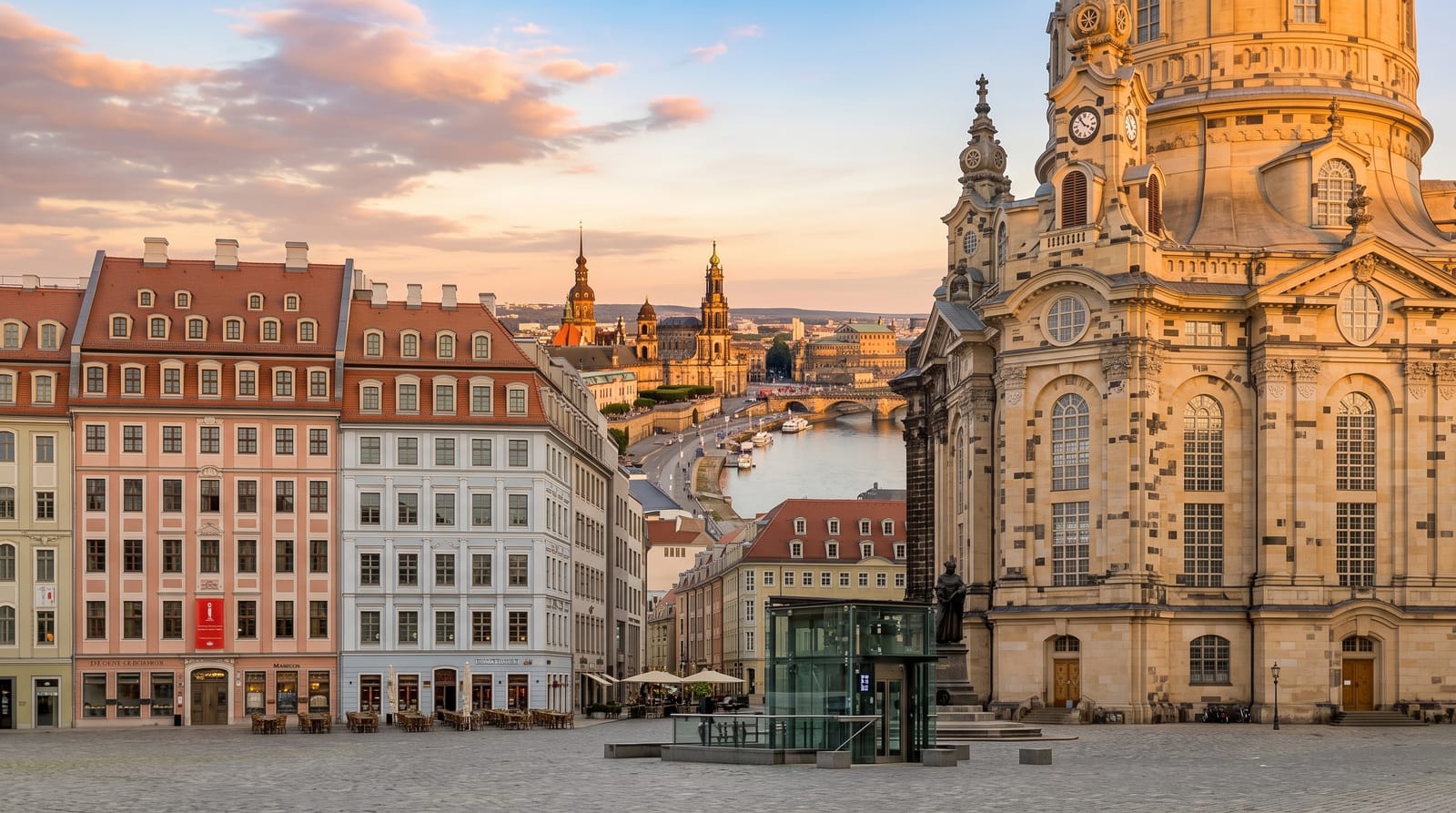
Dresden was once called the Florence on the Elbe for its magnificent baroque skyline of palaces, churches and galleries, before it was devastated by bombing in 1945. Painstakingly rebuilt, above all its great domed Frauenkirche raised anew from the rubble as a symbol of reconciliation, the restored old town, the Zwinger palace and the art treasures make it one of Germany's most beautiful cities.
What you'll find
- The Frauenkirche - the great domed church rebuilt from wartime rubble.
- The Zwinger - the baroque palace and its galleries.
- The old town skyline - the restored baroque riverfront on the Elbe.
- The art treasures - the Old Masters gallery and the Green Vault treasury.
When to go
Late spring to autumn for the mildest weather and river views; December for the famous Striezelmarkt Christmas market. The old town is compact and walkable in a day.
Practical notes
The old town is a beautiful reconstruction rather than an untouched historic centre, which is part of its moving story. It is compact, so the sights cluster within a walk. The surrounding modern city is less lovely than the restored core.
Nearby
The palaces of the Elbe and Saxon Switzerland's cliffs are nearby; Meissen porcelain town is close.
What to pack for Dresden and the Frauenkirche
Chosen from what this place is for. Tap a kit for the full checklist.
- Comfortable walking shoes - Sightseeing means kilometres of pavement and cobbles daily. Find on Amazon
- A slim anti-theft daypack - Zips that close properly; keep it in front in crowds and on transit. Find on Amazon
- A refillable water bottle - Many cities have public fountains; save money and plastic. Find on Amazon
- A light layer + compact umbrella - For museum air-con and a sudden shower. Find on Amazon
Some links on this page are Amazon affiliate links - if you buy through them we may earn a small commission at no extra cost to you.
All packing kitsPlan your trip
Where to start if Dresden and the Frauenkirche is going on the list.
Booking links on this page are affiliate links - if you book through them we may earn a small commission at no extra cost to you. It never changes what we write about a place.
Opening times, ticket prices and seasonal closures change - check the official source before you go: official site.