Old Havana
The colonial core of Havana around four plazas, inscribed in 1982, restored in parts and visibly failing in others.
Updated 18 October 2026
AI illustration
UNESCO World Heritage
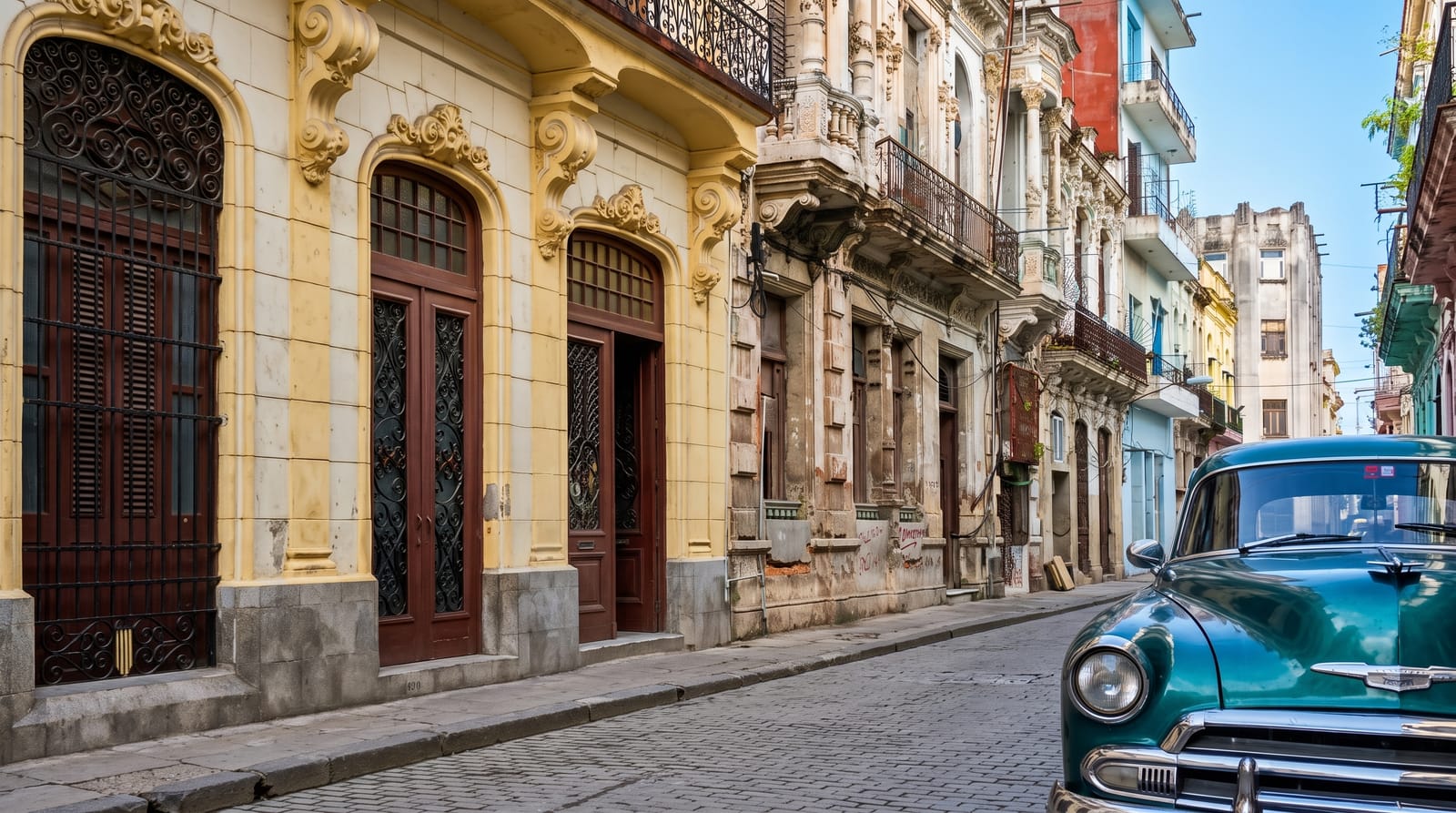
Habana Vieja is the walled colonial city, laid out around four squares - the Plaza de Armas, the Plaza Vieja, the Plaza de San Francisco and the Cathedral square - and inscribed in 1982 together with the fortifications that guarded the harbour. Restoration has run since the 1990s under the city historian's office, funded largely by tourism, and the result is uneven by design: restored blocks stand beside buildings that are propped, subdivided and occasionally collapsing. People live in all of it, which is what keeps it from being a set.
History
The Spanish founded Havana on 16 November 1519 on its natural harbour, and it became the stopping point of the treasure galleons crossing between the New World and the Old, and in the 17th century one of the main shipbuilding centres. In 1555 the French corsair Jacques de Sores took the town, plundered it and burned much of it, after which the Spanish brought in soldiers and built forts and walls, beginning with the Castillo de la Real Fuerza in 1558. In 1982 Old Havana was inscribed on the World Heritage List for its Baroque and neoclassical architecture, its fortifications and its place on the route to the New World, and the restoration that followed under the Office of the City Historian, directed by Eusebio Leal, turned it into a major tourist attraction (Wikipedia, Old Havana).
What you'll find
- The four plazas - Armas, Vieja, San Francisco and the Cathedral square, each with its own character.
- The cathedral - a baroque front in coral stone, deliberately asymmetrical, on the smallest of the squares.
- The restored and the unrestored - blocks brought back beside buildings still propped and subdivided.
- The street life - music from doorways, domino games, and laundry across the balconies above.
When to go
November to April is the dry season and the most comfortable. Hurricane season runs from June to November. Evenings are when the streets fill; the middle of the day is hot and the squares empty out.
What to expect
Practical conditions in Cuba are genuinely difficult: cash is essential, the currency situation is confusing and changes, internet is limited, and shortages affect restaurants and shops. Building collapses in Havana are real and streets are closed without notice. Hustlers work the tourist streets persistently.
Nearby
The Malecon runs west from the old town, the Colon cemetery is in Vedado, and the fortresses are across the harbour.
Key facts
Source: Wikidata, item Q1165566, read on 18 October 2026.
What to pack for Old Havana
Chosen from what this place is for. Tap a kit for the full checklist.
- Comfortable walking shoes - Sightseeing means kilometres of pavement and cobbles daily. Find on Amazon
- Modest clothing - Shoulders and knees covered - the single most common requirement. Find on Amazon
- A slim anti-theft daypack - Zips that close properly; keep it in front in crowds and on transit. Find on Amazon
- A scarf or shawl - To cover the head or shoulders on entry; women especially at mosques. Find on Amazon
Some links on this page are Amazon affiliate links - if you buy through them we may earn a small commission at no extra cost to you.
All packing kitsPlan your trip
Where to start if Old Havana is going on the list.
Booking links on this page are affiliate links - if you book through them we may earn a small commission at no extra cost to you. It never changes what we write about a place.
Opening times, ticket prices and seasonal closures change - check the official source before you go: official site.