The Malecon
Eight kilometres of seawall along the Havana waterfront, used as a bench, a fishing spot and the city's living room.
Updated 19 October 2026
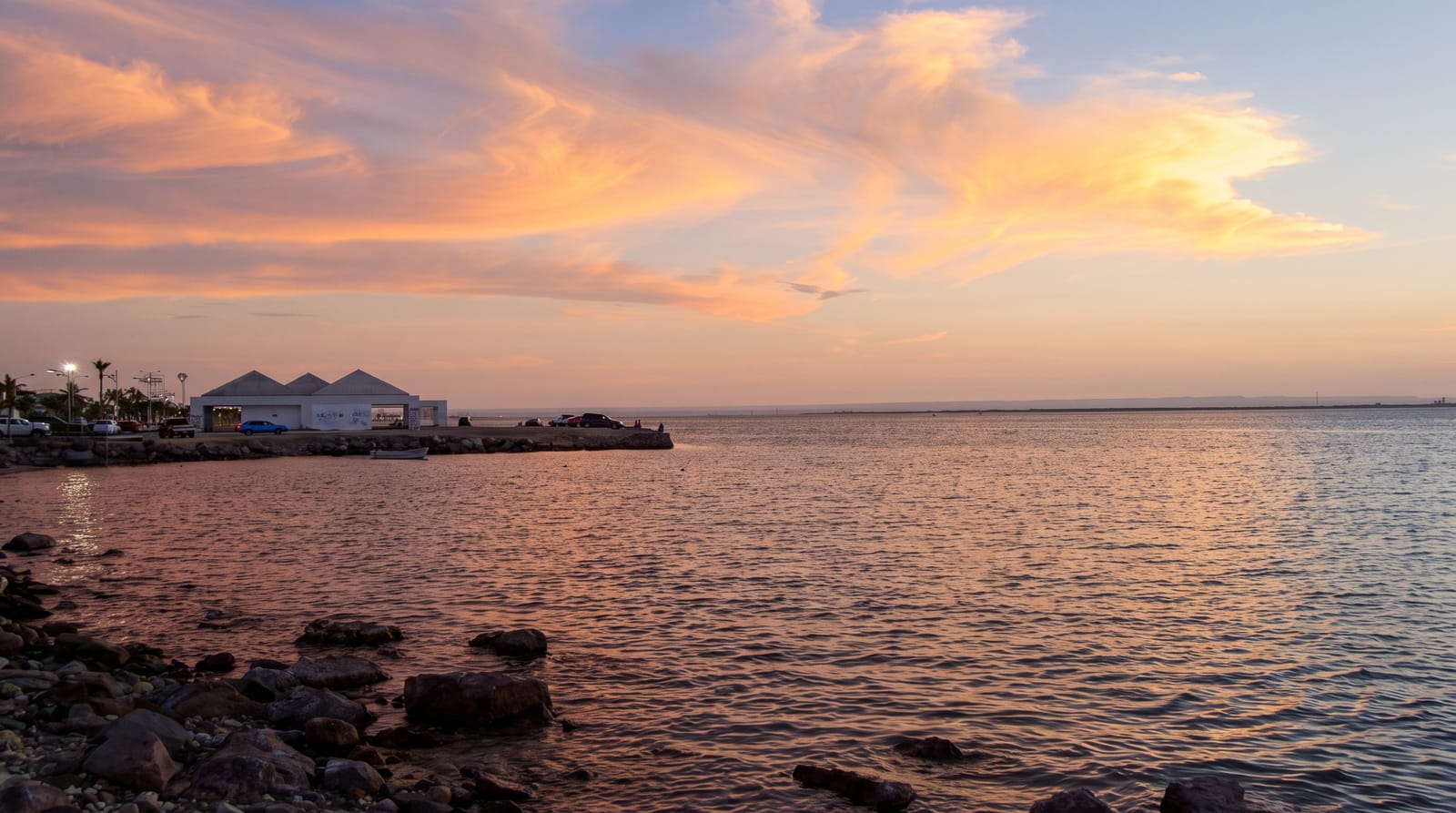
The Malecón was begun in 1901 and runs about eight kilometres from the mouth of Havana harbour west past Centro Habana and Vedado. It is a road and a seawall, and the wall is the point: people sit on it all evening, fish off it, drink on it, court on it and play music on it, and the buildings facing it are a peeling parade of everything Havana built between 1900 and 1958. When a northerly front comes through, waves break clean over the wall and across the road, which the city treats as normal.
History
The Malecón was begun in 1901 to protect Havana from the sea, above all from the northerly fronts that drove waves against the houses of San Lázaro. The completion of the first 500 metres was marked with a roundabout at the Paseo del Prado, said to be the first in Cuba built of reinforced concrete, where bands played on Sundays, and the fashionable Miramar Hotel went up opposite. Later governments carried it on: to the monument to the USS Maine between 1902 and 1921, to K and L streets in Vedado by 1923, along the bay entrance in 1927-1930, to the Avenida de los Presidentes by 1930 and to the mouth of the Almendares between 1948 and 1952, about 8 kilometres in all. In 1957 and 1958 the road was the circuit of the Cuban Grand Prix (Wikipedia, Malecón, Havana).
What to look for
- The seawall - a low parapet used continuously as seating along the whole length.
- The building line - salt-eaten facades from every decade of the first half of the twentieth century.
- The fishermen - hand lines and inner tubes worked off the wall all day.
- The waves - northerly swells breaking over the wall and across the road in winter.
When to go
November to April is the dry season, though winter fronts bring the biggest waves. Sunset is the hour when the wall fills. Summer evenings are hot and humid but the Malecon is at its busiest.
Things to know
The waves flood the road often enough that sections close, and the spray corrodes everything, including cameras. Restoration work has been going on for years and scaffolding moves along the line. Attention from hustlers is constant at the Old Havana end.
Nearby
Old Havana is at the eastern end, and Vedado and the Hotel Nacional are along the western stretch.
Key facts
Source: Wikidata, item Q12597, read on 18 October 2026.
What to pack for The Malecon
Chosen from what this place is for. Tap a kit for the full checklist.
- Travel rod + reel - A packable multi-piece rod fits in a case and covers most holiday fishing. Find on Amazon
- Strong insect repellent - DEET or picaridin; the jungle is where bites and disease risk are highest. Find on Amazon
- Comfortable walking shoes - Sightseeing means kilometres of pavement and cobbles daily. Find on Amazon
- A small tackle selection - Hooks, weights, line and a few lures or flies suited to local waters. Find on Amazon
Some links on this page are Amazon affiliate links - if you buy through them we may earn a small commission at no extra cost to you.
All packing kitsPlan your trip
Where to start if The Malecon is going on the list.
Booking links on this page are affiliate links - if you book through them we may earn a small commission at no extra cost to you. It never changes what we write about a place.
Opening times, ticket prices and seasonal closures change - check the official source before you go: official site.