Villefranche-sur-Mer
A deep natural harbour under coloured facades, with a covered medieval street running under the houses.
Updated 19 October 2026

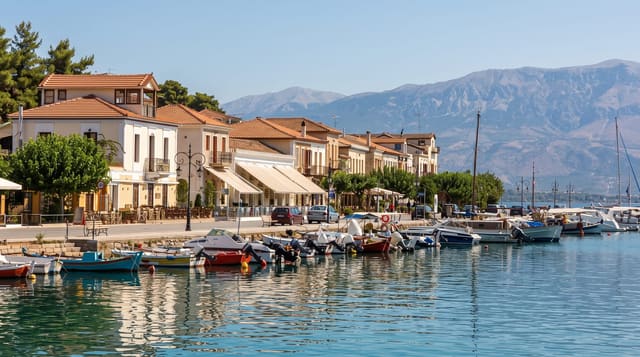
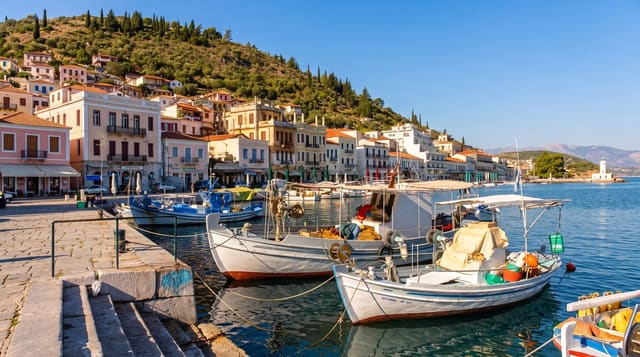
AI illustration
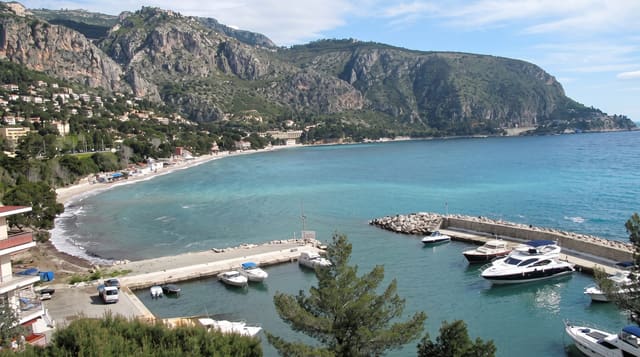
The bay at Villefranche is one of the deepest natural harbours on the Mediterranean, dropping to around ninety-five metres close inshore, which is why navies used it for centuries and why cruise ships anchor in it now. The old town rises straight from the water in ochre, pink and yellow, and the Rue Obscure runs about a hundred and thirty metres beneath the houses as a vaulted passage built in the thirteenth century, used as a shelter in wartime. Jean Cocteau decorated the seafront chapel of Saint-Pierre in 1957 with scenes from the saint's life and the local fishermen. A sixteenth-century citadel holds municipal museums.
History
The site has been settled since prehistoric times; Celto-Ligurian tribes farmed the hills, Greeks and then Romans used the natural harbour as a stopover, and after Caesar's conquest of Gaul an extension of the Via Aurelia passed through the hill settlement of Montolivo. In 1295 Charles II of Anjou, Count of Provence, persuaded its people to move down to the coast to guard against pirates and made Villefranche a free port, the source of its name, with tax and harbour privileges that lasted into the 18th century; from 1388 it belonged to Savoy, and for the next 400 years the County of Nice was contested between Savoy's allies and the French. After Franco-Turkish forces sacked the town in 1543, Duke Emmanuel Philibert built the citadel and a fort on Mont Alban, and the town remained a military and naval base even as the new harbour of Nice drew trade away. It was French from 1793 to 1814, returned to Sardinia and passed to France by treaty after a plebiscite in 1860, and by the late 19th century it was a base of the Imperial Russian Navy, which set up an oceanographic laboratory in the old lazaret, and a winter residence for royalty (Wikipedia, Villefranche-sur-Mer).
The main sights
- The Rue Obscure - a vaulted medieval street running under the houses.
- The Cocteau chapel - Saint-Pierre painted by Cocteau in 1957.
- The coloured waterfront - ochre and pink facades rising from the harbour.
- The citadel - a sixteenth-century fort with free museums inside.
When to go
April to June and September to October; cruise ship days crowd the small waterfront heavily, and the tourist office publishes the schedule. The train from Nice is the easiest arrival.
Good to know
The town is small and busy when ships tender in. The Cocteau chapel keeps limited hours and closes some months. The beach is narrow and packed in summer.
Nearby
Cap Ferrat lies east; Nice is west.
Key facts
Source: Wikidata, item Q207080, read on 18 October 2026.
What to pack for Villefranche-sur-Mer
Chosen from what this place is for. Tap a kit for the full checklist.
- Comfortable walking shoes - Sightseeing means kilometres of pavement and cobbles daily. Find on Amazon
- A slim anti-theft daypack - Zips that close properly; keep it in front in crowds and on transit. Find on Amazon
- A refillable water bottle - Many cities have public fountains; save money and plastic. Find on Amazon
- A light layer + compact umbrella - For museum air-con and a sudden shower. Find on Amazon
Some links on this page are Amazon affiliate links - if you buy through them we may earn a small commission at no extra cost to you.
All packing kitsPlan your trip
Where to start if Villefranche-sur-Mer is going on the list.
Booking links on this page are affiliate links - if you book through them we may earn a small commission at no extra cost to you. It never changes what we write about a place.
Opening times, ticket prices and seasonal closures change - check the official source before you go: official site.