Montpellier
A university city with the oldest working medical school in Europe and a mansion-lined medieval core.
Updated 19 October 2026
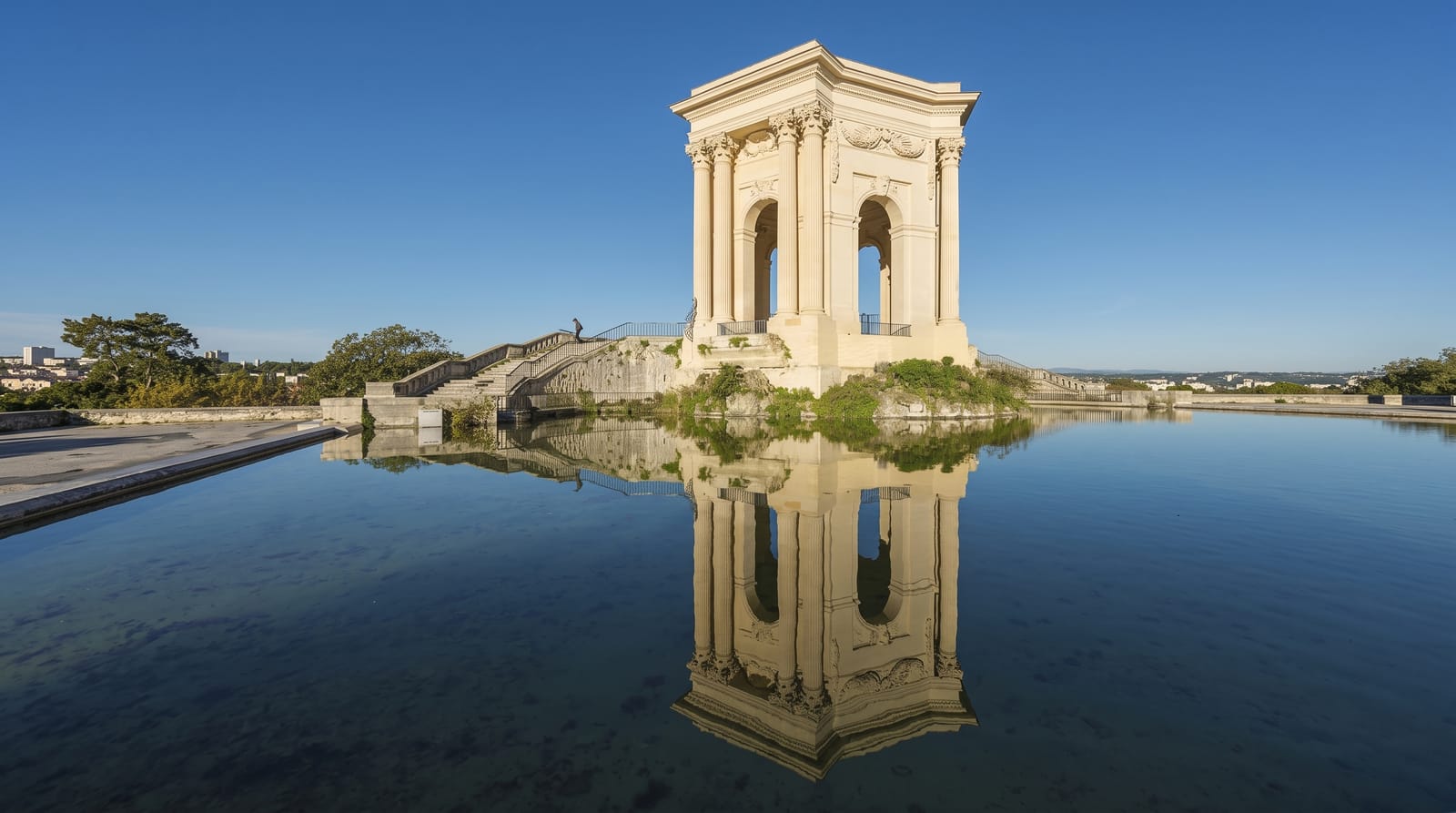
AI illustration
Montpellier was founded relatively late, in the tenth century, as a trading town rather than a Roman one, and it grew around teaching: its medical faculty received statutes in 1220 and has taught continuously since, making it the oldest medical school in Europe still operating. Rabelais studied there. The Jardin des Plantes, laid out in 1593 for the faculty, is the oldest botanical garden in France. The Ecusson, the medieval core, is a knot of narrow lanes hiding seventeenth and eighteenth-century mansions with courtyards and stairs. The Musee Fabre holds a strong painting collection, and the city is a third students by term time.
History
Pirate raids drew settlement inland from the bishop's town of Maguelone, and Montpellier, first mentioned in 985, was founded by the local Guilhem dynasty, who joined two hamlets inside walls; its name probably comes from the Latin for "woad mountain", after the dye plant grown here. A law school was active by 1160, William VIII granted freedom to teach medicine in 1180, and in 1220 Cardinal Conrad of Urach gave the faculties of law and medicine their statutes, the medical school becoming one of the great centres of medicine in Europe. Through the marriage of Peter II of Aragon and Marie of Montpellier in 1204 the city passed to the kings of Aragon, who confirmed its freedoms and its twelve elected consuls, and it grew into the main centre of the spice trade in France, with some 40,000 people before the Black Death, until James III of Majorca sold it to Philip VI of France in 1349; the bishop moved here from Maguelone in 1536 (Wikipedia, Montpellier).
What's there
- The medical faculty - Europe's oldest continuously working medical school.
- The Jardin des Plantes - France's oldest botanical garden, from 1593.
- The Ecusson - medieval lanes concealing grand private courtyards.
- The Musee Fabre - a substantial fine art collection.
When to go
April to June and September to October; summer is hot and the students are gone, which changes the character. The medical faculty's anatomy museum keeps very limited hours.
Good to know
Private mansion courtyards are mostly closed except on guided tours or heritage days. The old lanes are confusing and poorly signed. Summer heat is heavy inland from the coast.
Nearby
Saint-Guilhem-le-Desert lies northwest; the coast is ten kilometres south.
Key facts
Source: Wikidata, item Q6441, read on 18 October 2026.
What to pack for Montpellier
Chosen from what this place is for. Tap a kit for the full checklist.
- Loose, light, long clothing - Covering up beats bare skin in the desert - and locals dress this way for a reason. Find on Amazon
- Comfortable walking shoes - Sightseeing means kilometres of pavement and cobbles daily. Find on Amazon
- A wide-brim hat + sunglasses - Shade for your face and eyes where there is none overhead. Find on Amazon
- A slim anti-theft daypack - Zips that close properly; keep it in front in crowds and on transit. Find on Amazon
Some links on this page are Amazon affiliate links - if you buy through them we may earn a small commission at no extra cost to you.
All packing kitsPlan your trip
Where to start if Montpellier is going on the list.
Booking links on this page are affiliate links - if you book through them we may earn a small commission at no extra cost to you. It never changes what we write about a place.
Opening times, ticket prices and seasonal closures change - check the official source before you go: official site.