Grotte des Demoiselles
A cavern the size of a cathedral, reached by a funicular cut through the mountain.
Updated 21 October 2026
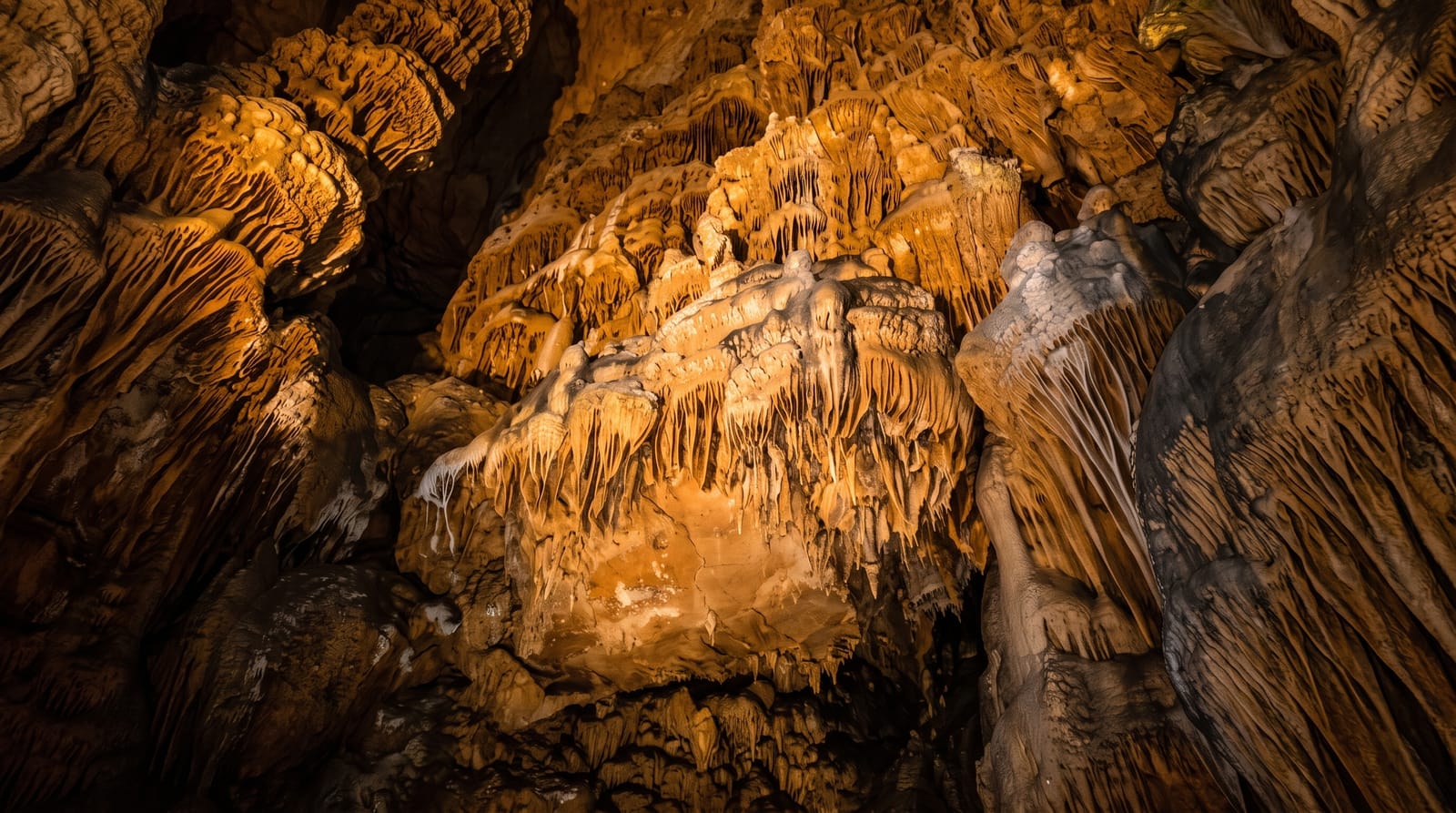
AI illustration
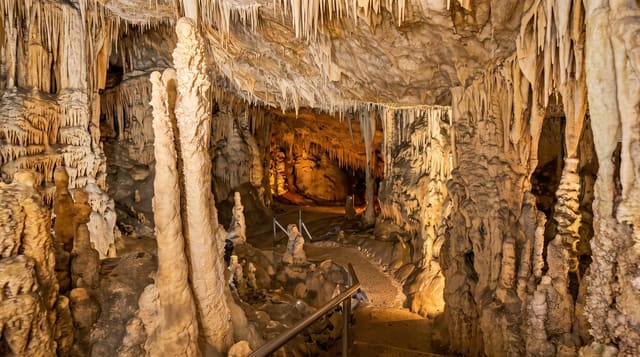
The cave was known locally as a fairy hole, which gave it its name, and Protestants sheltered in it during the persecutions after 1685. Edouard Martel explored it properly in 1889. The main chamber is around a hundred and twenty metres long, eighty wide and fifty high, called the cathedral for the obvious reason, and one large stalagmite in it is known as the Virgin and Child from its outline. A funicular built in 1931 through a tunnel in the hillside carries visitors up to the entrance, which was among the first such installations in a European cave. Guided routes run through the chambers on made paths.
History
The cave has been known in Languedoc since time immemorial, and its best-known legend tells of a shepherd who followed a lost lamb into the opening, fell into the great chamber now called the cathedral and saw young ladies dancing around him before he passed out, waking on the surface with his lamb; the name "maidens' grotto" replaced the older "fairies' grotto". The cave has served at times as a hiding place and refuge. The composer Benoît-Joseph Marsollier explored it in July 1780 and the speleologist Édouard-Alfred Martel more thoroughly in 1889, and in 1931 a funicular, concrete stairs, railed walkways and electric lighting opened it to the public (Wikipedia, Grotte des Demoiselles).
Highlights
- The cathedral chamber - a hall about 120 metres long and 50 high.
- The Virgin and Child - a large stalagmite named for its silhouette.
- The funicular - a 1931 tunnel railway up into the mountain.
- The formation galleries - draperies and columns on the guided route.
When to go
Year-round; the cave holds a steady temperature around fourteen degrees. Christmas concerts are held in the main chamber. Summer visits book up.
Practical notes
Visits are guided and timed, and the route has many steps. It is cool and damp inside. Photography rules vary by tour.
Nearby
Saint-Guilhem-le-Desert lies southwest; the Cevennes are north.
Key facts
Source: Wikidata, item Q251083, read on 18 October 2026.
What to pack for Grotte des Demoiselles
Chosen from what this place is for. Tap a kit for the full checklist.
- Broken-in walking shoes or boots - Grip and ankle support matter more than looks; never hike in brand-new boots. Find on Amazon
- Head torch + spare batteries - Hands-free light is essential; caves are truly dark. Find on Amazon
- Loose, light, long clothing - Covering up beats bare skin in the desert - and locals dress this way for a reason. Find on Amazon
- Modest clothing - Shoulders and knees covered - the single most common requirement. Find on Amazon
Some links on this page are Amazon affiliate links - if you buy through them we may earn a small commission at no extra cost to you.
All packing kitsPlan your trip
Where to start if Grotte des Demoiselles is going on the list.
Booking links on this page are affiliate links - if you book through them we may earn a small commission at no extra cost to you. It never changes what we write about a place.
Opening times, ticket prices and seasonal closures change - check the official source before you go: official site.