Chaudes-Aigues
A town heated since the fourteenth century by a spring emerging at eighty-two degrees, the hottest in Europe.
Updated 4 September 2026

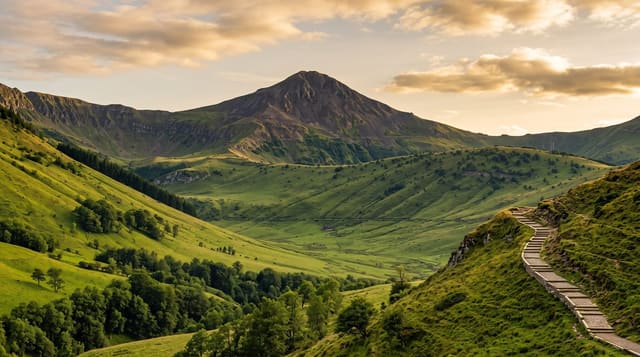
AI illustration
The Par spring at Chaudes-Aigues surfaces at about eighty-two degrees Celsius, the hottest natural spring in Europe, and the town has used it practically rather than only medicinally: from the fourteenth century water was piped through stone channels under houses to heat them, one of the earliest district heating systems anywhere, and parts of the network still warm public buildings. Around thirty springs rise in the town. Water is drawn at public fountains, used for washing in old lavoirs where it steams in winter, and cooks eggs in a few minutes. A museum, Geothermia, covers the geology and the heating system.
The landscape
- The Par spring - water surfacing at around eighty-two degrees.
- The old heating channels - medieval district heating under the houses.
- The steaming lavoirs - public washhouses fed by hot water.
- Geothermia - a museum on the geology and the town's use of it.
When to go
May to October for the walking country around; winter shows the steam best, when the lavoirs and street channels fume in cold air. The spa runs a season with breaks.
Before you go
The water at source is hot enough to scald and is fenced accordingly. The town is small and remote, high in the Cantal with winding approach roads. The spa is a treatment centre rather than a leisure pool.
Nearby
The Garabit viaduct lies north; Saint-Flour is northeast.
Key facts
Source: Wikidata, item Q269112, read on 18 October 2026.
What to pack for Chaudes-Aigues
Chosen from what this place is for. Tap a kit for the full checklist.
- Broken-in walking shoes or boots - Grip and ankle support matter more than looks; never hike in brand-new boots. Find on Amazon
- Layers + a waterproof shell - Mountain weather turns fast; a packable rain jacket saves the day. Find on Amazon
- Daypack with rain cover - 20-30 litres holds water, snacks, layers and a first-aid kit. Find on Amazon
- Offline maps + a power bank - Download the trail before you lose signal; carry backup charge. Find on Amazon
Some links on this page are Amazon affiliate links - if you buy through them we may earn a small commission at no extra cost to you.
All packing kitsPlan your trip
Where to start if Chaudes-Aigues is going on the list.
Booking links on this page are affiliate links - if you book through them we may earn a small commission at no extra cost to you. It never changes what we write about a place.
Opening times, ticket prices and seasonal closures change - check the official source before you go: official site.