Corisco
The white-sand outlier - an island of empty beaches, casuarina groves, Benga villages and iron-age burials off the mouth of the Muni estuary.
Updated 18 October 2026
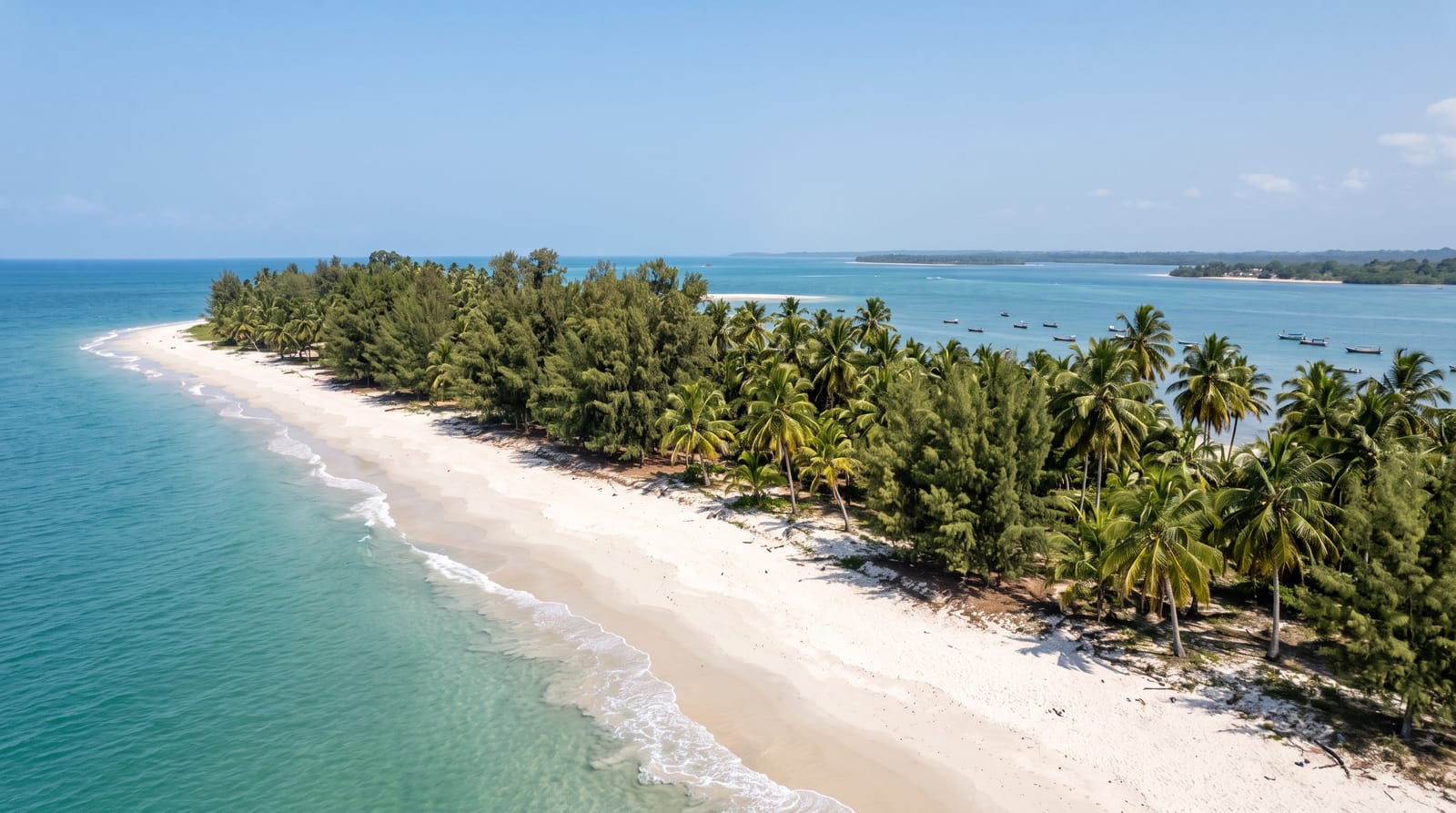
AI illustration
Off the mouth of the Muni estuary, Corisco lays out the country's dream coast: kilometres of white sand backed by casuarina and coconut, water in Caribbean palettes, and an island interior of villages of the Benga people, who settled here in the 18th century - and archaeology has turned up iron-age burials far older than that, the most important evidence of the island's early settlement. Development has touched it lightly (an airstrip and hotel infrastructure built for a bigger future that arrives slowly), which leaves the practical present: boat arrivals, beach days without footprints, and estuary horizons where Gabon's shore floats across the water.
History
In the Iron Age the island was densely settled: at Nandá, near the east coast, archaeologists have excavated dozens of burials from two periods - bundles of bones laid with iron axes, bracelets, spears and iron currency in the Early Iron Age (about 50 BC to AD 450), and graves surrounded by pots, probably of food and drink, with the dead wearing their collars, bracelets and anklets in the Middle Iron Age (about 1000 to 1150). When Portuguese sailors arrived in 1471 the islands of the area were mostly empty, and they named Corisco after the lightning of the gales they met there. After three centuries of only occasional visits, the Benga people settled the island in the second half of the 18th century, drawn by trade with Europeans; Spain acquired it in 1843 by an arrangement with the Benga king Bonkoro I, and it became part of Equatorial Guinea at independence (Wikipedia, Corisco).
What you'll find
- The white-sand kilometres - empty Atlantic beaches under casuarinas.
- The Benga villages - island life since the 18th century.
- The estuary horizons - Gabon's shore across the Muni mouth.
- The archaeological story - iron-age burials at Nandá, from about 50 BC to AD 1150.
When to go
June to September for the drier season's beach light; boat crossings prefer morning calm. Arrangements - transport and formalities - are made ahead through Bata or Cogo contacts.
Before you go
Corisco sits in border waters: confirm current travel formalities before planning, and go with arranged transport rather than improvised crossings. Facilities range from simple to sporadically open - self-sufficiency and flexibility are the kit. The emptiness is the entire luxury.
Nearby
Cogo and the Muni estuary, and Bata up the coast.
Key facts
Source: Wikidata, item Q749561, read on 18 October 2026.
What to pack for Corisco
Chosen from what this place is for. Tap a kit for the full checklist.
- Reef-safe sunscreen - High SPF that will not bleach the coral you are swimming over. Find on Amazon
- Quick-dry towel - A microfibre towel packs small and dries in minutes. Find on Amazon
- Water shoes - Protect your feet on rocky entries, hot sand and sea-urchin spines. Find on Amazon
- Dry bag - Keeps phone, cash and keys safe while you are in the water. Find on Amazon
Some links on this page are Amazon affiliate links - if you buy through them we may earn a small commission at no extra cost to you.
All packing kitsPlan your trip
Where to start if Corisco is going on the list.
Booking links on this page are affiliate links - if you book through them we may earn a small commission at no extra cost to you. It never changes what we write about a place.
Opening times, ticket prices and seasonal closures change - check the official source before you go: official site.