Chiloé
A misty green archipelago of wooden shingle churches, stilt houses and a mythology all its own, reached by a short ferry.
Updated 18 October 2026
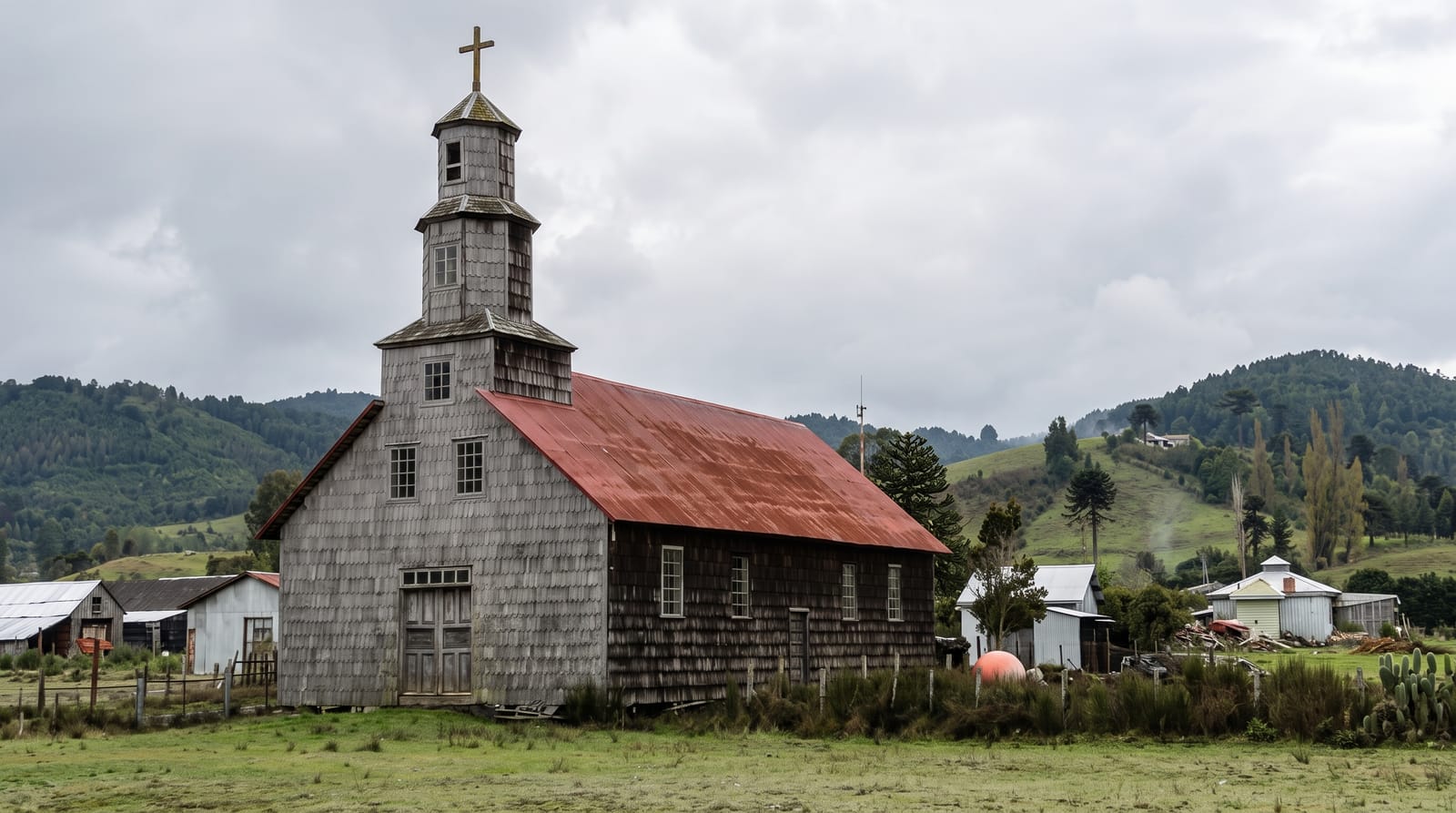
AI illustration
UNESCO World Heritage
Chiloé feels detached from the rest of Chile, and islanders will tell you it is. Cut off by water and wrapped in cloud for much of the year, it developed its own architecture, cuisine and folklore. Sixteen wooden churches built by Jesuit and Franciscan missionaries carry a joint UNESCO listing, constructed entirely of native timber using shipbuilding techniques, with shingled walls and vaulted interiors that look like upturned hulls. Along the waterfronts at Castro stand palafitos, houses on stilts over the tidal channel, painted in colours that survive the grey. The island's signature dish, curanto, is cooked in a pit with hot stones under leaves. Local myth is taken seriously enough to be printed on maps: the Trauco, the Pincoya, the ghost ship Caleuche.
History
Finds at Monte Verde, less than 50 kilometres north of the main island, suggest people may have reached the area as early as 12,000 BC; the first identifiable inhabitants are thought to have been the seafaring Chonos, and by the time the Spanish arrived the Cuncos farmed and fished along the eastern shore. Francisco de Ulloa sighted the island in 1553, and in 1567 Captain Martín Ruiz de Gamboa conquered it with 110 Spaniards, named it Nueva Galicia and founded Castro. The first Jesuits arrived in 1608 and built the first church in Castro in 1612; because the people lived scattered across many islands, they ran a circular mission, travelling by dalca boats from September to May, and by the suppression of their order in 1767 the archipelago had 79 chapels (Wikipedia, Chiloé Archipelago).
The landscape
- The wooden churches - the UNESCO-listed shingle churches at Castro, Achao, Dalcahue and elsewhere.
- Palafitos of Castro - stilt houses over the tidal channel, several now guesthouses.
- Chiloé National Park - temperate rainforest and long empty Pacific beaches on the west coast.
- A curanto - the pit-cooked shellfish, meat and potato feast, best arranged locally.
When to go
December to March is the southern summer and the only reliably drier window; even then, rain is a fixture. Winter is dark, wet and much quieter, which some travellers prefer. Ferries run year-round but the crossing gets rough.
Things to know
It rains a great deal, and visitors expecting Patagonian sunshine are often surprised by weeks of grey. Distances on the island are longer than the map suggests and buses are slow, so a rental car helps. Several of the sixteen churches are far apart and a few are only reachable by boat, so pick three or four rather than attempting the set.
Nearby
Puerto Montt and Puerto Varas are on the mainland; the Carretera Austral starts south.
Key facts
Source: Wikidata, item Q177608, read on 18 October 2026.
What to pack for Chiloé
Chosen from what this place is for. Tap a kit for the full checklist.
- Reef-safe sunscreen - High SPF that will not bleach the coral you are swimming over. Find on Amazon
- Strong insect repellent - DEET or picaridin; the jungle is where bites and disease risk are highest. Find on Amazon
- Quick-dry towel - A microfibre towel packs small and dries in minutes. Find on Amazon
- Long, light, quick-dry clothing - Covers skin from insects and sun without cooking you in the humidity. Find on Amazon
Some links on this page are Amazon affiliate links - if you buy through them we may earn a small commission at no extra cost to you.
All packing kitsPlan your trip
Where to start if Chiloé is going on the list.
Booking links on this page are affiliate links - if you book through them we may earn a small commission at no extra cost to you. It never changes what we write about a place.
Opening times, ticket prices and seasonal closures change - check the official source before you go: official site.


