Valle Nuevo
A high plateau of pine forest above two thousand metres where frost forms most winter nights, and where most of the country's rivers begin.
Updated 19 October 2026
AI illustration
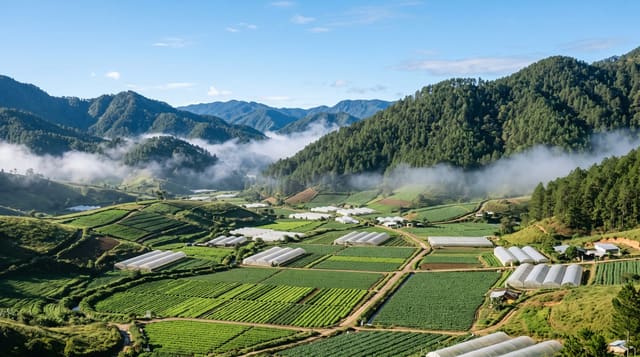
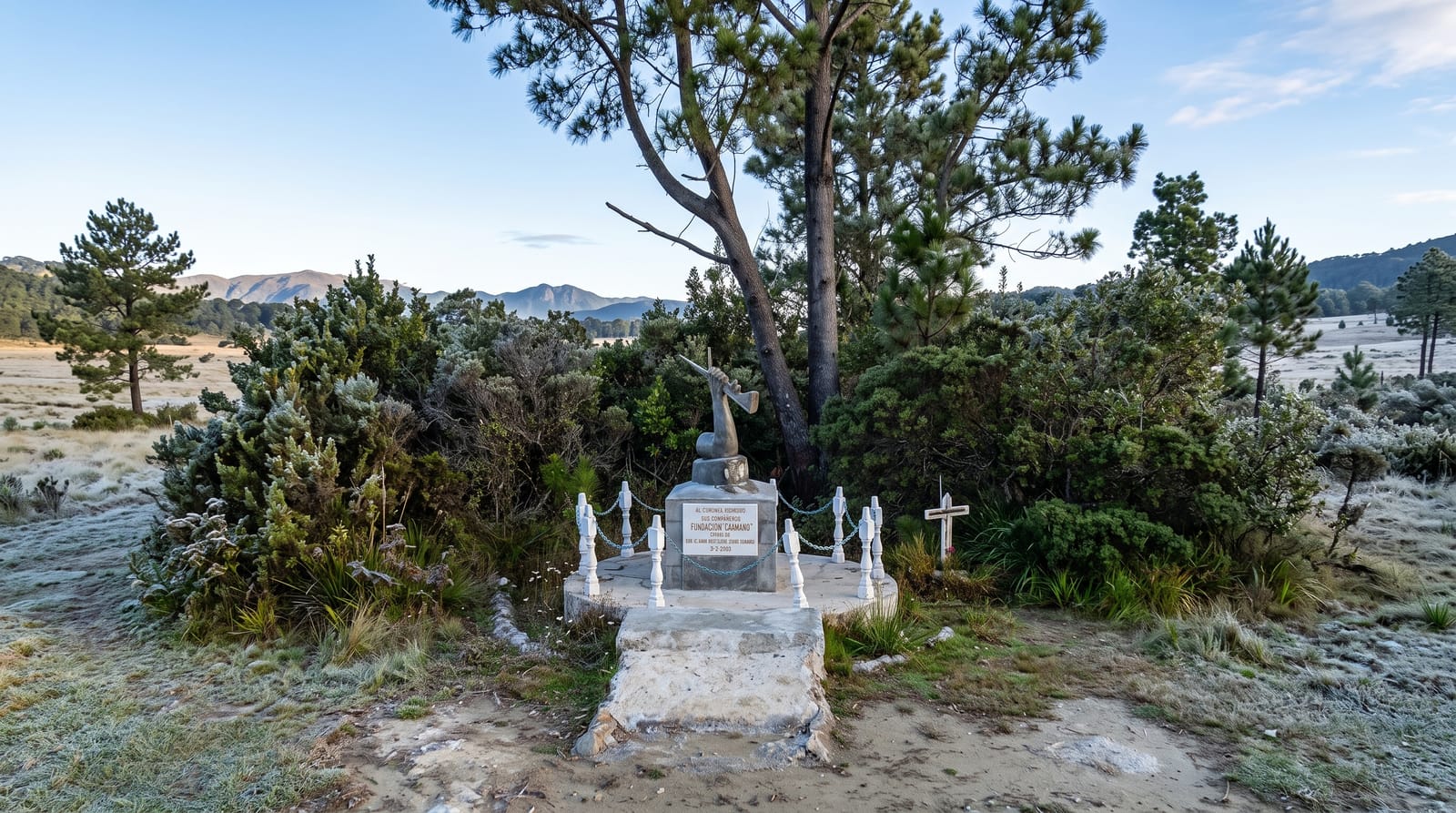
Valle Nuevo sits on a plateau above two thousand metres in the central cordillera, and it is known nationally as the Mother of the Waters because a large share of the country's rivers rise here. The landscape is not tropical at all: Hispaniolan pine forest, open grassy savannas, and temperatures that drop below freezing on winter nights, producing frost and occasionally ice on the puddles, which visitors from the coast find hard to believe. At the centre, where the road crosses the watershed, stands a stone pyramid marking what was calculated as the geographic centre of the island. Endemic birds are abundant and the night sky here is exceptional.
History
When the Spanish arrived the plateau held shallow lakes, according to the chronicler Gonzalo Fernández de Oviedo, and cattle have been ranched here since at least the mid-18th century. The explorer Robert Hermann Schomburgk visited in 1852 and the Danish naturalist Baron von Eggers described his travels here in 1887. Early 20th-century survey teams set flags on the peaks to tell them apart, which is how Pico de Sabana Alta became Alto de la Bandera, "flag peak". The road from Constanza to San José de Ocoa was opened in January 1959, with the stone pyramids beside it at the old boundary between the two municipalities. A fire destroyed 32 km² of forest in February 1983, after which the area became a scientific reserve, in 1996 it became a national park, and another fire in July 2014 destroyed at least a quarter of its forest (Wikipedia, Valle Nuevo National Park).
The landscape
- The pine plateau - Hispaniolan pine and open savanna above 2,000 metres.
- The pyramid - the stone monument at the island's calculated centre.
- Winter frost - ice on the ground on cold mornings, at this latitude.
- Endemic birds - Hispaniolan trogon, crossbill and parrot in the pines.
When to go
November to April is drier, and also when the frost happens; nights regularly drop near or below freezing, so proper warm clothing is essential. The road is often impassable after heavy rain. Clear nights here give some of the best stargazing in the Caribbean.
Good to know
The road across the plateau is rough and steep and genuinely needs four-wheel drive; ordinary cars get stuck or damaged. There is no accommodation inside the park beyond basic cabins and camping, and no services at all. Nights are cold enough to be dangerous for anyone who arrived expecting the Caribbean. Fires and illegal farming remain a pressure on the park.
Nearby
Constanza is an hour north; Jarabacoa is beyond it.
Key facts
Source: Wikidata, item Q11704970, read on 18 October 2026.
What to pack for Valle Nuevo
Chosen from what this place is for. Tap a kit for the full checklist.
- Broken-in walking shoes or boots - Grip and ankle support matter more than looks; never hike in brand-new boots. Find on Amazon
- Binoculars - The single best wildlife tool - even a compact pair transforms a sighting. Find on Amazon
- Spare batteries + cards - Cold and long shoots drain power; never run out at the good light. Find on Amazon
- Shelter suited to the place - Tent, tarp or hut booking - match it to the terrain and rules. Find on Amazon
Some links on this page are Amazon affiliate links - if you buy through them we may earn a small commission at no extra cost to you.
All packing kitsPlan your trip
Where to start if Valle Nuevo is going on the list.
Booking links on this page are affiliate links - if you book through them we may earn a small commission at no extra cost to you. It never changes what we write about a place.
Opening times, ticket prices and seasonal closures change - check the official source before you go: official site.