Constanza
A high valley in the Cordillera Central where frost falls in winter, growing the country's vegetables and strawberries under pine-covered peaks.
Updated 19 October 2026

AI illustration
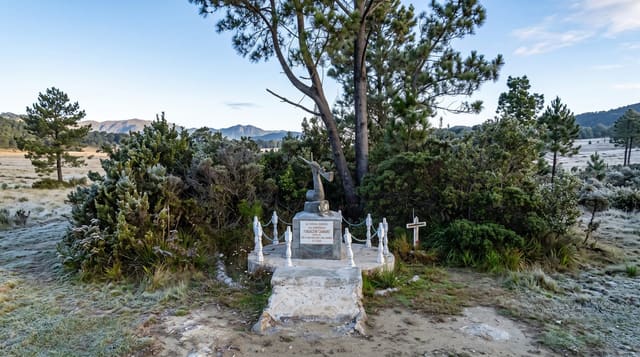
Constanza sits in a broad valley at around twelve hundred metres, ringed by pine-covered mountains, and it does not look Caribbean at all: the fields are laid out in neat rectangles of lettuce, carrots, garlic and strawberries, greenhouses climb the slopes, and in December and January frost settles overnight and occasionally ice forms, which is a national curiosity. It supplies much of the country's vegetables. Above the valley lies Valle Nuevo national park, a high plateau of pine forest and páramo grassland crossed by a rough road, with the Aguas Blancas waterfall dropping in two tiers nearby and a monument marking the geographic centre of the island. The air is cool and clear and the nights are genuinely cold.
History
The name comes from the legend of the daughter of a Taíno chief who lived in the valley. Constanza was sparsely populated, though explorers knew the valley in colonial times, and in 1750 a settler named Victoriano Velano brought European farming and ranching here. In 1852 the explorer and consul Sir Robert Hermann Schomburgk mentioned a farm in the valley on his way through the region. The town was formally founded in 1894 and became a municipality of La Vega Province on 9 September 1907; it has the coldest average temperature of any settlement on Hispaniola and in the whole Caribbean (Wikipedia, Constanza, Dominican Republic).
Highlights
- The valley fields - vegetable and strawberry farms under the pines.
- Valle Nuevo - the high pine and páramo plateau above the valley.
- Aguas Blancas - the two-tier waterfall on the road up.
- Winter frost - the overnight frost that makes Dominican news each January.
When to go
November to April is drier, and December and January bring the frost the valley is known for. It is cold at night year-round by Caribbean standards, so warm clothing is needed. The roads up are best tackled in daylight and in the dry.
Good to know
The roads into Constanza are rough, steep and slow whichever way you come, and the direct route from Jarabacoa in particular needs a sturdy vehicle. There is very little tourism infrastructure and few restaurants. Valle Nuevo's road is rougher still. Visitors expecting beaches and heat will be surprised by how cold it gets.
Nearby
Jarabacoa is two hours east; the Aguas Blancas falls are on the road above town.
What to pack for Constanza
Chosen from what this place is for. Tap a kit for the full checklist.
- Broken-in walking shoes or boots - Grip and ankle support matter more than looks; never hike in brand-new boots. Find on Amazon
- Reef-safe sunscreen - High SPF that will not bleach the coral you are swimming over. Find on Amazon
- Spare batteries + cards - Cold and long shoots drain power; never run out at the good light. Find on Amazon
- Shelter suited to the place - Tent, tarp or hut booking - match it to the terrain and rules. Find on Amazon
Some links on this page are Amazon affiliate links - if you buy through them we may earn a small commission at no extra cost to you.
All packing kitsPlan your trip
Where to start if Constanza is going on the list.
Booking links on this page are affiliate links - if you book through them we may earn a small commission at no extra cost to you. It never changes what we write about a place.
Opening times, ticket prices and seasonal closures change - check the official source before you go: official site.