Jelling Mounds and Runic Stones
The birth certificate of Denmark in stone - two great runestones and royal burial mounds where a Viking king proclaimed the nation Christian, a UNESCO site.
Updated 2 October 2026
AI illustration
UNESCO World Heritage
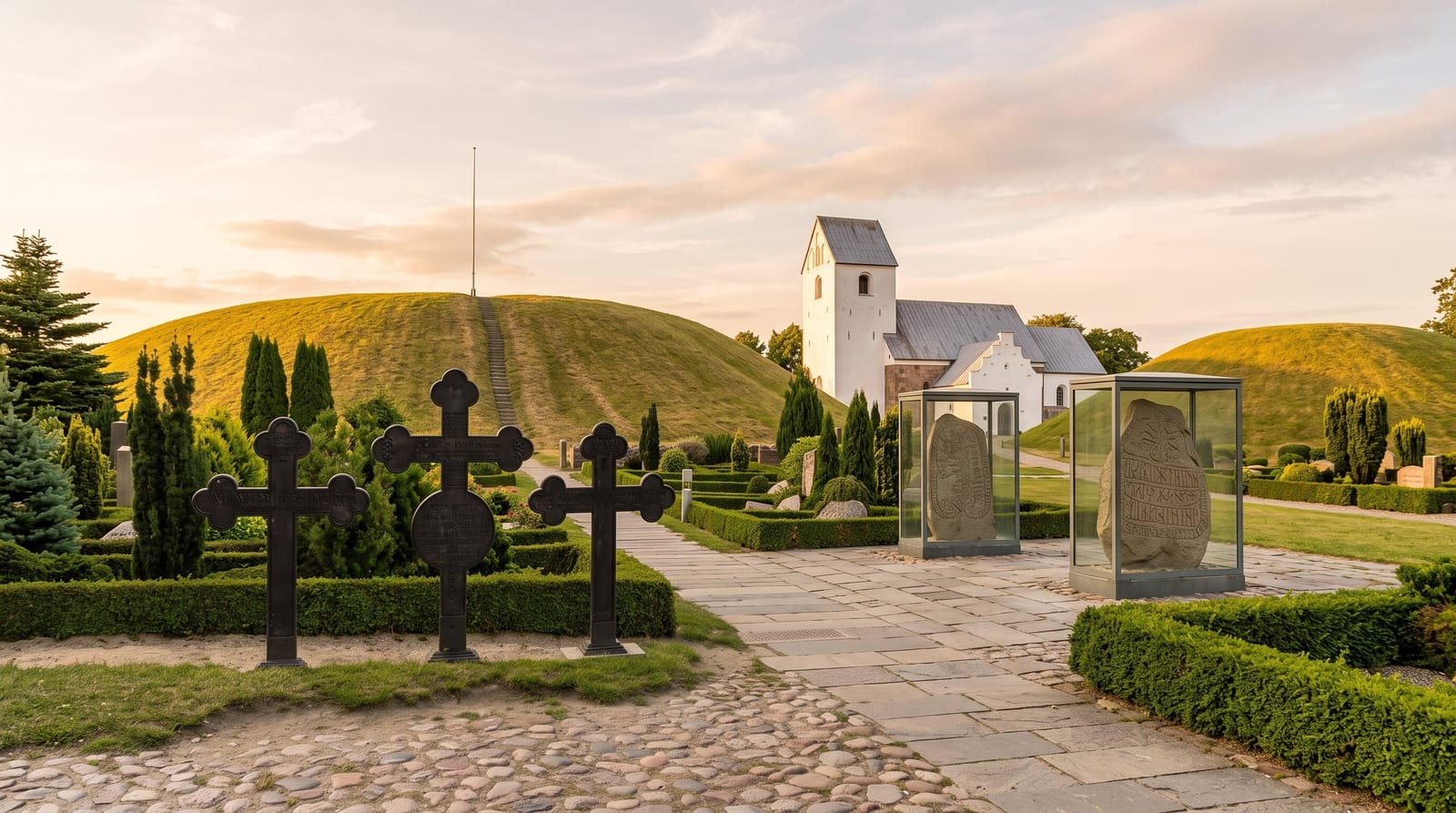
At Jelling stand two great runestones, two huge burial mounds and a church, a UNESCO site marking the birth of Denmark as a nation. The larger stone, raised by King Harald Bluetooth around 965, proclaims that he united Denmark and Norway and made the Danes Christian, and is often called the birth certificate of Denmark.
The main sights
- The runestones - the two carved stones, including Harald's founding proclamation.
- The burial mounds - the two great royal grassy mounds.
- The church and monument outline - the church and the stone ship setting marked around it.
- The visitor centre - the museum on the Vikings and the birth of the nation.
When to go
The warm months for the outdoor site; the visitor centre is a good year-round anchor. A clear day suits the mounds and stones.
Things to know
The stones are now protected in glass cases to save the fading carvings, so you see them behind glass. The site is otherwise mounds, a church and marked outlines, so the centre's context brings it alive. It is a short but historically weighty visit.
Nearby
Vejle and the Jutland lakes are close; Legoland at Billund is within reach.
What to pack for Jelling Mounds and Runic Stones
Chosen from what this place is for. Tap a kit for the full checklist.
- Comfortable walking shoes - Sightseeing means kilometres of pavement and cobbles daily. Find on Amazon
- A slim anti-theft daypack - Zips that close properly; keep it in front in crowds and on transit. Find on Amazon
- A refillable water bottle - Many cities have public fountains; save money and plastic. Find on Amazon
- A light layer + compact umbrella - For museum air-con and a sudden shower. Find on Amazon
Some links on this page are Amazon affiliate links - if you buy through them we may earn a small commission at no extra cost to you.
All packing kitsPlan your trip
Where to start if Jelling Mounds and Runic Stones is going on the list.
Booking links on this page are affiliate links - if you book through them we may earn a small commission at no extra cost to you. It never changes what we write about a place.
Opening times, ticket prices and seasonal closures change - check the official source before you go: official site.