Koldinghus
A royal castle in Kolding, burnt out in 1808 and rebuilt so that new timber and steel stand visibly apart from the old walls.
Updated 19 October 2026
AI illustration
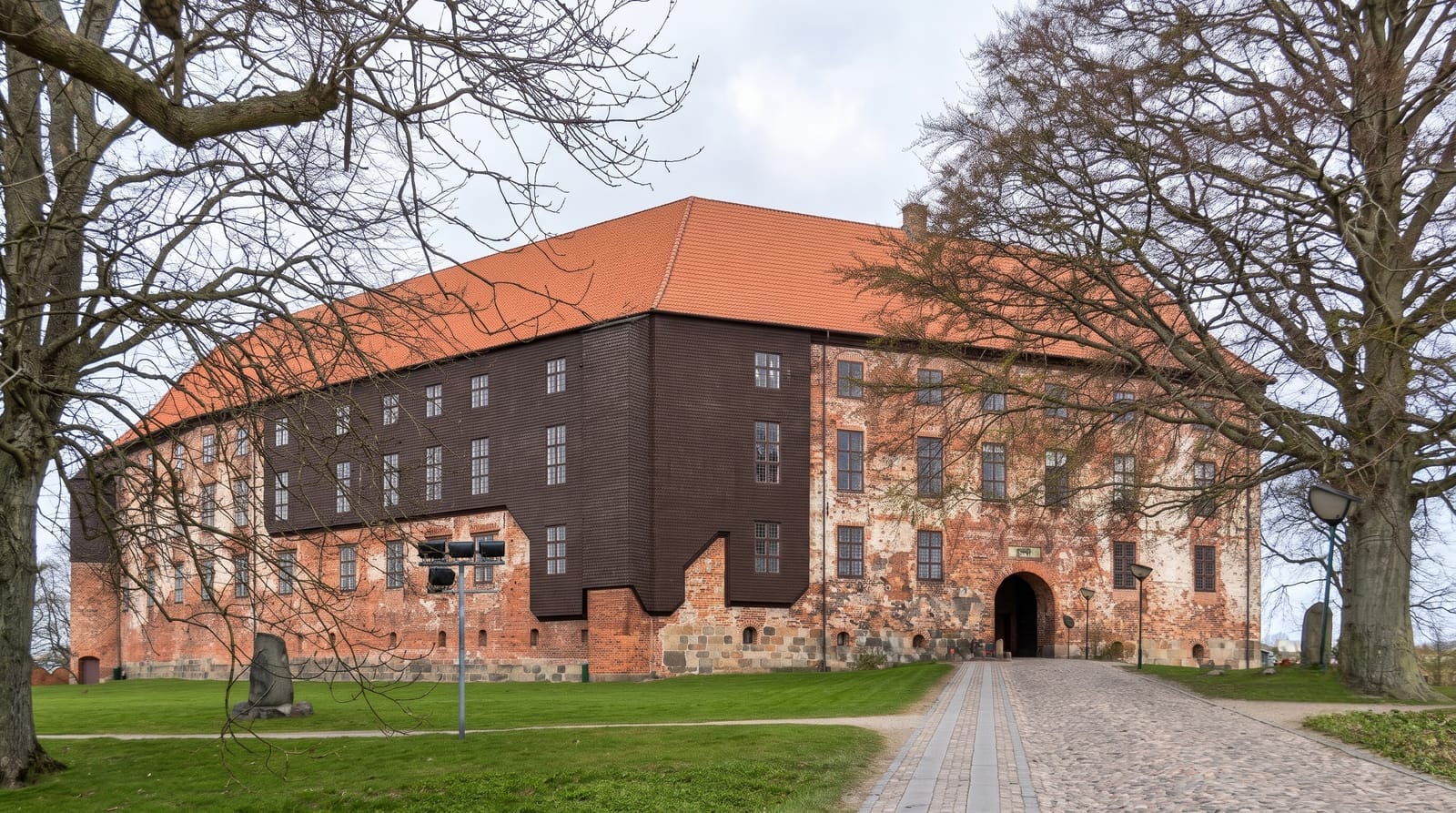
Koldinghus was the last royal castle in Jutland, begun in the 1200s and rebuilt many times before a fire in 1808 gutted it and left the shell open to the sky for most of two centuries. The restoration finished in the 1990s took an unusual line: rather than fake the lost interiors, the architects roofed the ruin with laminated timber columns and steel, so you walk through a modern hall that never pretends to be old, with charred brick and blackened stone left exposed beside it. The museum inside covers silver, ceramics and Danish furniture, and the tower gives a view over the lake.
History
Koldinghus grew out of the dynastic conflicts of the 13th century: after King Abel was killed in 1252 and his brother Christoffer I died in 1259, the boy king Eric V faced claims from Abel's sons, led by Eric I, Duke of Schleswig, and after several wars it was decided to build a fortress to guard the southern border. A hill in the centre of Kolding was chosen, a moat dug and wooden palisades raised. The castle was besieged in 1341 and again in 1368-1369 by Holstein and Jutish rebels. The oldest surviving part is the north wing facing the castle lake, built by King Christoffer III (1441-1448); Christian I built the western wing, and Christian III the south wing and the small towers in the courtyard. It was a fortress, a royal residence and later a ruin, and since 1890 it has been home to the museum, with collections of furniture from the 16th century on, church art, older Danish paintings, ceramics and silver (Wikipedia, Koldinghus).
What to look for
- The ruin hall - laminated timber columns and steel set inside the burnt shell.
- The Giant Tower - the climb for a view over Kolding and its lake.
- The museum collections - silver, ceramics and Danish furniture design.
- The old stonework - the surviving medieval and Renaissance walls and chapel.
When to go
Open year-round, and being mostly indoors it is a good wet weather stop in a part of Jutland that gets plenty of rain. Weekday afternoons are quiet. Special exhibitions change through the year and are worth checking before you decide how much time to allow.
Before you go
The modern restoration is the reason to come, and if you were hoping for furnished royal rooms you will be disappointed, because they burnt in 1808 and were never replaced. The permanent collections are modest for the ticket price. The tower stair is steep and narrow, and the top is exposed.
Nearby
Kolding's pedestrian centre lies below the castle; Christiansfeld is about twenty minutes south.
Key facts
Source: Wikidata, item Q3347392, read on 18 October 2026.
What to pack for Koldinghus
Chosen from what this place is for. Tap a kit for the full checklist.
- Comfortable walking shoes - Sightseeing means kilometres of pavement and cobbles daily. Find on Amazon
- A slim anti-theft daypack - Zips that close properly; keep it in front in crowds and on transit. Find on Amazon
- A refillable water bottle - Many cities have public fountains; save money and plastic. Find on Amazon
- A light layer + compact umbrella - For museum air-con and a sudden shower. Find on Amazon
Some links on this page are Amazon affiliate links - if you buy through them we may earn a small commission at no extra cost to you.
All packing kitsPlan your trip
Where to start if Koldinghus is going on the list.
Booking links on this page are affiliate links - if you book through them we may earn a small commission at no extra cost to you. It never changes what we write about a place.
Opening times, ticket prices and seasonal closures change - check the official source before you go: official site.