Hjerl Hede
An open-air museum on a west Jutland heath, with relocated buildings from the Stone Age to 1900 and a working village in summer.
Updated 31 August 2026
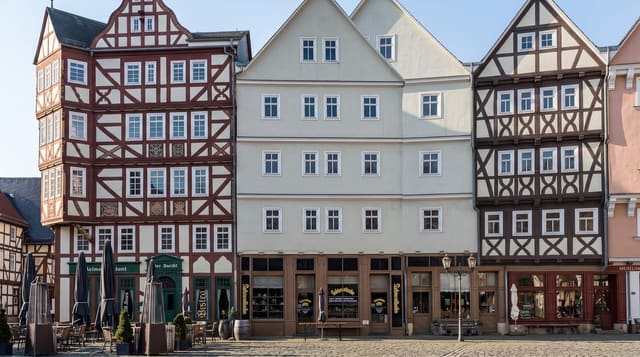
Hjerl Hede was begun in 1930 on a stretch of west Jutland heath, with buildings moved here from across Jutland to make an old village: farms, a church of 1500, a school, a mill, a smithy, an inn, a grocer's and a dairy, arranged along a street with fields and heath around them. A separate area holds reconstructions of much older settlements, a Stone Age camp and an Iron Age village, built from excavation evidence. In the peak summer weeks the village is staffed by people in period dress who work it as a living museum, with animals, crafts and cooking, and outside that season it is walked as an empty village, which some visitors prefer. The heath itself is a protected area of heather and bog.
What's there
- A relocated Jutland village - farms, church, school, mill and inn on one street.
- Stone Age and Iron Age reconstructions - settlements built from excavation evidence.
- The living village weeks - staff working the buildings in summer.
- Protected heath - heather and bog around the museum.
When to go
June to August for the living museum weeks, which is when the site is fully staffed and animated; spring and autumn are quieter with buildings open but empty. A full day. Heather flowers in August.
Good to know
The living museum runs only in peak summer weeks and the rest of the season is much quieter, which catches people out. It is entirely outdoors. Ticket prices are high in the animated weeks. It is remote and needs a car.
Nearby
Spottrup Castle is north; Holstebro lies south-west.
Key facts
Source: Wikidata, item Q501657, read on 18 October 2026.
What to pack for Hjerl Hede
Chosen from what this place is for. Tap a kit for the full checklist.
- Comfortable walking shoes - Sightseeing means kilometres of pavement and cobbles daily. Find on Amazon
- A slim anti-theft daypack - Zips that close properly; keep it in front in crowds and on transit. Find on Amazon
- A refillable water bottle - Many cities have public fountains; save money and plastic. Find on Amazon
- A light layer + compact umbrella - For museum air-con and a sudden shower. Find on Amazon
Some links on this page are Amazon affiliate links - if you buy through them we may earn a small commission at no extra cost to you.
All packing kitsPlan your trip
Where to start if Hjerl Hede is going on the list.
Booking links on this page are affiliate links - if you book through them we may earn a small commission at no extra cost to you. It never changes what we write about a place.
Opening times, ticket prices and seasonal closures change - check the official source before you go: official site.