Bile Karpaty
Hay meadows with some of the highest plant diversity recorded anywhere in Europe, and orchids in tens of thousands.
Updated 29 August 2026
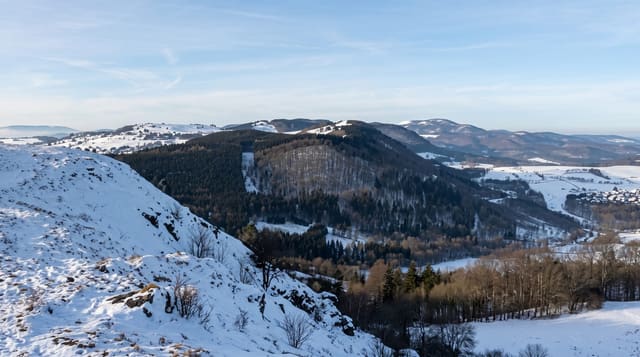
The White Carpathians run along the Slovak border in south-eastern Moravia, a range of flysch ridges and broad valleys, and what makes them internationally significant is not the hills but the meadows. Centuries of mowing without fertiliser on lime-rich flysch soils produced species-rich hay meadows that hold world records for small-scale plant diversity - counts of more than a hundred vascular plant species in a few square metres have been recorded here, among the highest measured anywhere. Orchids grow in enormous numbers on the best sites, with lady's-slipper, military and monkey orchids among the species, and some meadows carry tens of thousands of flowering spikes. The area is a UNESCO biosphere reserve, shared with Slovakia. The meadows survive only because they are still cut; abandonment is the main threat and conservation mowing is organised across the reserve. Villages here keep a strong folk tradition.
What's there
- Record-breaking meadows - among the highest small-scale plant counts measured anywhere.
- Orchids in tens of thousands - lady's-slipper, military and monkey orchids on the best sites.
- Flysch ridges - broad valleys and long slopes along the Slovak border.
- A shared biosphere reserve - designated with the Slovak side.
When to go
May to June for the orchids. Two days.
Practical notes
The flowering season is short and shifts with the weather. Meadows are working land - do not walk into them off paths. Public transport is thin. Some reserves restrict access during flowering.
Nearby
Straznice and its open-air museum are west; the Slovak border runs along the ridge.
Key facts
Source: Wikidata, item Q1338173, read on 18 October 2026.
What to pack for Bile Karpaty
Chosen from what this place is for. Tap a kit for the full checklist.
- Broken-in walking shoes or boots - Grip and ankle support matter more than looks; never hike in brand-new boots. Find on Amazon
- Layers + a waterproof shell - Mountain weather turns fast; a packable rain jacket saves the day. Find on Amazon
- Daypack with rain cover - 20-30 litres holds water, snacks, layers and a first-aid kit. Find on Amazon
- Offline maps + a power bank - Download the trail before you lose signal; carry backup charge. Find on Amazon
Some links on this page are Amazon affiliate links - if you buy through them we may earn a small commission at no extra cost to you.
All packing kitsPlan your trip
Where to start if Bile Karpaty is going on the list.
Booking links on this page are affiliate links - if you book through them we may earn a small commission at no extra cost to you. It never changes what we write about a place.
Opening times, ticket prices and seasonal closures change - check the official source before you go: official site.