Bata Canal
A canal dug in the 1930s to move lignite to the Bata works, now a boating route with hand-operated locks.
Updated 19 October 2026
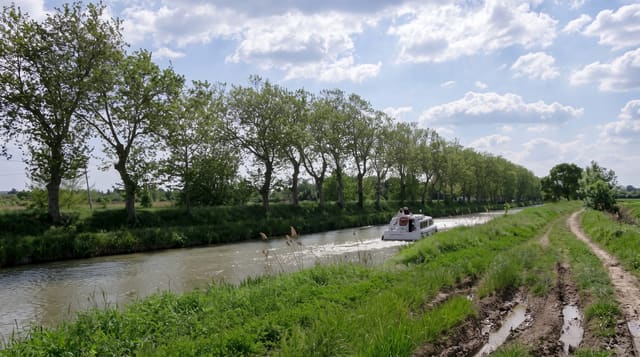
The Bata canal was built between 1934 and 1938 to bring lignite from the mines at Ratiskovice to the Bata power station at Otrokovice, using the Morava river where possible and cut channels where not, with fourteen locks over about fifty-two kilometres. It carried freight until the 1960s and then decayed; restoration from the 1990s reopened it as a recreational waterway, and it is now the main inland boating route in the country. The boats are small - no licence is needed for the hire craft under the local rules - and the locks are worked by hand or by the boaters themselves, which is a large part of the appeal, along with an aqueduct where the canal crosses a river on a bridge. It runs through Slovacko wine country, so the ports connect to cellar villages, and a cycle route follows the bank the whole way.
History
The canal was built for two reasons: to raise the groundwater after the Morava had been regulated, and as a first stage of the long-planned, never-built Danube-Oder canal. The immediate need was to carry lignite from the mine at Ratíškovice to the power station at Otrokovice, both owned by the Baťa shoe company, which paid most of the cost, the state the rest; Jan Antonín Baťa financed it together with the Czechoslovak state. Work began on 16 October 1934 and was finished in the autumn of 1938 (Wikipedia, Baťa Canal).
What's there
- Fourteen locks in fifty-two kilometres - many worked by hand by the boaters.
- An aqueduct - the canal crossing a river on a bridge.
- A lignite canal repurposed - built 1934-1938 for the Bata works, reopened for boats.
- Wine villages along the bank - Slovacko cellars at the ports, with a cycle route alongside.
When to go
May to September. Two days.
Things to know
The season is limited and locks keep operating hours. Hire boats book out in July and August. Progress is slow - the canal is not a way of covering distance. Water levels on the Morava sections vary.
Nearby
Straznice skansen and Mikulcice are on the route; Uherske Hradiste is upstream.
Key facts
Source: Wikidata, item Q812765, read on 18 October 2026.
What to pack for Bata Canal
Chosen from what this place is for. Tap a kit for the full checklist.
- Comfortable walking shoes - Sightseeing means kilometres of pavement and cobbles daily. Find on Amazon
- A slim anti-theft daypack - Zips that close properly; keep it in front in crowds and on transit. Find on Amazon
- A refillable water bottle - Many cities have public fountains; save money and plastic. Find on Amazon
- A light layer + compact umbrella - For museum air-con and a sudden shower. Find on Amazon
Some links on this page are Amazon affiliate links - if you buy through them we may earn a small commission at no extra cost to you.
All packing kitsPlan your trip
Where to start if Bata Canal is going on the list.
Booking links on this page are affiliate links - if you book through them we may earn a small commission at no extra cost to you. It never changes what we write about a place.
Opening times, ticket prices and seasonal closures change - check the official source before you go: official site.