Camagüey
A colonial city laid out as a deliberate maze of crooked lanes and irregular squares, with giant clay water jars on every corner.
Updated 18 October 2026

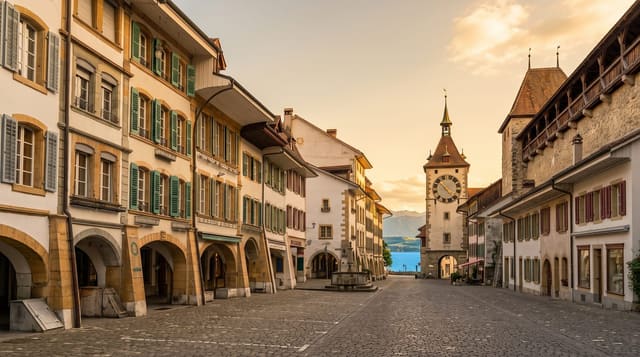
AI illustration
UNESCO World Heritage
Most Spanish colonial cities in the Americas were laid out on a grid. Camagüey was not, and its tangle of narrow curving streets, blind corners and irregular plazas is usually explained as a defence against pirates, who would lose their way in it. Whatever the reason, the effect is a city that has to be wandered rather than navigated. Its emblem is the tinajón, an enormous belly-shaped clay jar used to catch rainwater, thousands of which sit in courtyards and on street corners, and about which there is a local saying that a visitor who drinks from one will never leave. Plaza San Juan de Dios keeps its eighteenth-century colour scheme intact, and the city has produced an unusual number of Cuban artists, whose sculptures now occupy the squares.
History
Spanish colonists led by Diego Velázquez de Cuéllar founded Santa María del Puerto del Príncipe on 2 February 1514 on the north coast, near today's Nuevitas, as one of the seven original towns of Cuba, and in 1528 it was moved inland to the site of a Taíno village called Camagüey. Henry Morgan burned the city in the 17th century, and its maze of winding alleys, blind lanes and squares is often explained as a design to confuse raiders, though locals call that a myth and say the streets simply grew without a plan, with everyone wanting to live near one of the city's 15 churches. Between 1747 and 1753 the governor Luis de Unzaga y Amézaga rebuilt the town after damage in the War of Jenkins' Ear, and after independence from Spain in 1898 the city took the name Camagüey, from the cacique Camagüebax (Wikipedia, Camagüey).
What's there
- Plaza San Juan de Dios - the best-preserved colonial square, with its church and former hospital.
- Tinajones - the giant clay water jars in courtyards and on corners across the city.
- Plaza del Carmen - life-size sculptures of camagüeyanos going about ordinary business.
- Casa Natal de Ignacio Agramonte - a colonial mansion museum on the main square.
When to go
November to April is the dry season and much more comfortable; the summer is hot and humid inland with a hurricane risk from August. The city is a natural stop breaking the long road between Havana and Santiago.
Before you go
Camagüey is inland and hot, with none of the sea breeze the coastal cities get. Getting lost is genuinely easy and part of the experience, but it can be wearing in the heat. Cuba's shortages affect everything from restaurant menus to fuel for transport, and travellers should arrive with realistic expectations and cash, since card systems are unreliable.
Nearby
Playa Santa Lucía is on the north coast; Trinidad lies west along the central highway.
Key facts
Source: Wikidata, item Q115329, read on 18 October 2026.
What to pack for Camagüey
Chosen from what this place is for. Tap a kit for the full checklist.
- Strong insect repellent - DEET or picaridin; the jungle is where bites and disease risk are highest. Find on Amazon
- Comfortable walking shoes - Sightseeing means kilometres of pavement and cobbles daily. Find on Amazon
- Long, light, quick-dry clothing - Covers skin from insects and sun without cooking you in the humidity. Find on Amazon
- A slim anti-theft daypack - Zips that close properly; keep it in front in crowds and on transit. Find on Amazon
Some links on this page are Amazon affiliate links - if you buy through them we may earn a small commission at no extra cost to you.
All packing kitsPlan your trip
Where to start if Camagüey is going on the list.
Booking links on this page are affiliate links - if you book through them we may earn a small commission at no extra cost to you. It never changes what we write about a place.
Opening times, ticket prices and seasonal closures change - check the official source before you go: official site.