Vranjaca Cave
A cave on the Mosor slope found in 1903 by a landowner following a draught, and shown by his family ever since.
Updated 19 October 2026
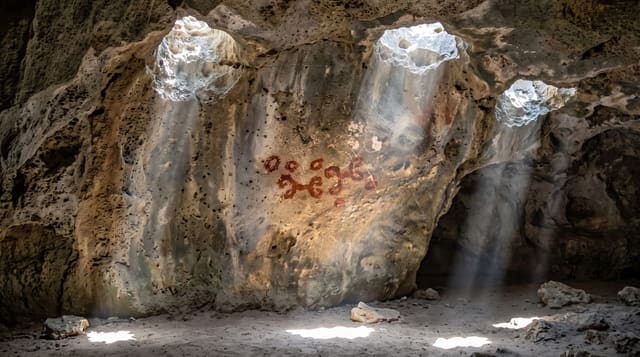
The first chamber of Vranjaca was known for a long time; the second, which holds the formations, was entered in 1903 by Stipe Punda, the landowner, who dug through after noticing air moving. It has been in the same family since, and they still run the visits - which is unusual for a Croatian show cave and gives the tour a different character to a state-run one. The chamber holds columns, curtains and stalagmites in reds and creams from iron and other minerals, lit and reached by a fitted path. The cave was opened for visitors in the 1920s and has been shown continuously apart from wartime.
History
Local people had long known the entrance hall of Vranjača when the landowner Stipe Punda found the second hall in 1903. A drawing by the miner Luigi Miotto reached the Viennese geologist Fritz von Kerner, who published the first description of the cave in 1905, and the name Vranjača first appeared in print the same year, in Dragutin Hirc's natural geography of Croatia. Two Split schoolteachers, Umberto Girometta and Ramiro Bujas, made the first scientific explorations and published them in 1911-1914; Girometta found a new eyeless spider, named Stalita giromettai after him. The cave was opened to the public in 1929, when members of the Mosor mountaineering association's karst section, led by the mining engineer Rade Mikačić, built an access road and steps and put in rope rails and electric light. In 1934 and 1935 Girometta dug out early Neolithic pottery and burnt animal bones, and deeper layers held fallow deer and the extinct cave bear (Wikipedia, Vranjača Cave).
The landscape
- A chamber opened in 1903 - dug into after air movement gave it away.
- Shown by the same family since - unusual among Croatian show caves.
- Coloured formations - reds and creams from iron and minerals.
- A fitted path and lighting - installed from the 1920s.
When to go
April to October; visits are less frequent off season. Two hours.
Practical notes
Guided access only, and turning up outside the schedule means waiting or missing it. The path has steps and is damp. The visit is about thirty to forty minutes. Facilities are minimal.
Nearby
Mosor's ridge is above; Split is down on the coast.
Key facts
Source: Wikidata, item Q20527480, read on 18 October 2026.
What to pack for Vranjaca Cave
Chosen from what this place is for. Tap a kit for the full checklist.
- Head torch + spare batteries - Hands-free light is essential; caves are truly dark. Find on Amazon
- Grippy closed shoes - Cave floors are wet, muddy and slick with formations. Find on Amazon
- A warm layer - Many caves sit near 10°C year-round, even in a hot country. Find on Amazon
- Gloves - Protect your hands on rough rock and cold metal handrails. Find on Amazon
Some links on this page are Amazon affiliate links - if you buy through them we may earn a small commission at no extra cost to you.
All packing kitsPlan your trip
Where to start if Vranjaca Cave is going on the list.
Booking links on this page are affiliate links - if you book through them we may earn a small commission at no extra cost to you. It never changes what we write about a place.
Opening times, ticket prices and seasonal closures change - check the official source before you go: official site.