Jacó and Playa Hermosa
The closest surf coast to San José, a busy town with a beginner break beside one of the country's heaviest waves.
Updated 21 October 2026
AI illustration
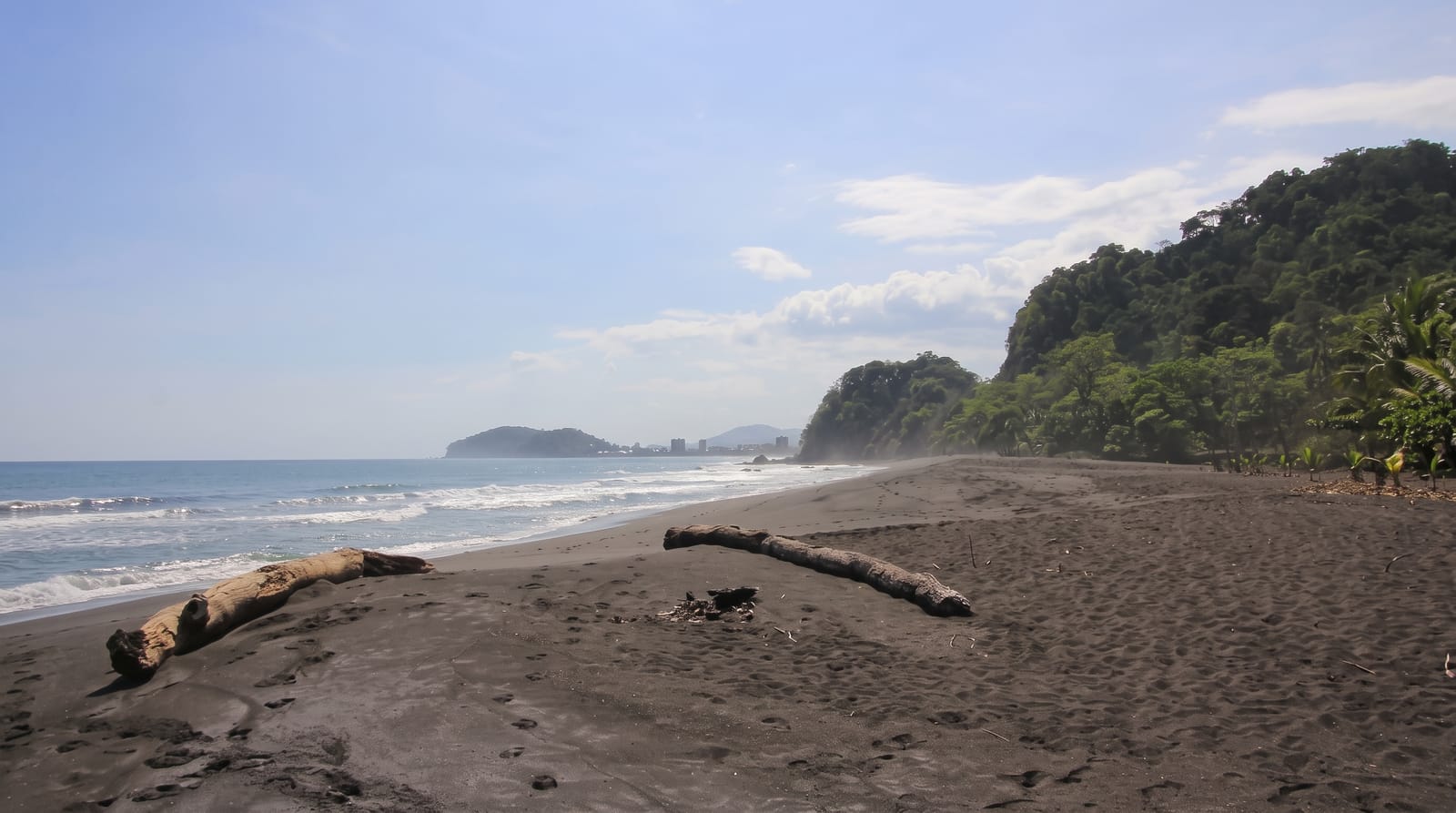
Jacó is the beach nearest to San José and has been the capital's weekend coast for decades, which made it the most developed and least tranquil town on the central Pacific: a long grey-sand beach, a strip of hotels, restaurants and nightlife behind it, and a beginner-friendly break that fills with surf schools. Five kilometres south, Playa Hermosa is the opposite: a fast, heavy, hollow beach break over a steep shore, one of the most serious waves in the country, host to international contests and no place to learn. The forested hills behind both hold scarlet macaws, and Carara is twenty minutes north.
What's there
- The Jacó break - forgiving beach waves and a wall of surf schools.
- Playa Hermosa - fast and heavy, for experienced surfers only.
- The macaws - flying between Carara and the coast at dawn and dusk.
- The hills behind - forest running down to the coastal strip.
When to go
Surf runs year-round with the biggest swells from May to November, which is also the wet season. December to April is dry and busiest with Costa Rican visitors. Weekends are considerably busier than weekdays.
Things to know
Jacó has a reputation for nightlife that includes an open and widely reported sex trade, and the town after dark is not to everyone's taste. Petty theft on the beach is common. Riptides are strong. Playa Hermosa is genuinely dangerous for anyone not already a strong surfer, with a heavy shore break.
Nearby
Carara is twenty minutes north; Manuel Antonio is an hour south.
What to pack for Jacó and Playa Hermosa
Chosen from what this place is for. Tap a kit for the full checklist.
- Reef-safe sunscreen - High SPF that will not bleach the coral you are swimming over. Find on Amazon
- Quick-dry clothing - Board shorts or synthetics that shrug off spray and dry fast. Find on Amazon
- Quick-dry towel - A microfibre towel packs small and dries in minutes. Find on Amazon
- Secure water shoes or reef boots - Grip on slippery launches and protection on rocky shores. Find on Amazon
Some links on this page are Amazon affiliate links - if you buy through them we may earn a small commission at no extra cost to you.
All packing kitsPlan your trip
Where to start if Jacó and Playa Hermosa is going on the list.
Booking links on this page are affiliate links - if you book through them we may earn a small commission at no extra cost to you. It never changes what we write about a place.
Opening times, ticket prices and seasonal closures change - check the official source before you go: official site.


