Xidi
A Huizhou merchant village of 124 surviving Ming and Qing houses, entered through a stone memorial archway of 1578.
Updated 18 October 2026
AI illustration
UNESCO World Heritage
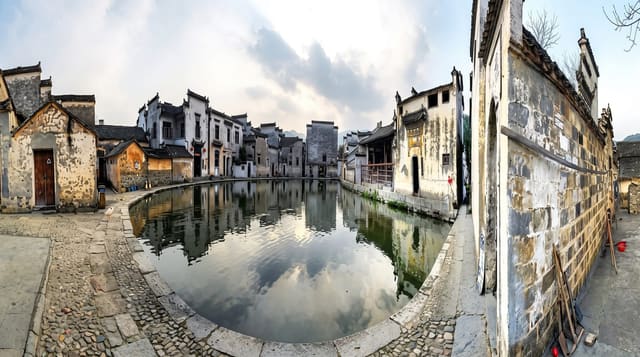
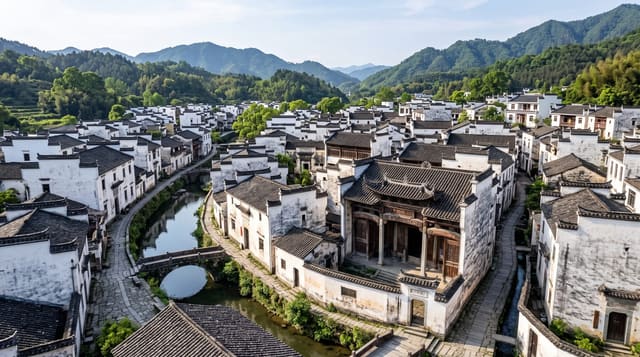
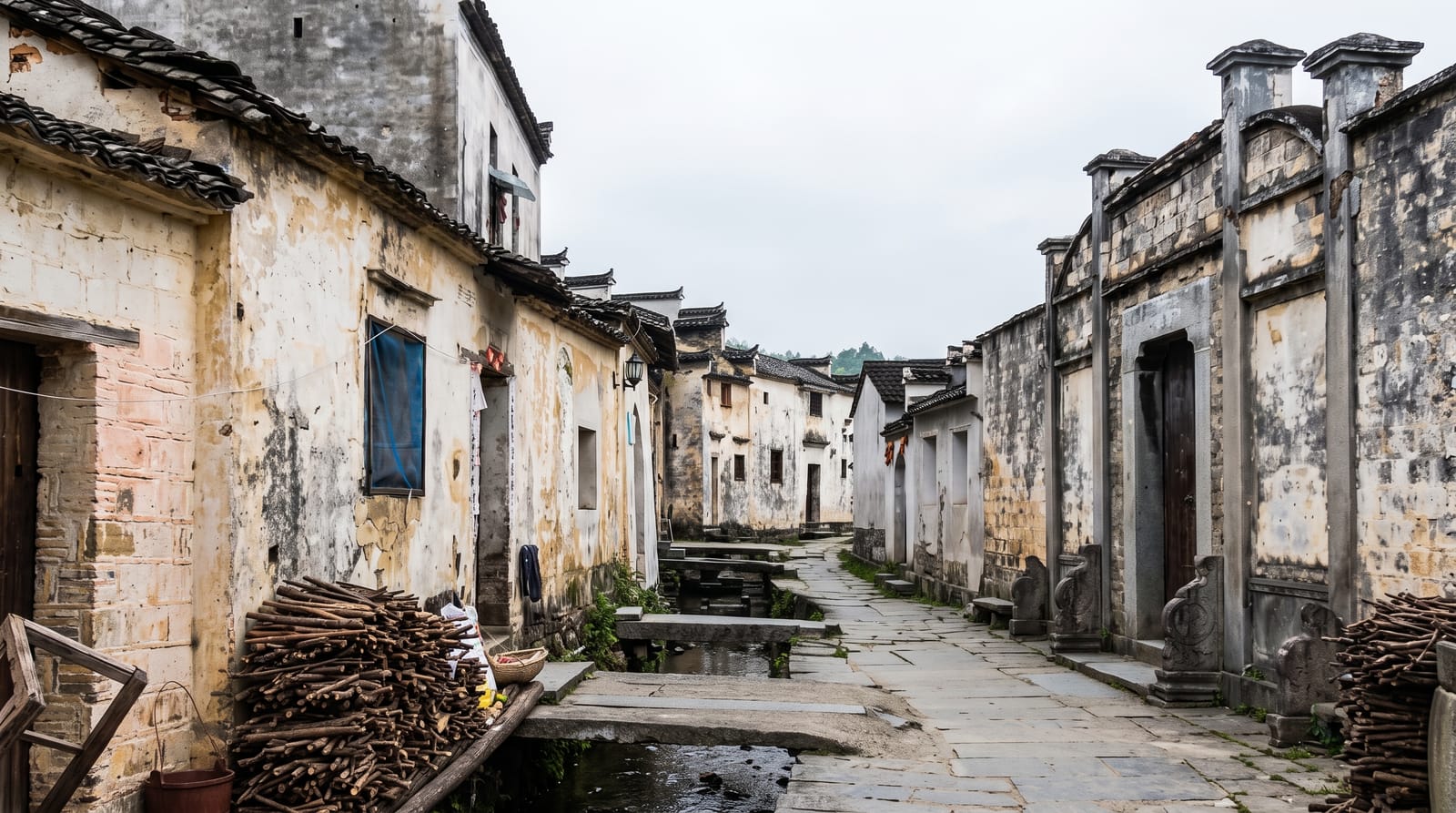
Xidi was settled by the Hu clan, who claimed descent from a Tang emperor, and grew wealthy through Huizhou merchants trading salt and timber; the money went into houses, and around a hundred and twenty-four Ming and Qing residences survive along a spine of lanes, inscribed with Hongcun by UNESCO in 2000. The village is entered past the Hu Wenguang memorial archway of 1578, a three-tier stone paifang of the kind that once stood in numbers before most were destroyed. Inside, the houses carry carved brick, stone and wood, with couplets on the doorposts, and Lüfu Hall, Zhuimu Hall and others are open. It is quieter than Hongcun.
History
The village was first built in the Huangyou era (1049-1053) of the Song emperor Renzong and was first called Xichuan, West River, after the streams that run through it. Its Hu family descended from Hu Shiliang of Wuyuan, a descendant of a son of the Tang emperor Zhaozong adopted by the Hu family; by 1465 its members had gone into trade, which paid for large private buildings and public works, and by the mid-17th century their influence reached into politics. Xidi was at its most prosperous in the 18th and 19th centuries, with about 600 residences, before the decline of the Anhui merchant communities in the late 19th century halted its growth; together with Hongcun it was declared a World Heritage Site in 2000 (Wikipedia, Xidi).
What's there
- The 1578 archway - the three-tier stone paifang at the village entrance.
- The merchant houses - 124 surviving Ming and Qing residences.
- The carved detail - brick, stone and wood carving through the buildings.
- The door couplets - inscribed sayings on the houses, some centuries old.
When to go
March to May and September to November; spring brings rape flowers to the surrounding fields. Weekdays are calmer than weekends. Combining with Hongcun in one day is standard and the two are a short drive apart.
Before you go
Entry is charged and the village is small. Tour groups arrive through the middle of the day. Some houses are shops. Xidi sees fewer visitors than Hongcun but is not undiscovered.
Nearby
Hongcun is a short drive north; Huangshan lies northeast.
Key facts
Source: Wikidata, item Q4010, read on 18 October 2026.
What to pack for Xidi
Chosen from what this place is for. Tap a kit for the full checklist.
- Comfortable walking shoes - Sightseeing means kilometres of pavement and cobbles daily. Find on Amazon
- A slim anti-theft daypack - Zips that close properly; keep it in front in crowds and on transit. Find on Amazon
- A refillable water bottle - Many cities have public fountains; save money and plastic. Find on Amazon
- A light layer + compact umbrella - For museum air-con and a sudden shower. Find on Amazon
Some links on this page are Amazon affiliate links - if you buy through them we may earn a small commission at no extra cost to you.
All packing kitsPlan your trip
Where to start if Xidi is going on the list.
Booking links on this page are affiliate links - if you book through them we may earn a small commission at no extra cost to you. It never changes what we write about a place.
Opening times, ticket prices and seasonal closures change - check the official source before you go: official site.