Wuyuan
Huizhou villages of white walls and black tiles set among terraces that turn yellow with rape flowers each spring.
Updated 4 September 2026
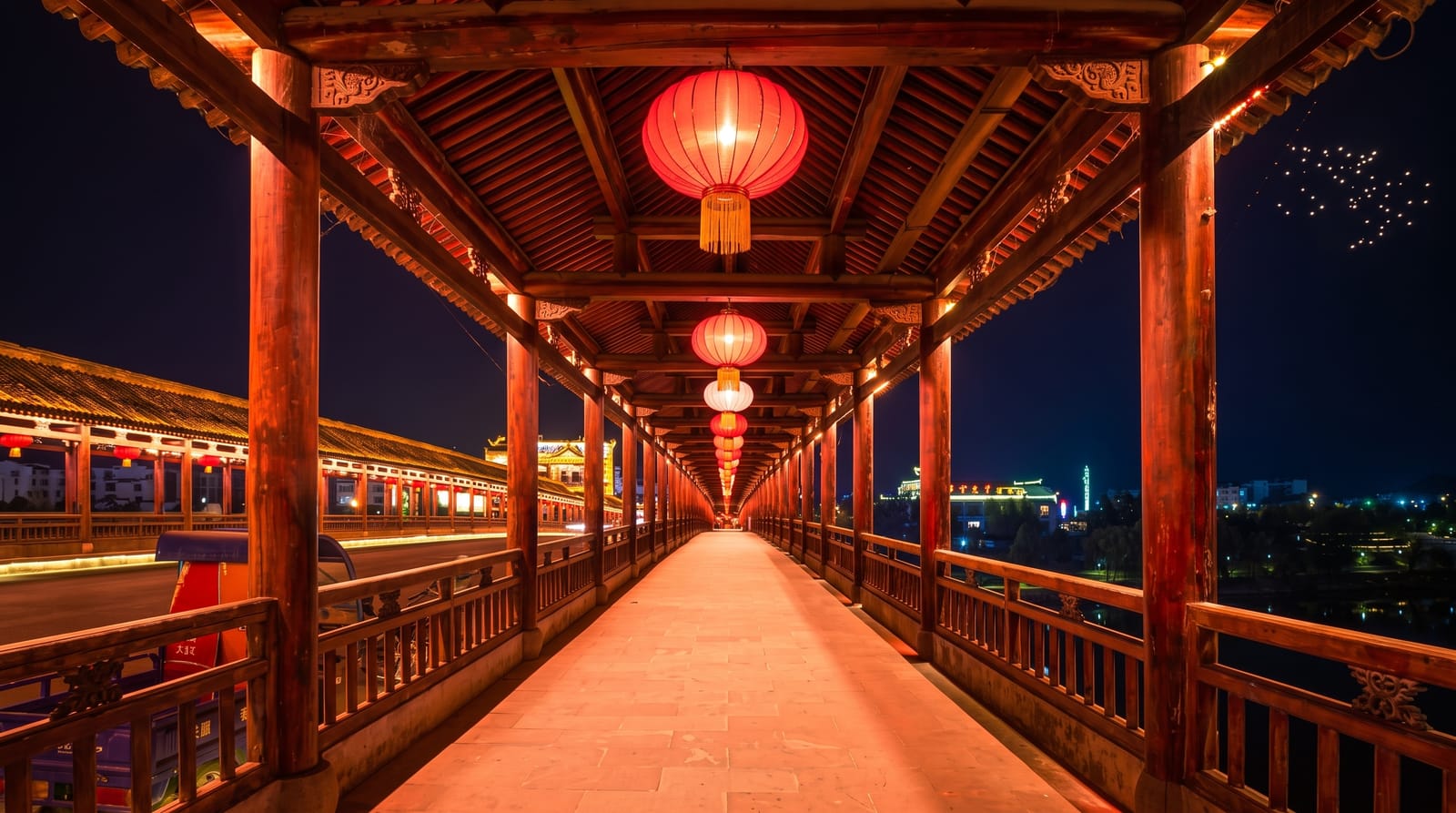
AI illustration
Wuyuan belonged historically to Huizhou and shares its architecture: white-walled, black-tiled houses with stepped gables, clustered in villages along streams. What makes it a destination is the combination with agriculture: in late March and early April the terraces around Jiangling and Huangling turn solid yellow with flowering rape, and the villages sit in the middle of it, an image that has made Wuyuan a fixture of Chinese spring travel. Huangling village, built on a steep slope, is known for shaiqiu, the autumn drying of chillies, corn and persimmons on round trays on the rooftops, a display staged now for visitors but rooted in practice.
Highlights
- The rape flower terraces - hillsides solid yellow in late March and early April.
- Huangling village - houses stacked on a slope with round drying trays on roofs.
- The Huizhou architecture - white walls, black tiles and stepped gables.
- The autumn drying - chillies, corn and persimmons spread on rooftop trays.
When to go
March to April for the rape flowers, the peak lasting about two weeks and drawing enormous crowds; November for the autumn drying displays and colour. Outside those windows the villages are quiet and the terraces green or bare.
Before you go
The flowering season brings severe crowding, full accommodation and inflated prices. Huangling is reached by cable car with queues. The combined ticket covers many villages, not all worth the time. The rooftop drying is now largely a staged display.
Nearby
Huangshan lies northeast across the provincial border; Jingdezhen is west.
What to pack for Wuyuan
Chosen from what this place is for. Tap a kit for the full checklist.
- Comfortable walking shoes - Sightseeing means kilometres of pavement and cobbles daily. Find on Amazon
- A slim anti-theft daypack - Zips that close properly; keep it in front in crowds and on transit. Find on Amazon
- A refillable water bottle - Many cities have public fountains; save money and plastic. Find on Amazon
- A light layer + compact umbrella - For museum air-con and a sudden shower. Find on Amazon
Some links on this page are Amazon affiliate links - if you buy through them we may earn a small commission at no extra cost to you.
All packing kitsPlan your trip
Where to start if Wuyuan is going on the list.
Booking links on this page are affiliate links - if you book through them we may earn a small commission at no extra cost to you. It never changes what we write about a place.
Opening times, ticket prices and seasonal closures change - check the official source before you go: official site.