Longnan Hakka Walled Villages
Square fortified clan compounds of the Hakka, built with gun ports and wells to withstand a siege.
Updated 14 October 2026
AI illustration
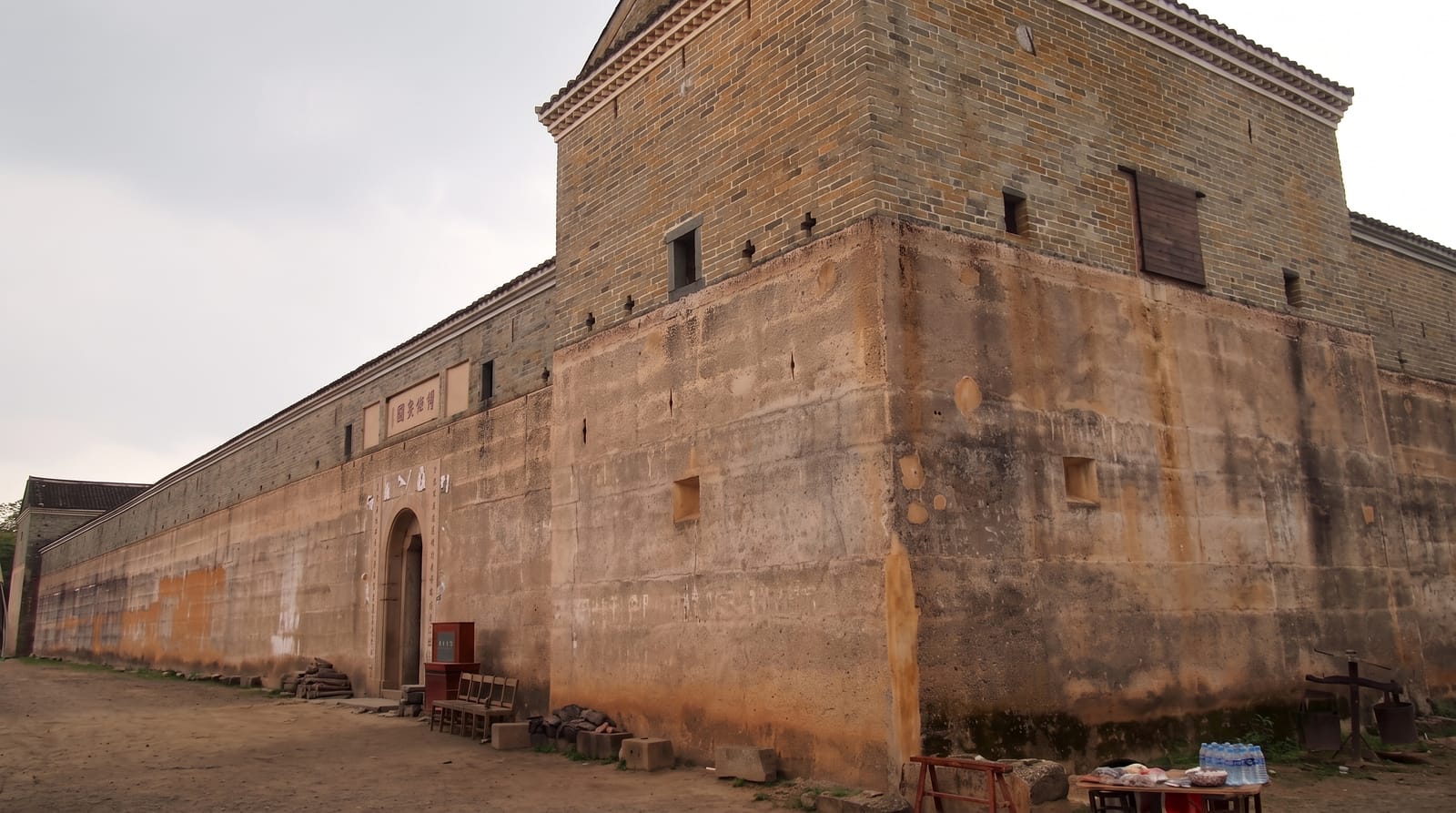
Southern Jiangxi holds around three hundred and seventy surviving weilongwu, Hakka fortified compounds, more than anywhere else in China. Unlike the round tulou of Fujian, these are mostly square: high rammed-earth or brick walls enclosing courtyards and rooms for an entire clan, with corner towers, gun ports, a single reinforced gate, and wells and grain stores inside so that the community could shut itself in for weeks. They were built between the Ming and the early twentieth century, in country where clan feuds and banditry were constant. Guanxi Weilongwu is the largest, with over two hundred rooms across an enclosure of some ten thousand square metres.
Highlights
- Guanxi Weilongwu - the largest compound, with over two hundred rooms.
- The defensive features - corner towers, gun ports and a single gate.
- The internal courtyards - halls, ancestral shrines and living quarters within.
- The density - hundreds of surviving compounds across the county.
When to go
March to May and September to November; summers in southern Jiangxi are hot and humid. The compounds are lived in or partly abandoned, and opening arrangements vary. A car or local driver helps considerably.
Good to know
Sites are scattered across a rural county with poor public transport. Some compounds are derelict and others still occupied, with access depending on residents. Interpretation is in Chinese only.
Nearby
Ganzhou lies north; the Guangdong border is south.
What to pack for Longnan Hakka Walled Villages
Chosen from what this place is for. Tap a kit for the full checklist.
- Strong insect repellent - DEET or picaridin; the jungle is where bites and disease risk are highest. Find on Amazon
- Comfortable walking shoes - Sightseeing means kilometres of pavement and cobbles daily. Find on Amazon
- Modest clothing - Shoulders and knees covered - the single most common requirement. Find on Amazon
- Long, light, quick-dry clothing - Covers skin from insects and sun without cooking you in the humidity. Find on Amazon
Some links on this page are Amazon affiliate links - if you buy through them we may earn a small commission at no extra cost to you.
All packing kitsPlan your trip
Where to start if Longnan Hakka Walled Villages is going on the list.
Booking links on this page are affiliate links - if you book through them we may earn a small commission at no extra cost to you. It never changes what we write about a place.
Opening times, ticket prices and seasonal closures change - check the official source before you go: official site.