Mount Sanqing
A UNESCO granite mountain of pillars and pinnacles, with cliff walkways cut around the faces at high level.
Updated 14 October 2026
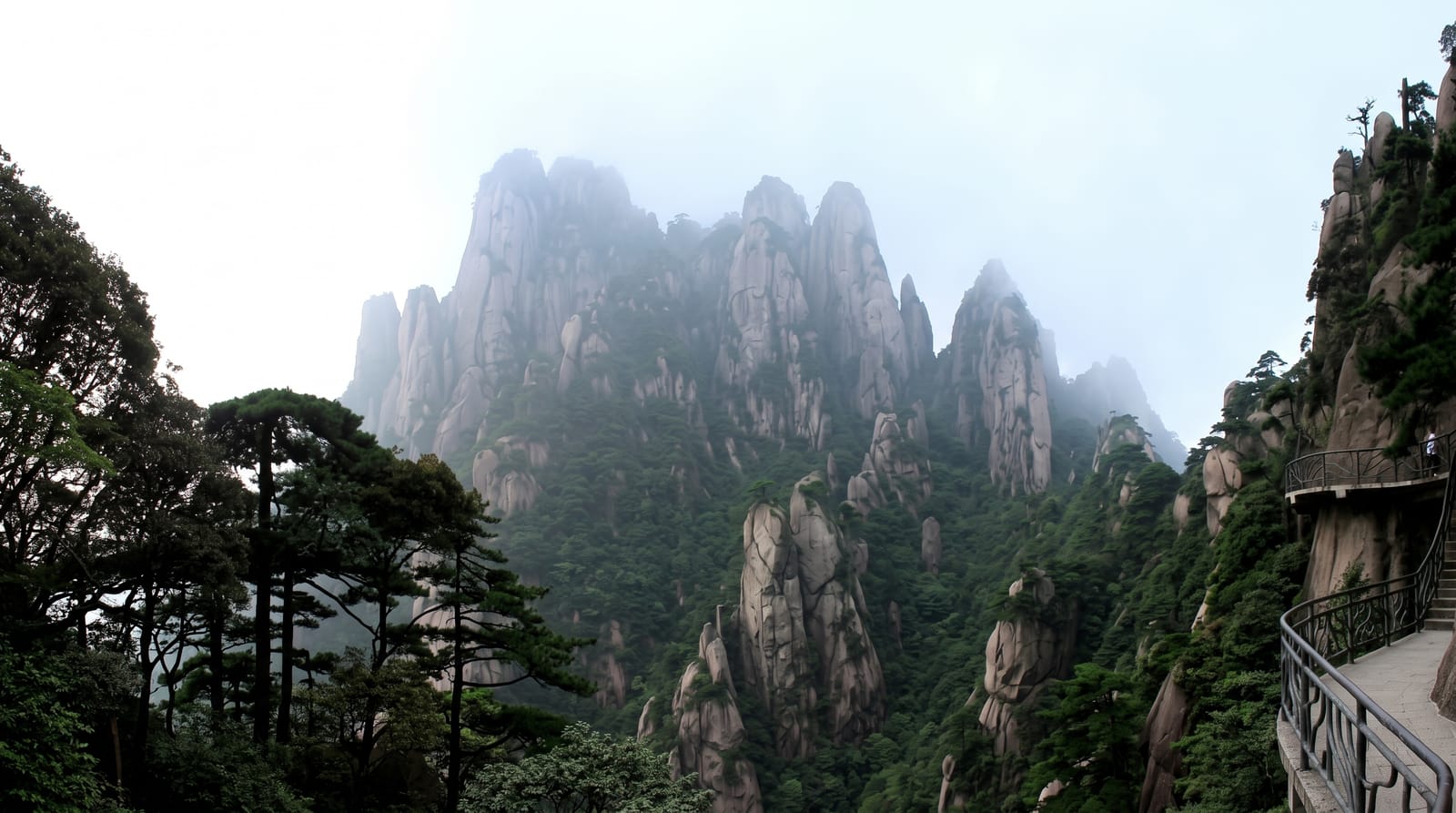
AI illustration
UNESCO World Heritage
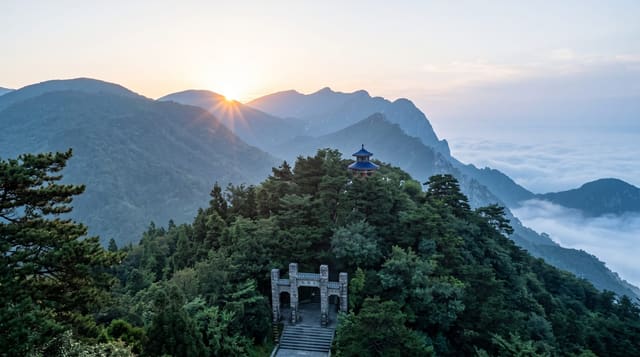
Sanqingshan was inscribed by UNESCO in 2008 for its granite geology: some forty-eight named peaks and dozens of pillars weathered into forms that erosion along vertical joints has left standing free, including the Oriental Goddess and the Giant Python, a column of over one hundred metres. It is a Taoist mountain, named for the three pure ones, with temples and a stone-built Taoist complex on the slopes. Around ten kilometres of plank walkways are bracketed onto the cliffs at high level, running around the faces with drops beneath, and cable cars carry visitors to the ridge. Cloud fills the valleys frequently, leaving the pillars standing above it.
What's there
- The granite pillars - free-standing columns including the hundred-metre Python.
- The cliff walkways - plank paths bracketed around the rock faces.
- The cloud sea - mist filling the valleys below the ridges.
- The Taoist complex - stone temple buildings on the mountain.
When to go
April to June and September to November; azaleas flower in May. Cloud and rain are frequent, and walkways close in ice, which is common in winter. Summer holidays and weekends bring long cable car queues.
Before you go
Cable car queues at peak times can exceed an hour. The walkways are exposed and unnerving for anyone afraid of heights, and close in bad weather. Cloud can hide everything for days. Entry plus cable car is expensive.
Nearby
Wuyuan lies northwest; Mount Longhu is southwest.
Key facts
Source: Wikidata, item Q873358, read on 18 October 2026.
What to pack for Mount Sanqing
Chosen from what this place is for. Tap a kit for the full checklist.
- Broken-in walking shoes or boots - Grip and ankle support matter more than looks; never hike in brand-new boots. Find on Amazon
- Modest clothing - Shoulders and knees covered - the single most common requirement. Find on Amazon
- Layers + a waterproof shell - Mountain weather turns fast; a packable rain jacket saves the day. Find on Amazon
- A scarf or shawl - To cover the head or shoulders on entry; women especially at mosques. Find on Amazon
Some links on this page are Amazon affiliate links - if you buy through them we may earn a small commission at no extra cost to you.
All packing kitsPlan your trip
Where to start if Mount Sanqing is going on the list.
Booking links on this page are affiliate links - if you book through them we may earn a small commission at no extra cost to you. It never changes what we write about a place.
Opening times, ticket prices and seasonal closures change - check the official source before you go: official site.