Mausoleum of Genghis Khan
A ceremonial shrine in Ordos honouring the khan, holding relics rather than remains, tended by hereditary guardians.
Updated 21 October 2026
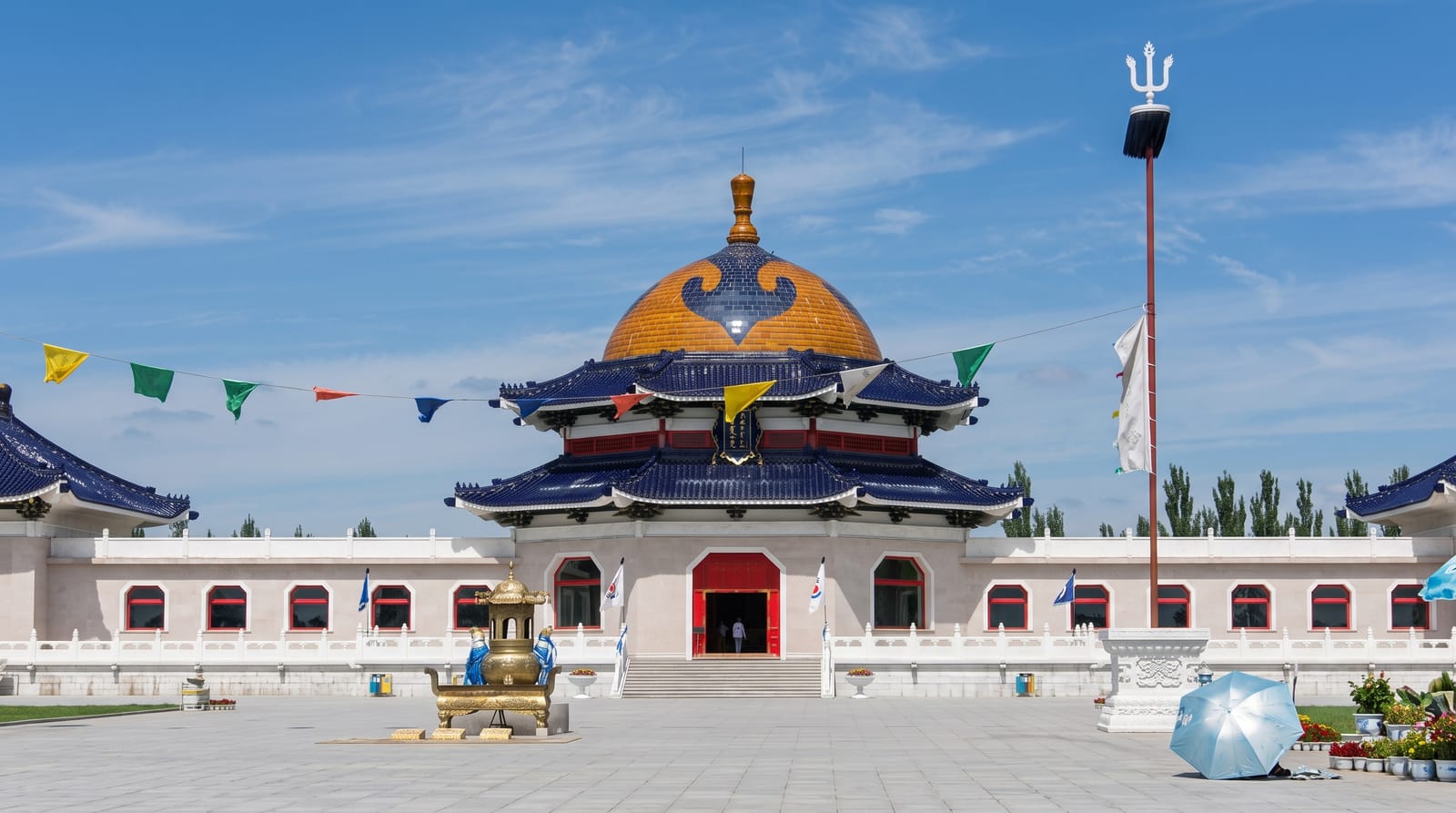
AI illustration
Genghis Khan's actual burial place has never been found and by tradition was deliberately concealed, so this complex is a cenotaph and shrine rather than a tomb. It holds objects associated with him and continues a ceremonial tradition maintained for centuries by the Darkhad, hereditary guardians who conduct rituals here through the year. The present buildings, three linked halls under blue-tiled domes, were completed in 1956, replacing a mobile shrine of felt tents that had moved with the relics; the objects themselves were once moved away for safekeeping and later brought back. Ceremonies take place on set dates in the Mongolian calendar, and the site is significant to Mongols on both sides of the border.
History
After Genghis Khan died in 1227 he was buried in secret, in an unmarked grave, and the Mongols honoured him through his personal belongings; Kublai Khan built temples to his grandfather in Daidu and Shangdu, and after the fall of the Yuan in 1368 the shrine became the "eight white yurts", portable halls tended by the Darkhad. The Darkhad moved with them from the Kherlen River to the Ordos, which takes its name, meaning palaces, from the shrine; under the Qing 500 Darkhad were freed from tax and military service to keep its rituals, a permanent mausoleum was built in 1864, and the present halls in the traditional Mongol style went up between 1954 and 1956 (Wikipedia, Mausoleum of Genghis Khan).
Highlights
- The three domed halls - the 1956 complex housing the shrine.
- The Darkhad ceremonies - rituals conducted by hereditary guardians.
- The relics - objects associated with the khan rather than remains.
- The grassland setting - the Ordos plateau around the mausoleum.
When to go
May to October for comfortable weather; the main ceremonies fall on set dates in the lunar calendar, most importantly in spring, and draw large gatherings. Winter on the Ordos plateau is very cold.
Things to know
This is not a burial site and no remains are here, which disappoints visitors expecting a tomb. The complex is a 1950s construction. Interpretation is limited in English, and the site's ceremonial life is not always visible to casual visitors.
Nearby
Ordos city lies north; the Kubuqi desert and Xiangshawan are northwest.
Key facts
Source: Wikidata, item Q3301848, read on 18 October 2026.
What to pack for Mausoleum of Genghis Khan
Chosen from what this place is for. Tap a kit for the full checklist.
- Loose, light, long clothing - Covering up beats bare skin in the desert - and locals dress this way for a reason. Find on Amazon
- Comfortable walking shoes - Sightseeing means kilometres of pavement and cobbles daily. Find on Amazon
- Modest clothing - Shoulders and knees covered - the single most common requirement. Find on Amazon
- A wide-brim hat + sunglasses - Shade for your face and eyes where there is none overhead. Find on Amazon
Some links on this page are Amazon affiliate links - if you buy through them we may earn a small commission at no extra cost to you.
All packing kitsPlan your trip
Where to start if Mausoleum of Genghis Khan is going on the list.
Booking links on this page are affiliate links - if you book through them we may earn a small commission at no extra cost to you. It never changes what we write about a place.
Opening times, ticket prices and seasonal closures change - check the official source before you go: official site.