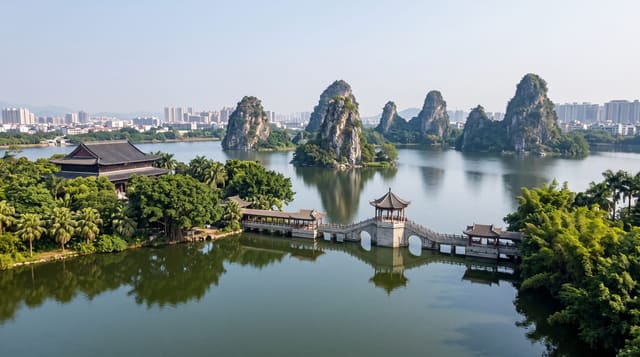
Luofu Mountain
A Daoist mountain where the alchemist Ge Hong wrote, and where a Chinese text later guided a Nobel-winning malaria cure.
Updated 16 October 2026
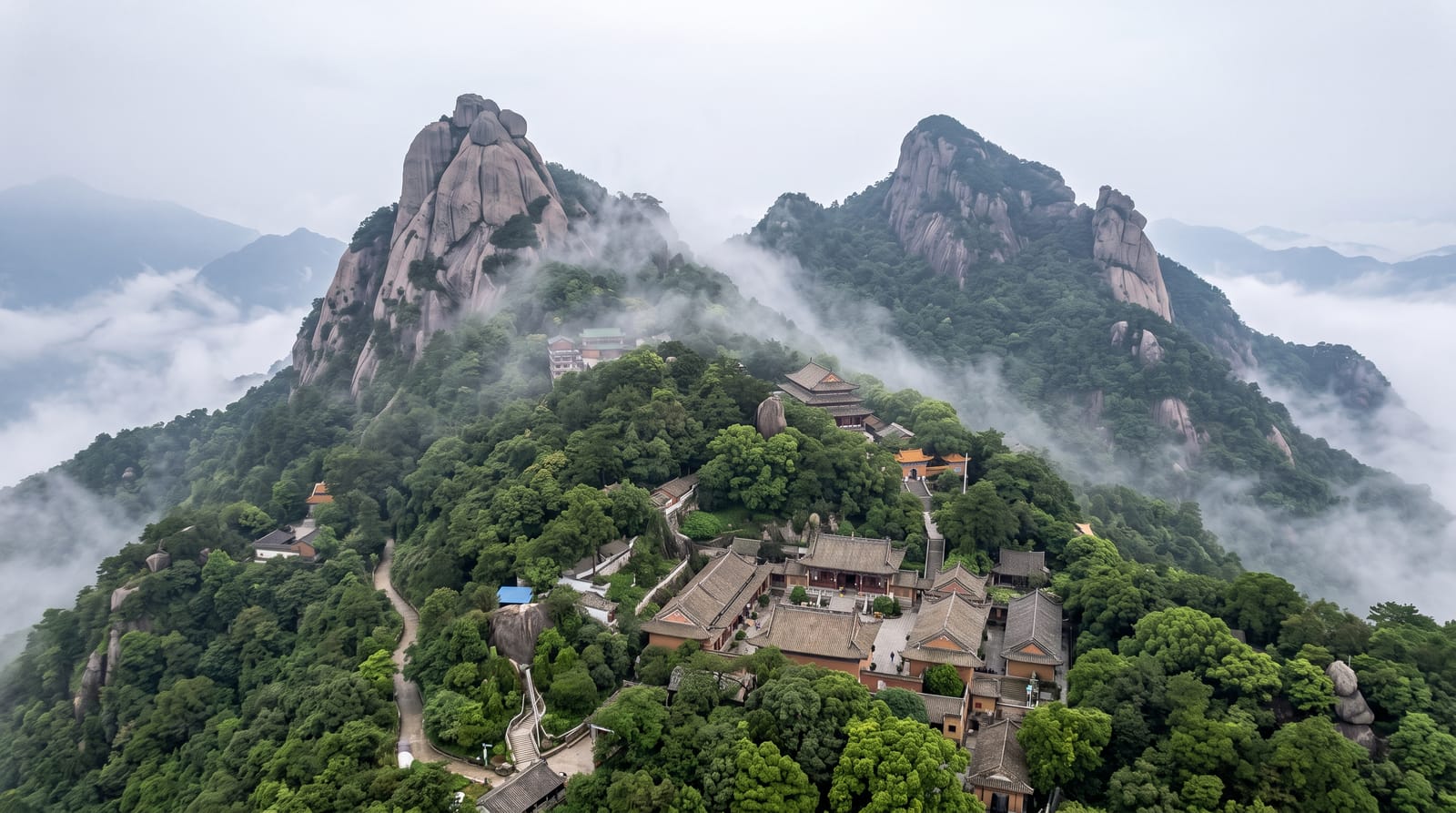
AI illustration
Luofushan has been a Daoist mountain since the fourth century, when Ge Hong settled here to practise alchemy and write the Baopuzi, a foundational text on Daoist immortality practice and early Chinese chemistry. He also compiled a handbook of emergency remedies, and a line in it describing sweet wormwood steeped in cold water gave Tu Youyou the clue to extract artemisinin without heat, work for which she received the Nobel Prize in 2015. The mountain keeps Daoist temples including Chongxu Guan, waterfalls, pools and a cable car to the ridge, and its herbal tradition is still visible in the medicine shops below.
Background
The mountain stands north of the Dongjiang river in northwestern Boluo County and counts among the ten greater dongtian of Taoism. Four huts built here grew into temples facing the four directions: the Temple of Great Emptiness to the south, later renamed the Temple of Emptiness, the Yellow Dragon to the west, the Nine Heavens to the east and the Temple of Junkets to the north. Tradition speaks of nine Taoist temples, 18 Buddhist monasteries and 22 nunneries on the slopes, but many fell after the Ming and Qing dynasties, and five of each kind of temple remain. Wa Sau Toi temple has links with two kung fu styles, Dragon and Bak Mei.
Source: Wikipedia, "Mount Luofu"
What's there
- Chongxu Guan - the main Daoist temple associated with Ge Hong.
- The herbal tradition - the mountain's long medicinal reputation.
- Waterfalls and pools - streams down the forested slopes.
- The ridge views - reached on foot or by cable car.
When to go
October to April for cooler walking; Guangdong summers are hot and humid, with afternoon storms. The mountain is busy at weekends and during Daoist festivals.
Things to know
Temples are largely modern rebuildings. The site is heavily developed with ticketed sections and cable car. The Ge Hong and artemisinin connection is interpreted mainly in Chinese.
Nearby
Huizhou lies southeast; Guangzhou is west.
Key facts
Source: Wikidata, item Q1877573, read on 18 October 2026.
What to pack for Luofu Mountain
Chosen from what this place is for. Tap a kit for the full checklist.
- Broken-in walking shoes or boots - Grip and ankle support matter more than looks; never hike in brand-new boots. Find on Amazon
- Strong insect repellent - DEET or picaridin; the jungle is where bites and disease risk are highest. Find on Amazon
- Modest clothing - Shoulders and knees covered - the single most common requirement. Find on Amazon
- Shelter suited to the place - Tent, tarp or hut booking - match it to the terrain and rules. Find on Amazon
Some links on this page are Amazon affiliate links - if you buy through them we may earn a small commission at no extra cost to you.
All packing kitsPlan your trip
Where to start if Luofu Mountain is going on the list.
Booking links on this page are affiliate links - if you book through them we may earn a small commission at no extra cost to you. It never changes what we write about a place.
Opening times, ticket prices and seasonal closures change - check the official source before you go: official site.